Earth Heart Holistic
  • www.glittermouse.co.uk
  • Earth Heart About
  • Earth Heart Blog

Spring Tonic Tea

28/3/2024

2 Comments

 
Some of my favourite things to bring to my culinary frolics at this time of year are teas and infusions from freshly growing shoots. There’s just something that feels deeply nourishing to me about stepping just yards from the kitchen door and doing a bit of weeding (well, that’s how I pretend I’m helping Nik in the garden) before brewing up a delicate tonic, full of the promise of spring and a cocktail of nutrients that nature deems appropriate to make available just now.
​
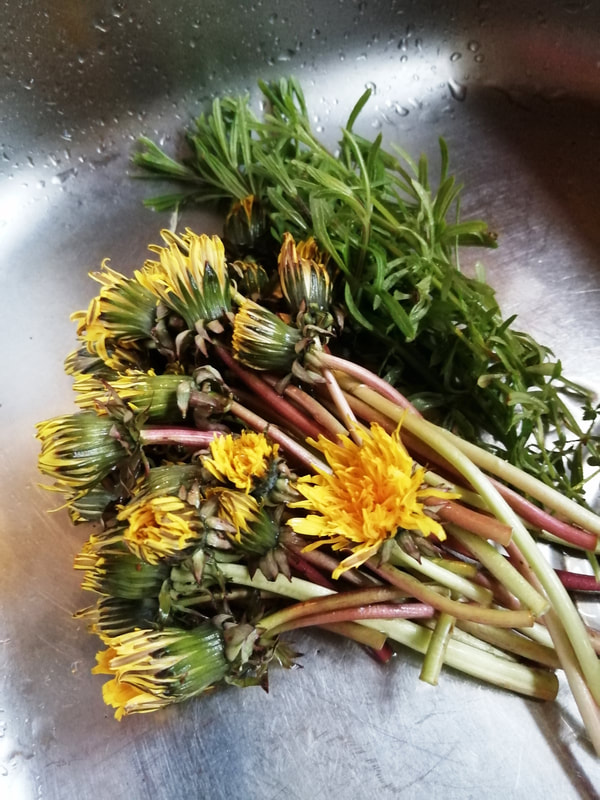
​The term ‘weed’ in my book, simply means ‘plants growing in inconvenient places’ but I did actually go a little further afield (maybe ten minutes up the lane) today to find a crop of dandelions which inconveniently weren’t growing in the garden!  I think that counts as a proper forage! I also grabbed a handful of cleavers to add to the pot! (cleavers is also called ‘sticky weed’ and sometimes ‘sticky willy’ but I avoid the latter term myself, ahem.) Dandelions are famous for having a diuretic effect and cleavers are also traditionally utilised to benefit the urinary tract and renal system so this blend is a real flush-you-out spring cleaning detox of a tea. Here’s how I make it:
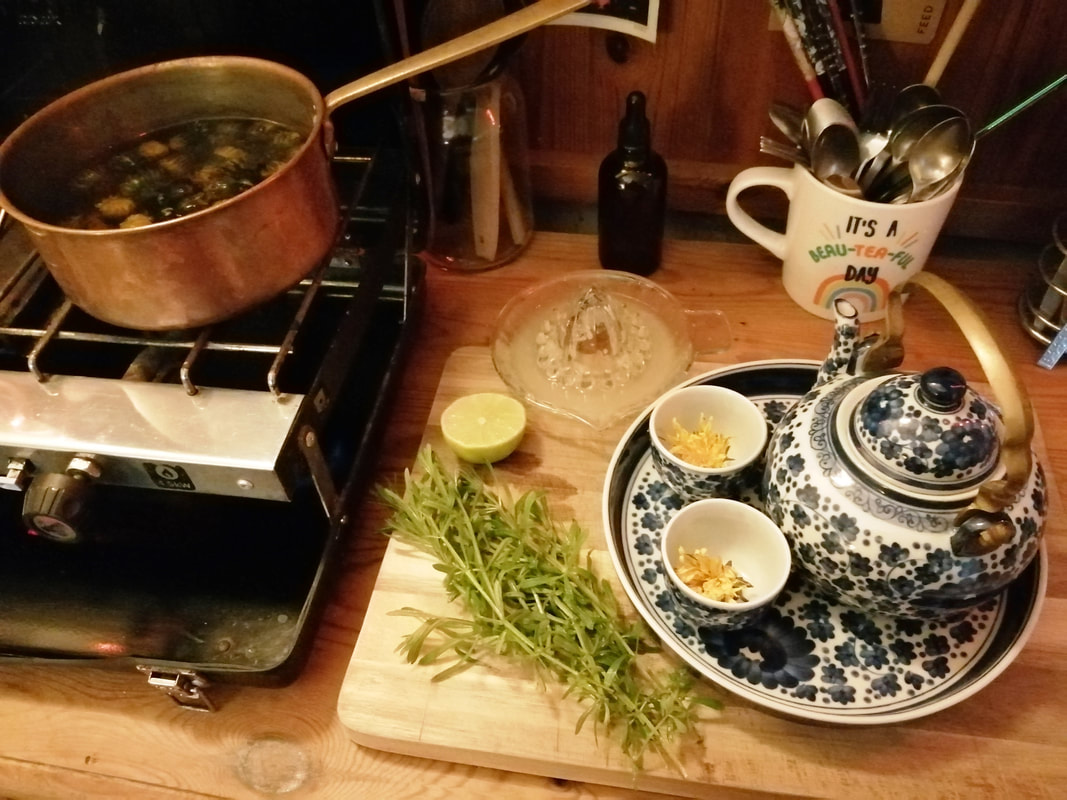
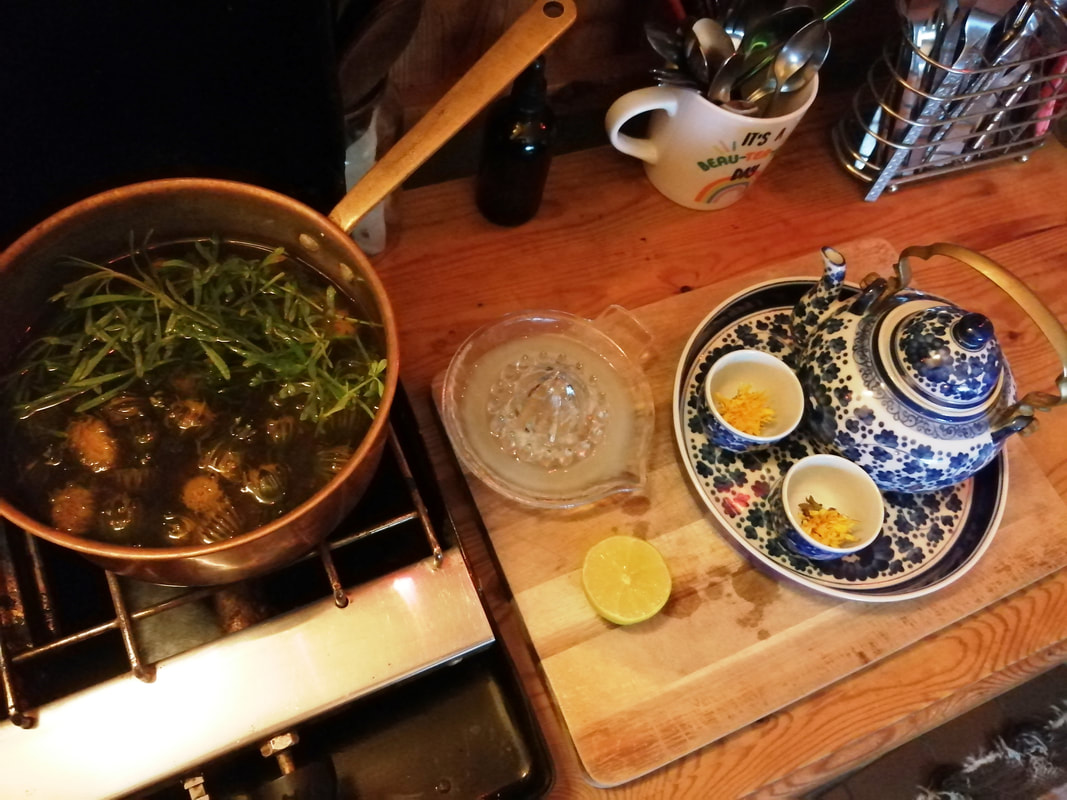
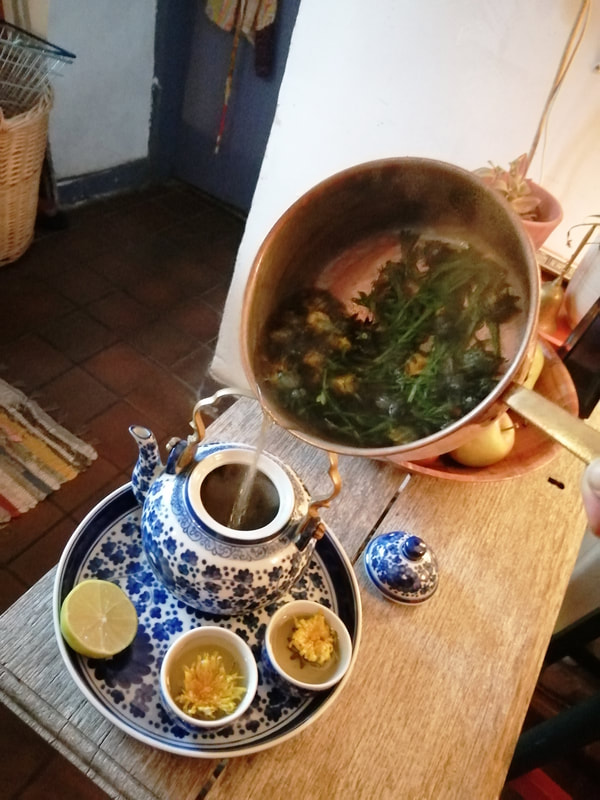
Fresh Herbs and Flowers
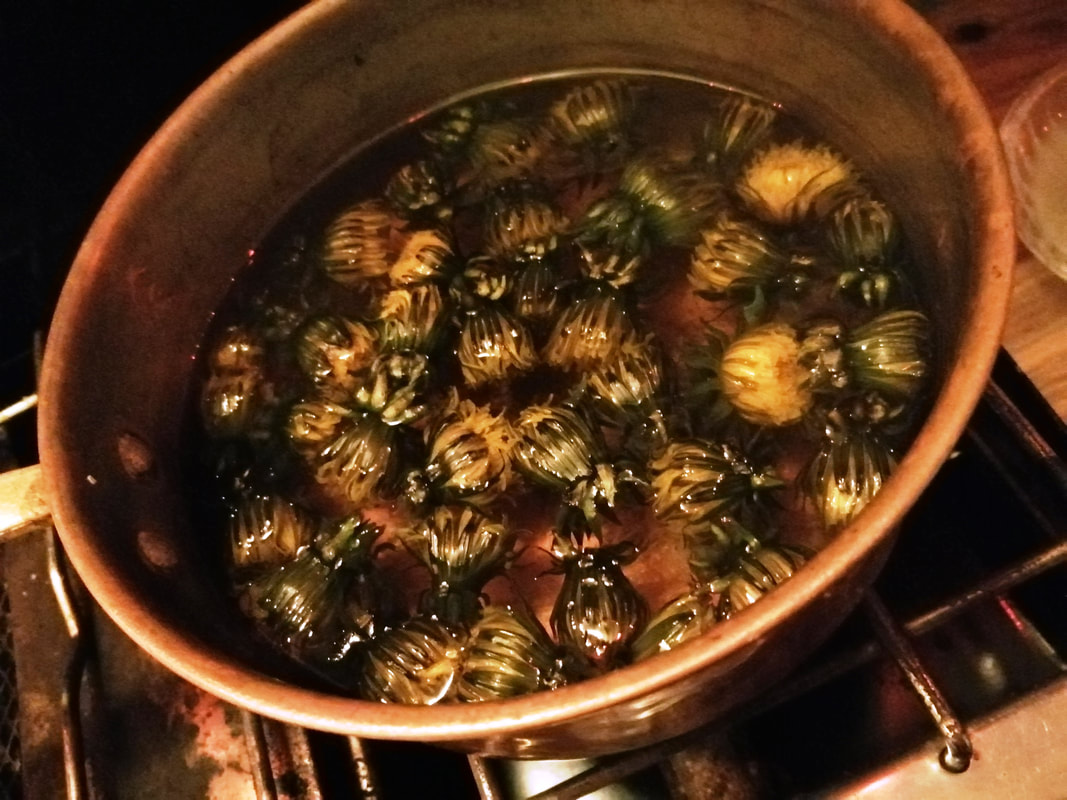
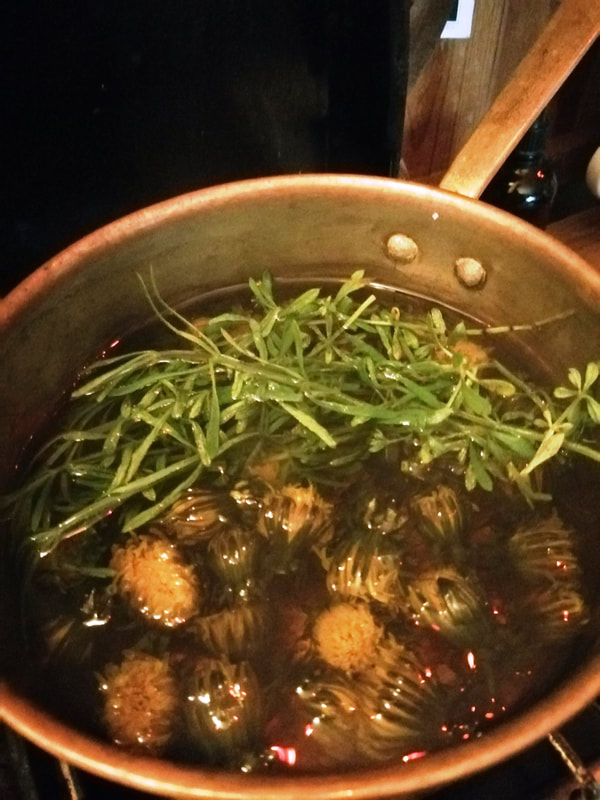
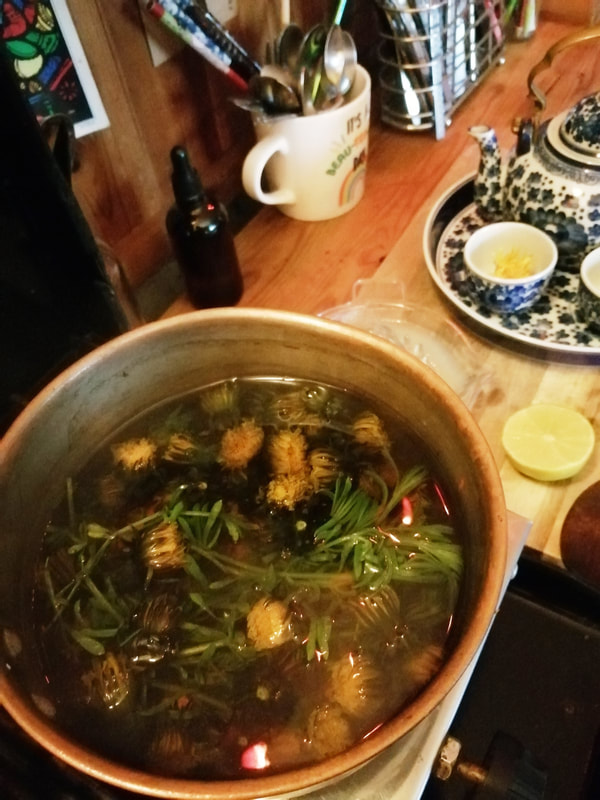
You want to pick your flowers and greens as soon before making the tea as you can. Once they wilt, they lose a lot of life and flavour, as well as actually starting to look like weeds, or worse, a compost heap! Give them a gentle wash and carefully relocate the mini-beasts that emerge as soggy refugees from your crop. Remove the flower heads from the stems. The leaves can be lovely in salad (note to self for a future post!) but I’ve never found a pleasant use for the thick hollow stems that seep sticky, white and very bitter sap. You really just want the flowers! Get some water boiling (I’ve been using a lovely old copper pot which I’d like to think adds a bit of extra micro nutrient to the brew!) and then reduce it to a simmer. Add the flowers and cleavers, but you really don’t want to boil them. For this tea, I added the juice of half a lime, but note, if you are also using a copper pot, best to add that the tea pot and then pour the tea onto the lime juice. Acidic things in copper pots are liable to result in a little bit too much extra copper in your diet! You could also sweeten it. When I was living in the Taraloka community, we often had organic apple juice concentrate in the ‘fridge and a little of that worked very well with the light flavours but I’d also consider using agave syrup (date would be too heavy) and if you’re not strictly vegan, there’s always the classic spoon of (preferably local) honey!

Other plants I’ve been brewing up recently include nettles (not just good for soup!) and fresh mint shoots… Mmmm, freshness! You could use any of those on their own or make a super brew! I’m also looking forward to my lemon balm getting more leafy; one of my favourite herbal brews! 

​
So there we are, as simple as that! It really doesn’t take long and it’s such a refreshing treat of a way to bring some spring time health and healing to your system. Incidentally, I always like to ask permission before I harvest any plant. I’d like to think I have a sense of when the answer is ‘no’ but it more often than not seems to be a ‘yes’.  At the very least I’d say it’s important to cultivate a sense of gratitude. How you communicate that is up to you but holding it in mind as you prepare, enjoy and benefit from the plants is part of the magic, I have no doubt!
​
Wishing you a joyful spring unfurling until the next post! xx
2 Comments

Nettle Soup!

26/3/2024

0 Comments

 
​In the last (first!) post, I promised ‘seasonal recipes’… and then slightly regretted it. Not because I lack excitement in sharing my culinary adventures, far from it, but because the word ‘recipe’ suggests a kind of measured restraint with which I do not cook. I did actually, in a previous life, run a vegan cooking website. What I’d invariably do is cook merrily into the early hours, flinging stuff about my kitchen, take photos of it, eat it, and then begin the arduous task of trying to guess, remember or approximate how I’d arrived at the outcome. Of course I had to use recipes when I was running the kitchen at Taraloka, otherwise the cooks wouldn’t necessarily know where to start, but I didn’t much use them when I was cooking and the occasional ‘helpful notes’ that were returned to me in the menu folder often betrayed my embarrassing inability to distinguish between theoretical quantities where zeroes were concerned. I once accidentally ordered 2.5 grams of mushrooms instead of 2.5 kilo​grams of mushrooms. The delivery driver kept a wonderfully straight face as he solemnly handed me a single cup mushroom dangling loosely in its luxuriously spacious carrier bag. Meh. Whatever.
So, I should like to correct my earlier statement, I’m not going to be sharing seasonal recipes in the formal, traditional sense. I shall be sharing visual guides to the (mostly) seasonal, vegan food I’m preparing for us to eat. Think of them as starting points and, should you feel you need it, feel free to then search out a more formal guide to quantities and cooking times! I do believe cooking should be an intuitive art, a creative act, a magical incantation, an alchemical method for transforming matter via the hopefully joyful activity of eating and I do hope you’ll find some inspiration and permission to begin flinging things about your own kitchen! These recipes will be plant based and will avoid processed food; that’s not to say I don’t occasionally indulge in a bit of vegan ‘cheese’ or a random veggie sausage but I do think preparing meals with minimally processed ingredients is by far the most healthful for person and planet. Fortunately, I also live with an experienced organic grower, which means that a lot of what I use will be home grown or foraged. Of course, if you want to try cooking something I’ve shared, you may need to make some adjustments!
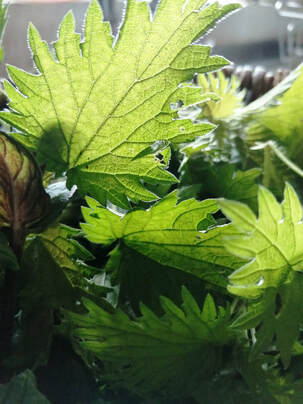
Nettles
At this time of year, Nik’s only just getting the growing underway (though we’re looking forward to some pea shoots soon!) so it’s foraging first.  I’ve been doing my bit to help with the weeding by bringing nettles into the kitchen. I’m probably not really scratching the surface but it’s nice to think I’m playing a part in keeping them at bay! They also happen to be incredibly nutritious and full of vital, springy, stingy energy! Interestingly, I do actually have a nettle soup recipe on my old cooking site, which I’ll share for nostalgic value but the ‘recipe’ bears little relation to what I actually prepared for our lunch at the weekend which went something more like this:

​Nettle Soup Recip(ish)

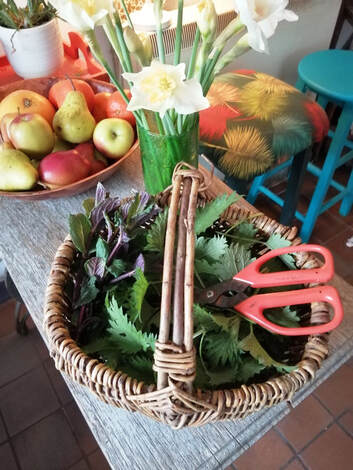
Nettle Basket
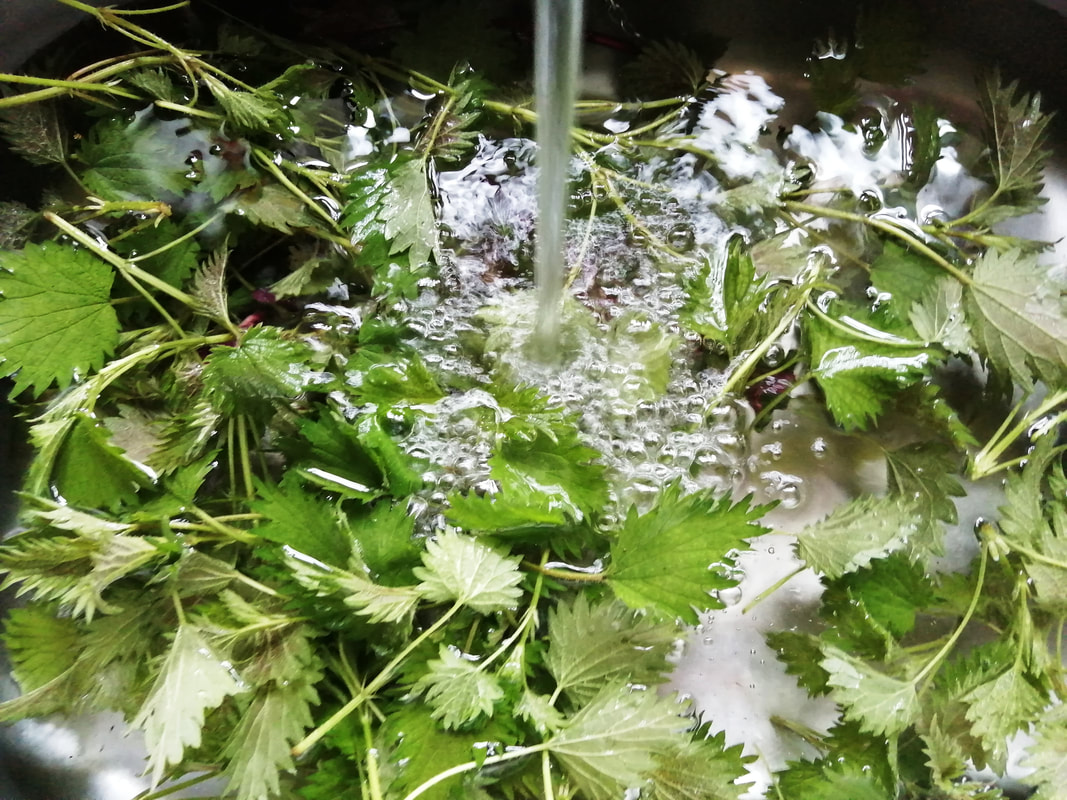
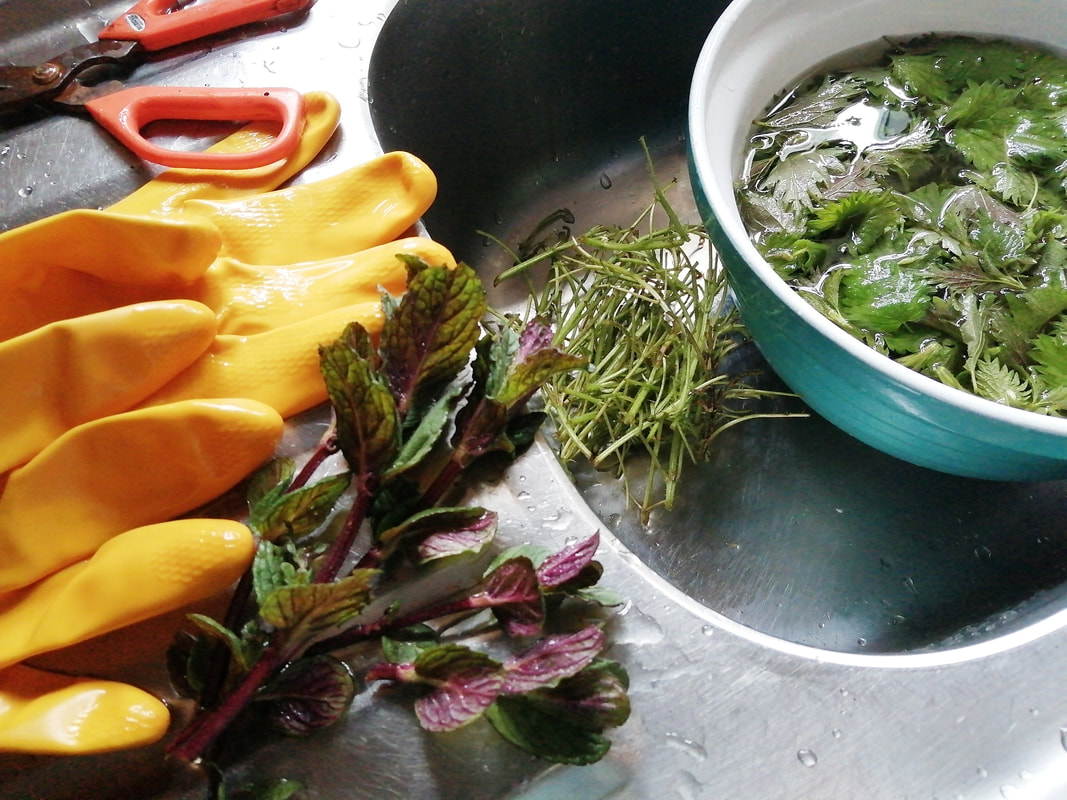
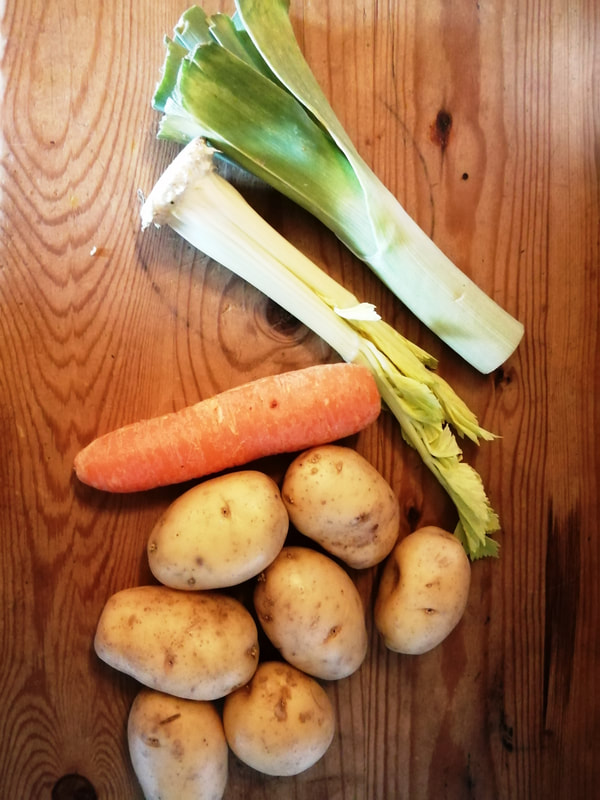
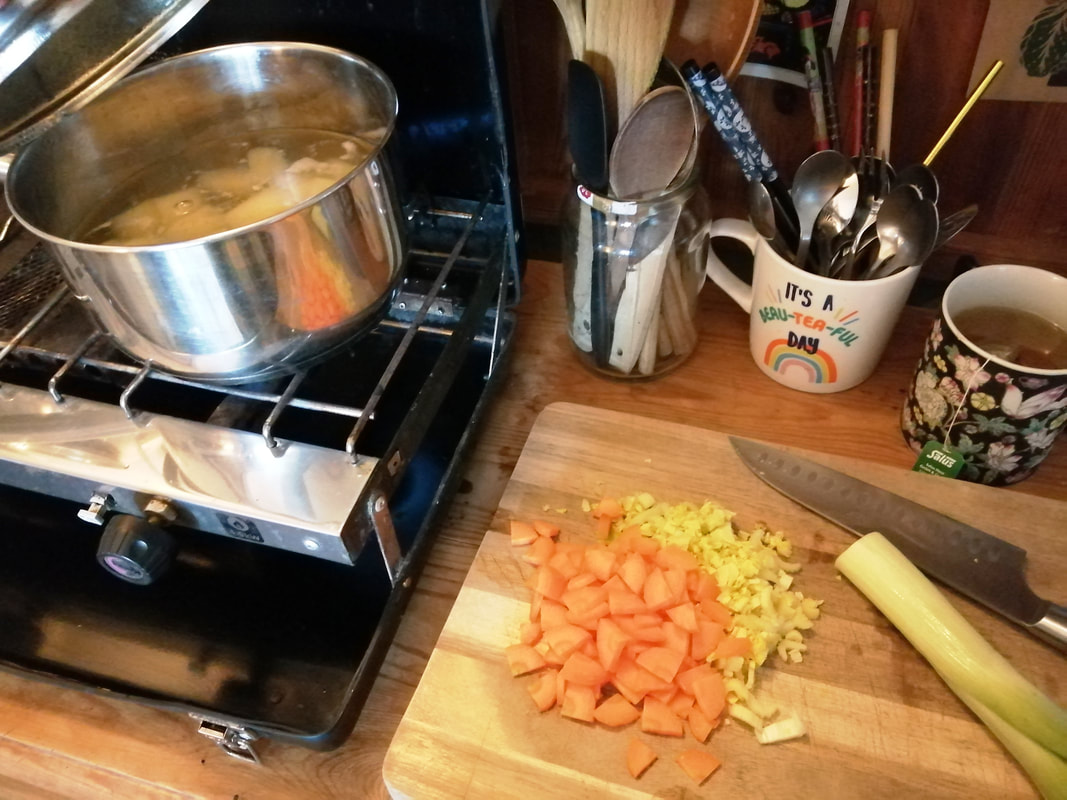
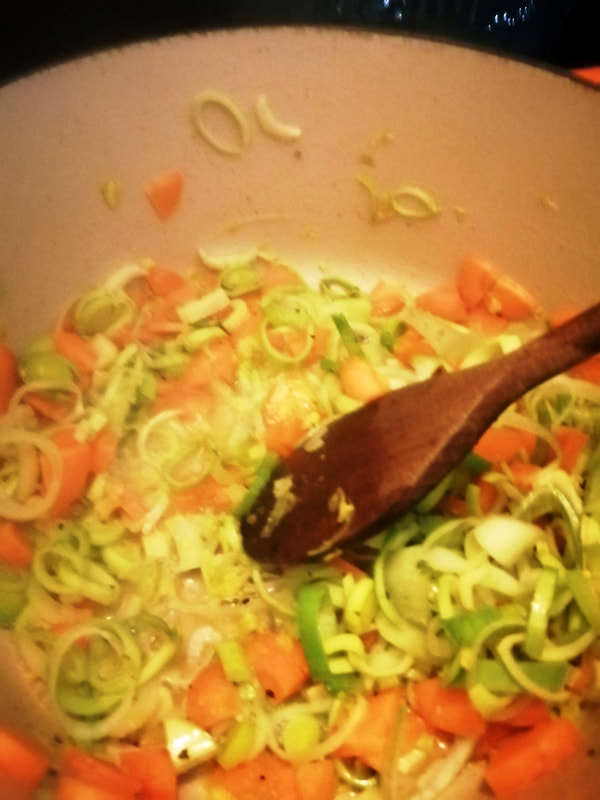
Carefully wash a basketful of nettles (yes, we’re in an organic garden and there’s not much local traffic but there’s probably some agricultural runoff from the local fields and I know the dog’s not the only one to take a leak in random places). Please don’t ask me how big the basket was. Here’s a picture. Sting yourself a bit as you cut the leaves off the stems and then remember the gloves. Look in the ‘fridge and fish out some veg that looks like it would be happier in a stock than where it’s currently languishing. Roughly that sort thing, vague amounts will do, potatoes are a really good addition. I’ve recently discovered that potatoes are a much nicer addition to soup if you peel and boil them separately first. Apparently this helps stop them overpowering the other flavours and improves the texture. I’ve only tried it this once but I’m convinced. Having said that, if you’re short on time you could happily chuck them in with all the other veg, I doubt anyone would really notice. Chop the other veg and sauté it in some tasty fat (I used sunflower oil because it’s cheaper but I’d have liked to use rapeseed or olive) to get all the flavours going. Fat carries flavour, so for sure you can cook things in water if you need to have a very low fat diet for some reason... but I’m sorry to say it almost certainly won’t be as fully flavoured as it’s fatty cousin. 
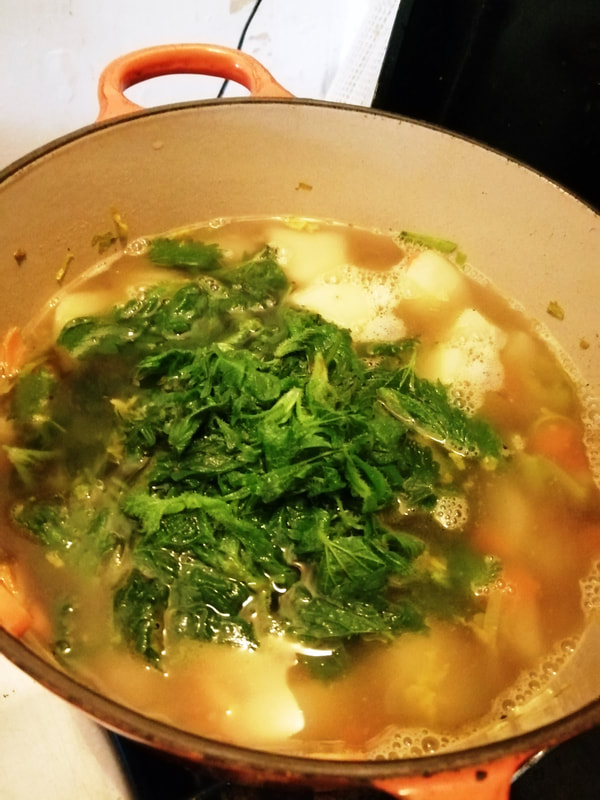
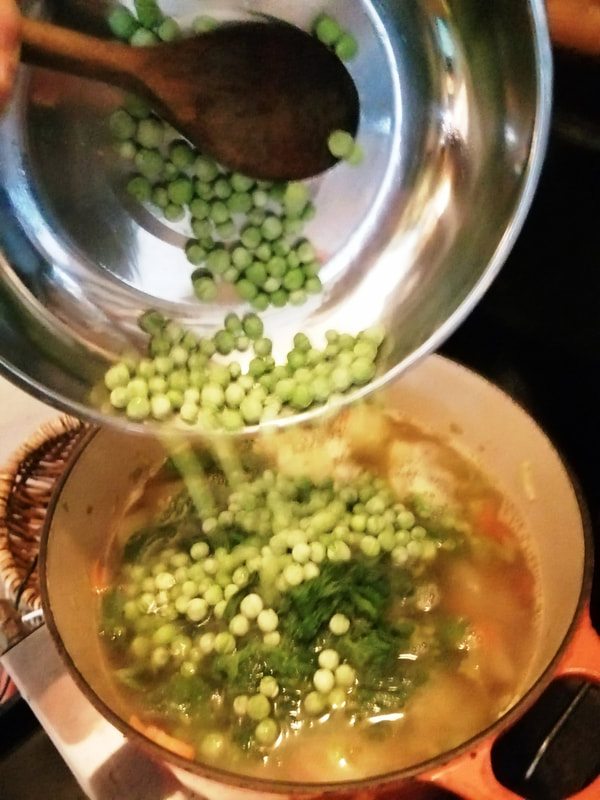
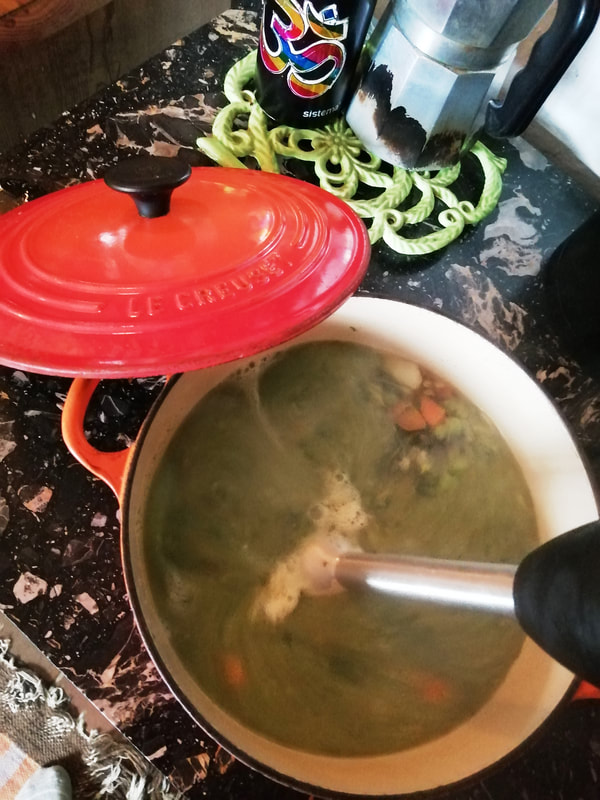
This is a good time also to add black pepper, salt if you want it, herbs, culinary seeds, that sort of thing. All their flavours get in on the party too. Add some vegetable stock and let it do its thing for a bit whilst you blanch the nettles. That’s a posh word for ‘pour boiling water on them’. Depending on what you’re cooking, you might want to do that in a sieve but I kept them in their water this time so as to not lose any of their flavour or goodness down the sink! Hooray! No need to remember the gloves any longer, your nettles are now not stingy! Add them to the mix, complete with their lovely dark greeny-blue water and then have a mild panic about the lack of protein. Resort to the freezer and chuck in a handful (maybe a cupful?) of frozen peas with a sigh of relief. Cook it a little until they are defrosted and move on to the fun bit; time to release the stick blender! Up to you how smooth you like it. I tend to take this one pretty smooth but no reason not to keep it a bit chunky for character. It’ll hang out there for a little while but avoid letting it boil if you can. Flavours (and probably nutrients) tend to do better below 100 degrees in my experience. ​
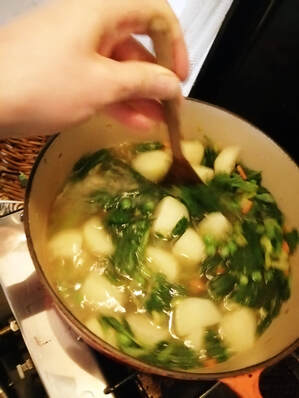
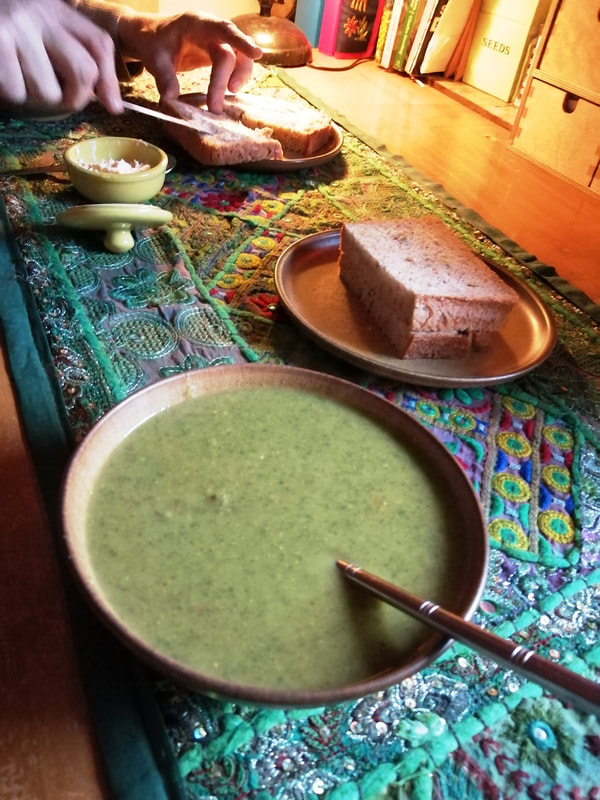
Soup Pot
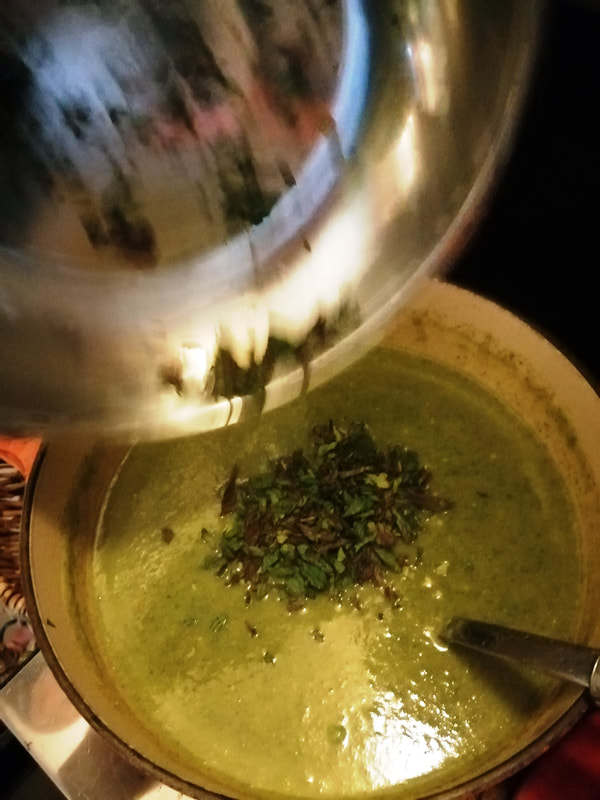
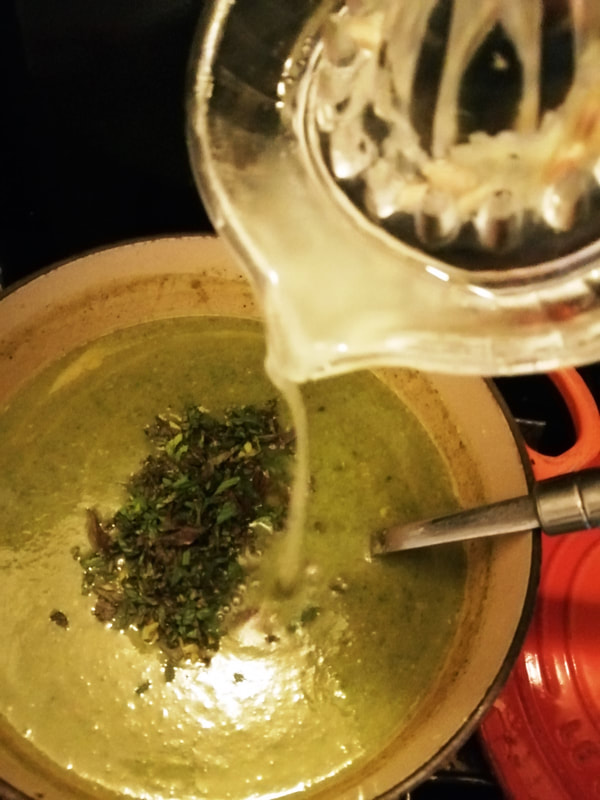
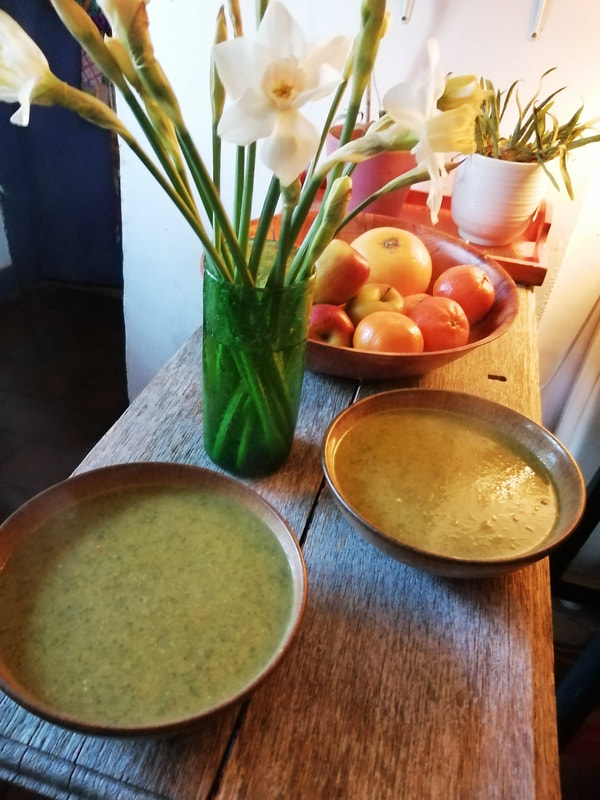
​When you’re ready to serve, stir in some chopped fresh mint (that’s the other thing we can reliably harvest from the garden now and will also get out of hand very quickly if we don’t keep on top of it!) and lemon juice. Sorted. The amount you can see here served two good bowlfuls, twice. I suppose a more straightforward way of saying that is four portions, but where’s the fun in that? I think the real point to make there is that it keeps well. Actually, like many things, time deepens and improves the flavour.

A Visual Journey of Nettle Soup!

​Incidentally, Milarepa, the 11th Century Tibetan Buddhist Yogi is famous for existing on a diet of nettles. It would be my hope that any food you prepare that's inspired by this article would nourish you on your own journey to happiness and enlightenment for the benefit of all beings… but I suspect Milarepa wouldn’t advocate my use of bulking ingredients, fat and flavouring so perhaps I’ve got a little way to go just yet! 
​With love until next time, Annabeth xx
0 Comments
Forward>>

    ​We're Nik and Annabeth. This is Earth Heart...

    Read about the Earth Heart Project here...


    Picture

    ​Reaching Out?
    [email protected]

    Categories

    All
    Buddhism
    Foraging
    Herbs And Healing
    Land
    Meditation
    Organic Gardening
    Placemaking
    Poetry
    Seasonal Eating
    Seasonal Festivals
    Sitar
    Upcycled Crafts
    Vegan Home Cooking

    RSS Feed

Powered by Create your own unique website with customizable templates.