Earth Heart Holistic
  • www.glittermouse.co.uk
  • Earth Heart About
  • Earth Heart Blog

The House That Saccadhamma Built

20/10/2016

0 Comments

 
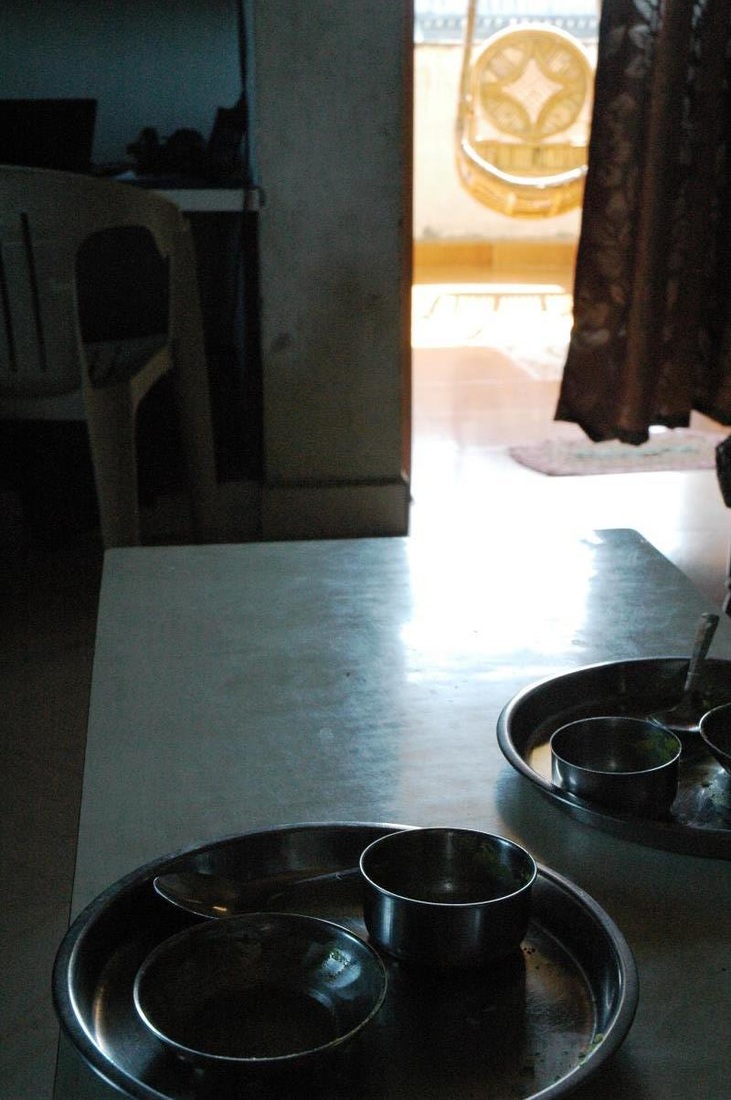
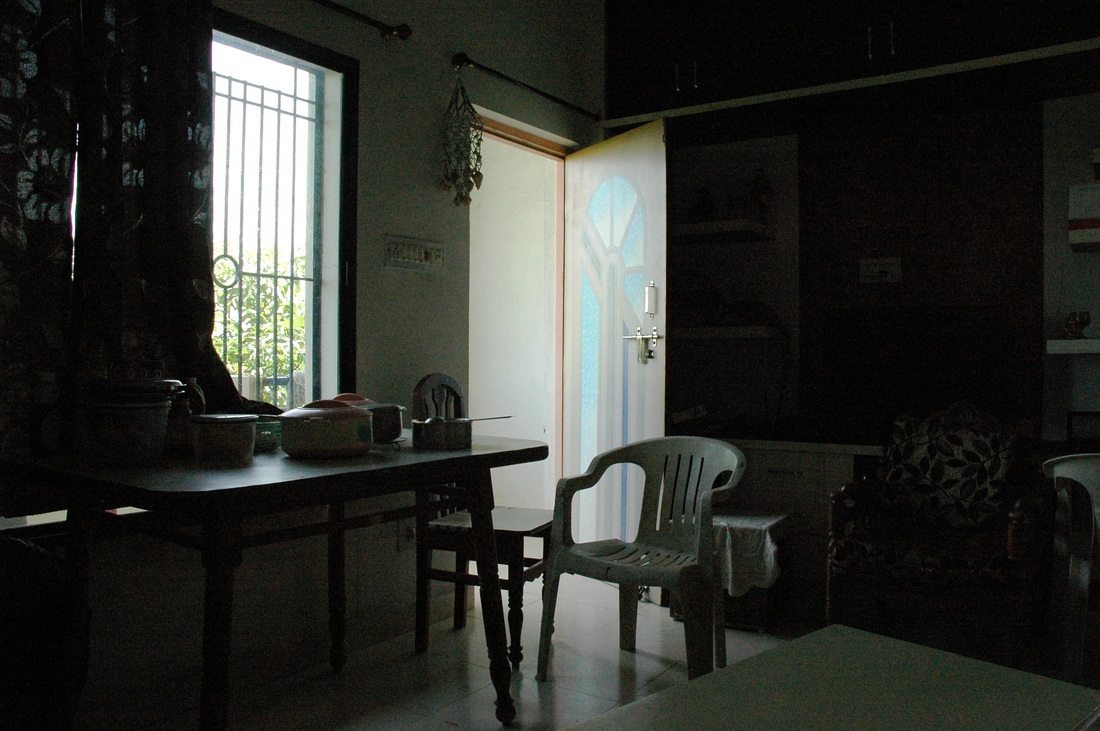
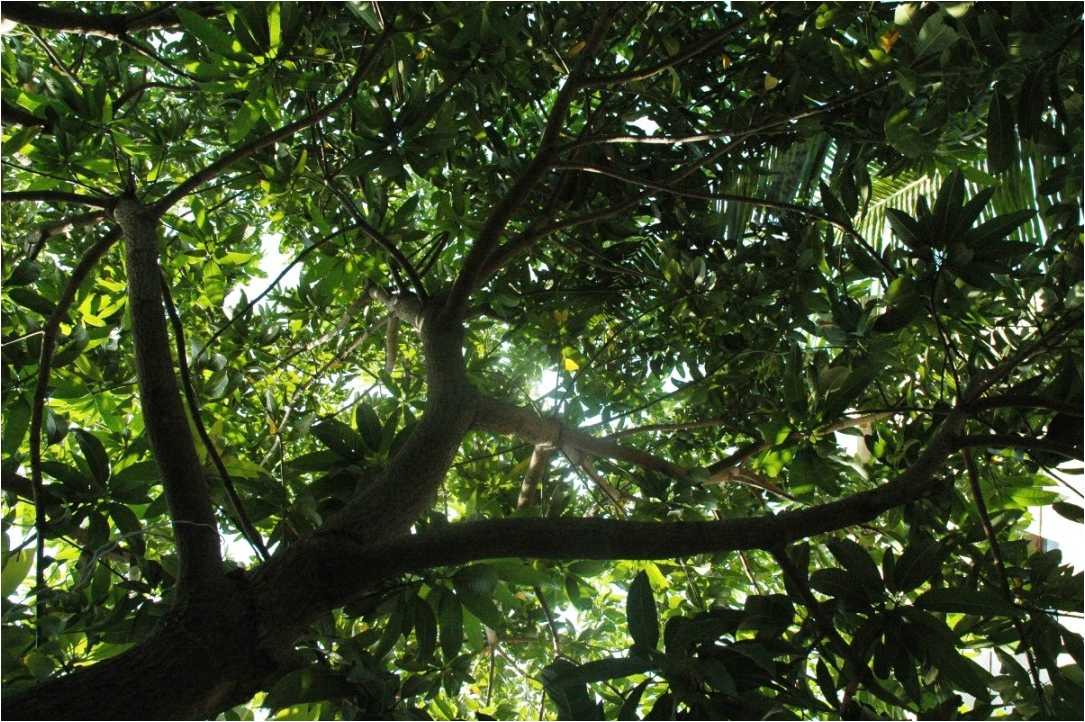
As I reflected in the closing thoughts of my last update, I feel as if I am settling in here very quickly and it is the home and family environment in to which I have been so unconditionally welcomed that has been central to my experience of India so far. I have no doubt that the physical and social comfort of this environment is the foundation that has determined the speed of this for both myself and the other new guests here; the community of young women who live on the top floor of the same family home. This has not always been the experience of many of the family members though, and I have recently learnt the extent to which this safety and abundance has been very carefully and deliberately cultivated from a great deal of misery and want. I have expressed before that my aim for this blog is in part to share the stories I discover here, to celebrate the people and their achievements, and so it seems appropriate to start near that core of the family from which everything else is supported. The trunk from which the branches of the tree may safely grow and be nourished.
Picture
The Branches of The Mango Tree
Picture
Stories Beside The Well
If home is where the heart is, this domestic story is no exception and I shall start with sharing the story of Saccadhamma; Triratna Order Member and father of the director of Aryaloka, Aryaketu.

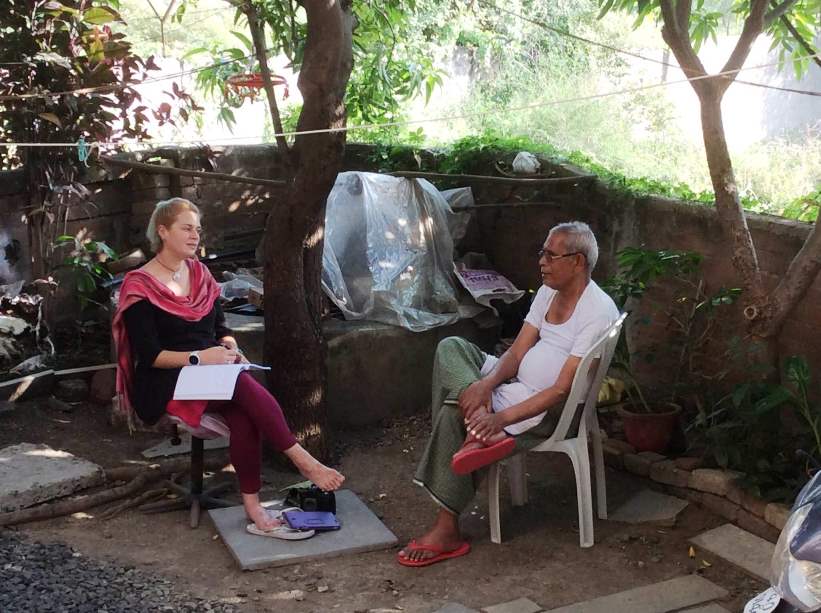
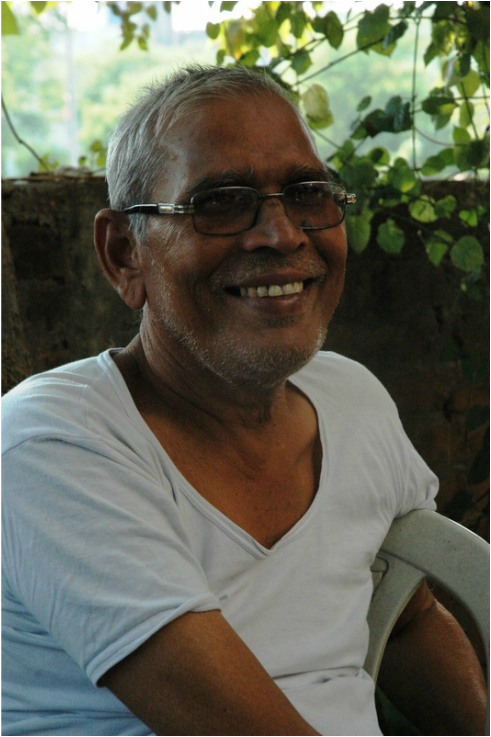
I first realised how important Saccadhamma’s story was when he invited me to sit and talk with him a couple of days ago. As an order member, he was interested in my background and intentions within Triratna, but also in me personally as a new teacher for the young people to whom he opens his home and shares his life. I was both moved and intrigued when he said to me that I should forget thinking of the house as ‘his’, but should view it instead as ‘ours’. This was, he said, because ‘Bhante gave it to us.’ (Bhante is a term used in a respectfully affectionate way to refer to Sangharakshita, the founder of Triratna). At that time, I had to go and teach so I could not enquire further, but I knew there was more to hear and I was fortunate to sit down with him again today in the shade of the mango tree outside the front door, as he kindly indulged my questions to draw out a more remarkable story than even I had expected. I am very honoured to be able to recount that story here as what I hope to be the first of a few individual tales that I imagine will bring life to the background of daily experiences I’ll also be relating.
Saccadhamma was born on the 22nd of July, 1946, into a family of 15 brothers and sisters, though only 4 brothers remain alive today as childhood illness, disease and malnutrition was rife. His father could not earn; as a member of the community who fell outside the Orthodox Hindu caste system, he was very limited in the roles he was permitted to perform (‘Dalits’ were only allowed to carry out jobs considered impure or polluting to the individual) and so he acted as a spiritual man whose time was spent mainly in prayer and was frequently away on pilgrimages. Saccadhamma’s mother carried out labouring work to generate some income but this was minimal and she often went hungry to provide for the homeless family who really survived only on support and charity from others. They relied on these donations for their accommodation, clothes and food. Saccadhamma was clever though, often coming top of every class, and thanks to this he attracted the additional support of his teacher, who helped him with clothes, books and sometimes food. Despite his academic success; however, he related how he often felt sad as a child, seeing that his family could not enjoy life because they were in such poverty.

Such were the hardships of his first decade until his father converted to Buddhism at the Deekshabhoomi, following the leadership of Dr Ambedkar at the original mass conversion of October 14th 1956. Saccadhamma remembers being there too but, he says that as a ten year old boy, though he could enjoy the atmosphere he did not understand the significance of the event. Though the conversion marked a momentous shift in the Indian society and for the individual, it was not a religious awakening and his relationship with Buddhism did not really begin here. His father’s decision was a practical one; to convert to Buddhism and renounce the Hindu religion was a way of achieving liberation from oppression, not pursuing a spiritual life. This is perhaps best exemplified in the 19th of Ambedkar’s 22 vows; ‘I renounce Hinduism, which is harmful for humanity, and which impedes the advancement and development of humanity, because it is based on inequality, and adopt Buddhism as my religion.’ For these reasons, the act of conversion was a formative one for the family, but still life was tough and even as a boy he always understood the need to work hard and support the poor. As an intellectually gifted young man, he was able to attend college but needed to carry out labouring work at the same time. A usual day would involve hard labouring work from seven in the morning until eleven, then starting college from one until four, with his hands still chapped and sore from the morning work. He was unhappy at this time, but knew he must help feed his family as well as work to pursue his education, which would eventually be the key to further liberation from poverty and oppression.
This steadfast determination eventually paid off when he secured employment in a government telecommunications department in Bombay (now Mumbai) where he lived in a small house with his wife Jija, (married in 1971, they entered a love marriage that was not approved of parentally), three sons (Aryaketu was the eldest, born in 1972) and two daughters, as well as his mother and father. In 1977, the family relocated for work purposes to Nagpur, where they lived in a ten foot square residence, with a thin tin roof that leaked in monsoon season. He had just one shirt and one pair of trousers that Jija would wash when he got home from the office, drying them overnight for him to wear again the next day. Aryaketu and his siblings walked 6 kilometres to school and back every day. In 1988, his father died and his mother moved to live with a younger brother in the village.

In 1989, Aryaketu told his father about a talk being given by Dhammachari (Order Member) Padmavajra who had come from England to give lectures and seminars about Dr Ambedkar. This simultaneously piqued his interest and caused some outrage as he asked ‘I’m an Indian, a follower of Ambedkar, so how can an English man tell me anything about him!?’ Nevertheless, he went to a talk and was won over by a lecture Padmavajra delivered on habits. He told the story of a woman whose trade was selling fish at the market. Every day, she undertook a long journey from her home by the sea to the marketplace to sell her catch. One night, she was held up securing her last sales and so darkness fell before she had returned home. As she lived far away and there was no moon to see by, she decided to stay the night with a relative living nearby who was also a trader at the market; a florist, a purveyor of fresh flowers. As she settled down that night, she was troubled by the unfamiliar smell of the sweet blooms and could not drift off to sleep. At last she realised the strange odour was keeping her awake, so she fetched an empty fish box from her cart and again lay down to rest. With the familiar scent of fish, she was able to fall into a peaceful sleep. This story is designed to encourage reflection on our habitual patterns of behaviour and how we can become unaware of even those which may be quite damaging as we mechanically normalise them into our daily routines. Saccadhamma relates that he was moved to tears by the talk. “I also had bad smells” he explains, “I realised I must break my bad habits” and from this day onwards he attended every talk that Padmavajra gave. Saccadhamma is quite clear and precise about his gratitude to Aryaketu for this introduction to the Dhamma. “For this reason, I say that Aryaketu is my Kalyanamitra” (Kalyanamitra is Sanskrit for ‘Spiritual Friend’, a term for a teacher or guide) he states slowly and deliberately.
Saccadhamma did indeed break his bad habits and began to question his lifestyle. He gave up drinking, smoking and eating meat, realising that these products were bad for his whole family if he was unnecessarily spending money on them. “How could I care for my family?” he asks, “if my money was spent on watching movies and fighting?” He began saving the money that he had once spent on pleasures and luxuries and after two to three years of this he was able to buy the plot of land upon which the house now stands “because of my spiritual practice”. 1994 was an important year; not only did the purchase of the land take place, he was also formally ordained into the Triratna Buddhist Order. Still, practical progress was slow and he was only able to pay for the materials in instalments so building did not start until 2002. The first work to take place was the well sinking, followed by construction of an outhouse. He references Jija suddenly, mindful of her contribution and support. She worked as a labourer to bring in extra funds just like his mother, but he says she never complained about his lifestyle choices or expensive habits and helped when work towards building began. From 2002 until 2005, the family lived in Indora, a central district of Nagpur and saved every month to pay for the construction. In 2005, the foundations were finally laid and they moved into the (still incomplete) residence in 2006; but to his mind there is still work to do.
Picture
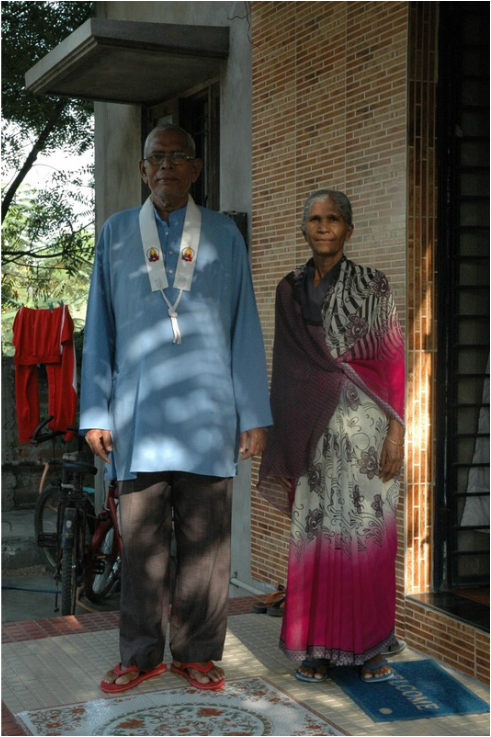
Saccadhamma and Jija at the Front Door
There were no tiles in the ground floor rooms until two years ago. The outhouse needs repair. The garden walls are also crumbling. The house has never had any external painting and is still imposing in its original grey concrete. “But I cannot do this work.” He states. I ask why; “How much it would cost to paint the house?” The answer is in excess of 150,000 rupees; money, he explains, that is better spent on supporting his family; and the students of Aryaloka. Between 700 and 800 students so far have been able to benefit from the education offered at Aryaloka, subsequently securing employment that in turn enables them to support their poor families, just as the young Saccadhamma felt himself compelled to do. This is work he is clearly fully committed to despite his own needs. He still struggles to support his family; his health is suffering from early malnutrition and years of hard labouring in poor conditions but his only aim is to take on more students, which he sees as a far more important use of the precious resource of pension money than a lick of paint on the walls. He hopes to repair the outhouse first he explains because this could accommodate up to six more students, lives improved and empowered to in turn go on and ease the suffering of many more.
Picture
Saccadhamma
His story is one of complete self-sacrifice; he has not only given himself and his energy unconditionally to the spiritual community of the Triratna Sangha but has also poured his working years and monetary income into crafting a vastly improved quality of life for his wife and children, extended family of daughters in law and grandchildren and the hundreds of students who come to receive free food, accommodation and education every year. I find myself unable to fully articulate the awe his story inspires in me as he sets an example I feel I can only aspire to follow but what I have learned is that while a house may be built from bricks and held together by mortar, this home is built from love and cemented with blood, sweat and tears. I fully understand now why he says this house has been ‘given’ to him by Bhante; it is as a direct result of the lifestyle changes he made after finding and following the Buddhist spiritual path as taught by Sangharakshita that he has been able to realise such an ambitious project. And so I am doubly honoured to be not only invited to share this precious place as my own home, but also to have been trusted with such a story. I only hope I have done it some justice in this account and would like to extend my heartfelt thanks and admiration to Dhammachari Saccadhamma for his time, his story and his warmest hospitality.
Picture
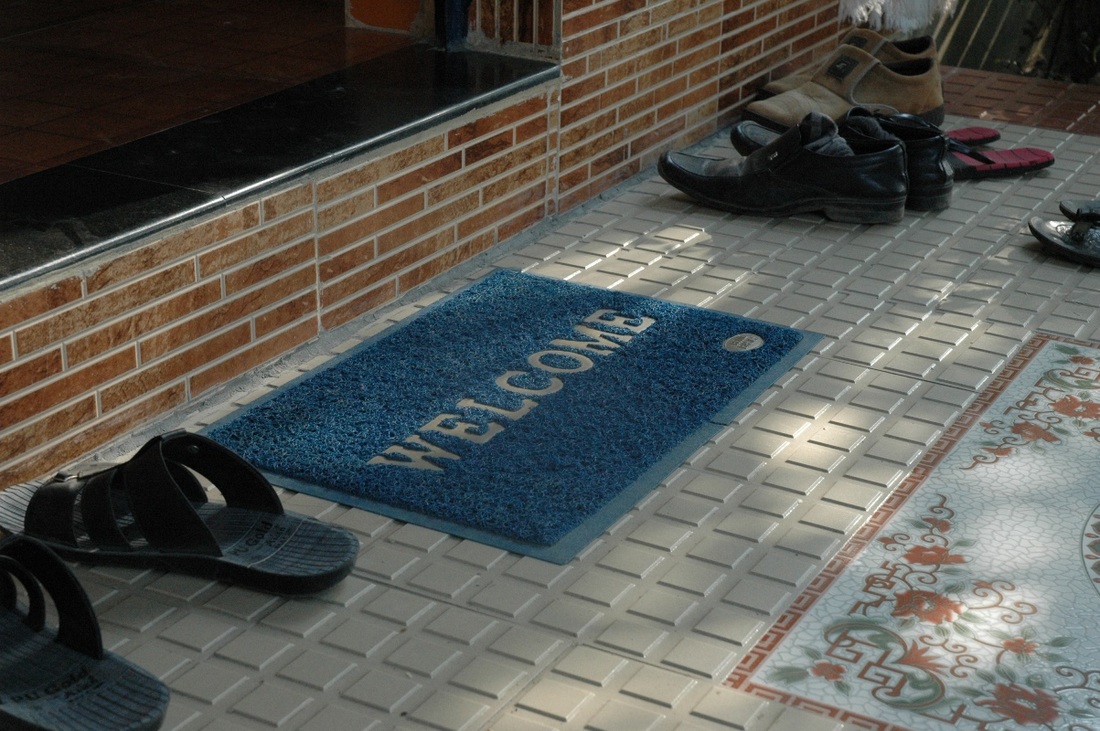
A Welcoming Home
0 Comments

City Life and a Girls' Night In

18/10/2016

0 Comments

 
Teaching is gradually getting into something of a groove now. We had a short session with the girls this morning to recap some of our previous work on introductions and question forms, followed by a little bit on What? Where? How Many? and How Old? Dhamma study continues too and it’s good to be able to reinforce and practice English language use wherever possible, so the girls have also started reciting the Positive Precepts in English as well as Hindi as part of the morning chant before meditation.
In the afternoon, we were back out to the city centre to teach the boys. We actually caught the bus this time, which wasn’t quite the harrowing experience I’d come to expect, though I think I got an easy time of it as we avoided rush hour. Actually recognising and then flagging down the correct bus is a mysterious art I have no confidence I shall be able to practice; however, and getting the thing to stop so you can alight (into the middle of the road!) will be equally as challenging when I am finally required to travel alone. Still, I’ll deal with that when I come to it! We had two new young men in the class today, both of whom were delightfully strong in their English already and seemed to have fitted in very naturally to the group dynamic with no hiccups. I’d certainly not have been able to pick the late starters if I’d not met the group already.
After class, we had a little time to spare before an arrangement for dinner. We’d agreed to meet Neha, a very successful ex Aryaloka student whom I first met in London earlier this year, and our friend, colleague and hostess, Sheetal. Our walk to the restaurant took us past many smaller traders as well as a larger ‘emporium’ and we managed to buy a couple of little household items we’d been meaning to pick up.
Picture
All aboard the (very quiet) city bus!
Picture
The full group of lads!
Getting over the roads was a new experience. There is no system for pedestrians to cross (there isn’t even what I’d recognise as a pavement on many streets) so one has to either wait, meekly, forever, for a gap in the incessant stream of smoke pumping traffic, or, simply grit one’s teeth and bravely wade out into it. I’m not sure what’s least safe, risking a collision or spending any more time than absolutely necessary breathing in the dense fog. Another balance I have yet to learn! Just outside the restaurant I spotted some strange little fruits on a barrow that were completely new to me and seeing my interest, the stallholder proffered me one to try. When broken open, it looked like a rotten relative of a lychee but tasted more like a sour persimmon. Despite my rather lukewarm feelings towards it, I felt obliged to make a purchase of a few, and fancied some of the conveniently sized apples he was selling; the transaction rather fell through though when he gave me only a ten Rupee note as change for my one hundred. Realising I was less than impressed, he tried to concede by charging me eighty, but by then I was rather put off the whole sale, which I felt (and have since had confirmed) should have been more around the fifty mark, so I managed to retrieve my cash and left sans fruit. I suppose I shall have to learn the art of haggling more successfully soon, else I shall end up either hungry or dependent on others to feed my fruit habit!
Picture
Neha, Sheetal and Shakyajata have dinner at Jaiswal
No chance of going hungry at Jaiswal, However; our chosen restaurant was a surprising opportunity to discover the authenticity of Lily’s in Ashton-Under-Lyne; a small, cheap, but very tasty option for lunch with colleagues when I worked in Tameside. Neha had also brought some treats for us, little coconut balls that her mum had made, and we were also served a dish of fennel seeds and tiny, brightly coloured candy pellets with our bill. Neha’s father, an auto rickshaw driver (who had also taken us to and from the Deekshabhoomi last week) picked us up and ferried us home with a minimum of fuss.

After a busy day, Shakyajata headed for her room to rest, asking to discuss lesson plans in the morning instead so I was expecting that would be pretty much it for the day.
Sheetal however, never early to bed, produced a conical wrap of henna and lead me upstairs to the students’ living space where she commissioned Gayatri to produce an intricate mehndi design on my arm! Of course, this was a novelty of entertainment for the whole group and it wasn’t long before we had an audience of the others. Hemlata especially watched the whole pattern emerge and we engaged in conversation as best we could, slipping at one stage in to a beautiful Hindi song, to which I was encouraged to respond by singing something English. I did my best; there aren’t many songs I know all the way through, but a rendition of Spaceman by 4 Non Blondes seemed to fit the mood and went down rather well. Just as there was clearly not a spare centimetre of skin to decorate on my lower arm, I glanced at my watch and decided that was probably just as well as it was half past nine and I’d still have to leave it on for at least two hours before bed. The girls had other plans of course, and I didn’t manage to make an exit until both my feet were also decorated by another keen mehndi artist, Pushpa. I managed to draw the line at starting on my other arm shortly after ten, without appearing to cause and offence, thankfully and managed to retreat downstairs to have a chat with Aryaketu before heading to bed at the end of yet another eventful day. Tomorrow we’ll have been here a whole week already and I can’t yet decide if that week feels like no time at all, or all the time in the world. India certainly hasn’t disappointed my appetite for new experiences and in many ways I’m very aware of my foreign status but I’ve been so warmly welcomed into the family, work and social environments it’s easy to feel very much at home. New experiences shall continue to unfold, I’m sure there will be challenging moments as often as fun ones but having the sense of a stable home at the centre of it all is a comfort that I’m really coming to appreciate for the first time in my life, as I imagine are many of our students. Seven days down, twenty weeks to go and I can’t help but wonder what on earth tomorrow will bring!

Picture
Gayatri begins a painstaking process...
Picture
Now stay like that... for two hours...
Picture
Our lovely ladies!
0 Comments

Mad Dogs and English Women

17/10/2016

3 Comments


The Daily Chapatti Batch!
After teaching and later consuming yet another delicious lunch involving far too many chapattis, batch cooked at least once a day by Sheetal, who had even thought ahead to leave some for us as she would be out all day, a lull descended upon the house. Those of school age were out and learning. The girls were deep in their own academic activity with Vaishali, Aryaketu’s sister in law and Aryaloka’s computing teacher, up in the classroom. The rest of the family were either attending a staff training day at Indora or being of retirement age were resting from the midday heat, as was sensible Shakyajata. And I was feeling better. Whether it was a cold or an initial reaction to the dusty air, I’ll probably never know but with a less runny nose and an end to the sore throat, I was also finally feeling that any lingering jetlag had pretty much receded. I then realised that I had yet to venture forth alone.  Usually, I like to get out and about independently as soon as possible when I am in a foreign place. On this occasion though, I have been aware that any accidental social faux pas or unintended breach of cultural code may not only reflect badly on me but could potentially cause difficulties for my hosts. I will be around for longer than the couple of weeks I’d normally be in any area for, and I’m probably pretty recognisable so I’ve felt more need for tact, diplomacy and taking time to allow myself a gentle introduction to the geographical and social spaces in which I shall be living. Even so, this afternoon seemed like a pretty good opportunity to start spreading my wings a bit so I left a note explaining my absence and wandered out into the village.
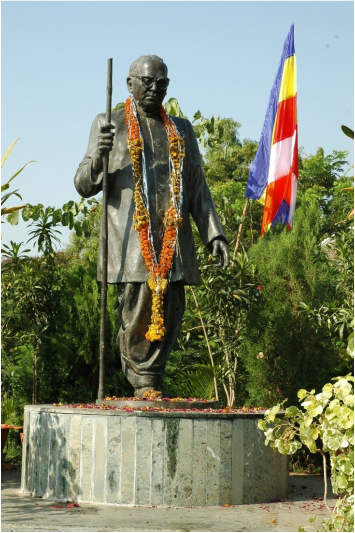
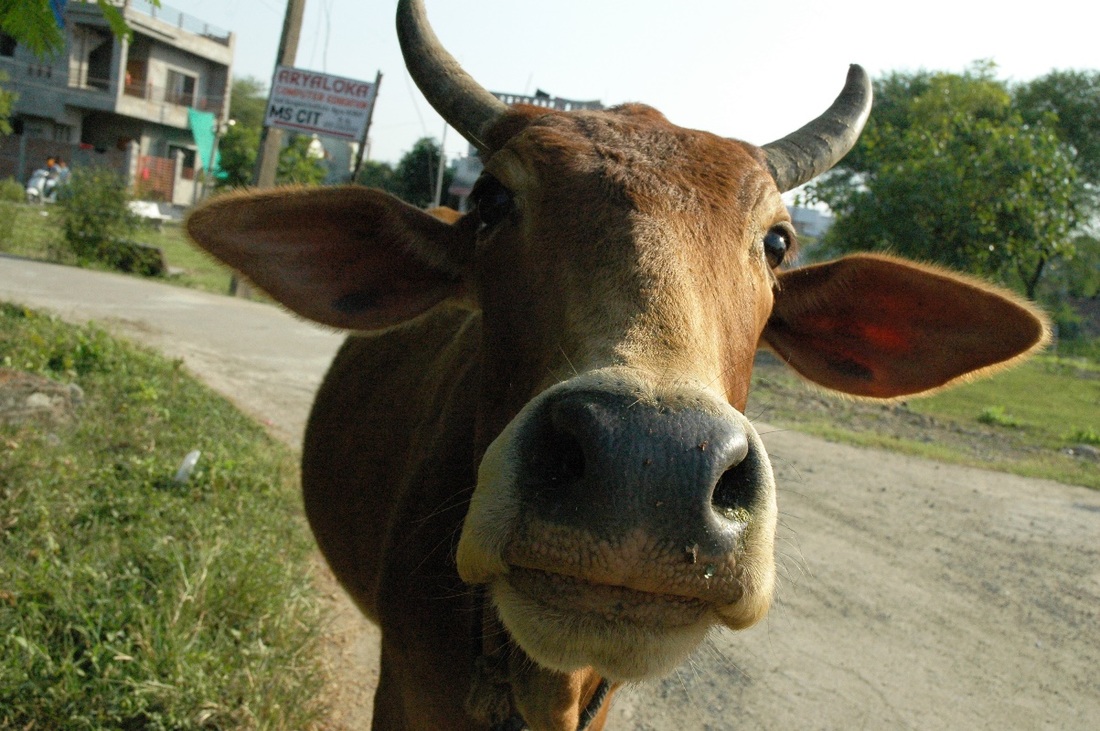
I probably picked a really good time of day because although the temperature had barely begun to dip from the noon battering, there wasn’t much traffic to avoid nor probing stares to neutralise with optimistic congenial smiling. I strolled past a few people lounging in front of shops, the occasional conversation drifted out of shady houses. Even the mangy-looking feral dogs were crashed out in the dusty heat, while cows snuffled at the side of the road beside them, small black pigs occasionally joining in. Brightly coloured saris hung over baked brick walls to dry, chickens strutted nowhere in particular, yet very purposefully and upon spotting a fruit barrow being wheeled clunkily past a lady washing rice on her doorstep, I began to wonder if I might have been accidentally sucked into one of the National Geographic photographs I used to enjoy looking at as a child. Much like one of the strangely leggy chickens, I realised that although I was heading down the road with an apparent focus, I hadn’t thought much about where I was going beyond ‘out of the house’. Noticing that I was on the same route we’d taken previously towards Nagaloka, this then became my destination and I realised I would be finally able to get a good look at the Walking Buddha in daylight. I explored the site quite a bit more and discovered a garlanded statue of Ambedkar too, before bumping into a neighbour whom I had met a couple of months back at the London Buddhist Centre (it’s a small world; at least in Triratna!). After swapping contact details, I continued my amble and found that since I had the time and space for them, all manner of reflections were coming to mind.
I became particularly aware of how much I had enjoyed teaching earlier in the day and I found myself thinking how often it is that you don’t notice problems until they are removed; a bit like when you suddenly become aware that an annoying noise or nagging pain has stopped, without having been consciously that aware of it before. Such are some features of my current teaching experience in comparison to that UK system in which I had become so uncomfortably institutionalised. There is firstly, a much more flexible approach to time. “Better to be a little late than too early!” I was told by Shakyajata when I was about to leap from the couch five minutes before we were teaching. Indians themselves often refer to Indian Stretchable Time (as opposed to the more scientifically formal Indian Standard Time!) and while Westerners may find this frustrating, a less rigid approach to timing (this novelty watch design explains pretty well) does allow a much more perceptive degree of response to the people and situations around you. Is it a little too hot today? No worries, we’ll start class a bit later, when everyone will be more comfortable.
Picture
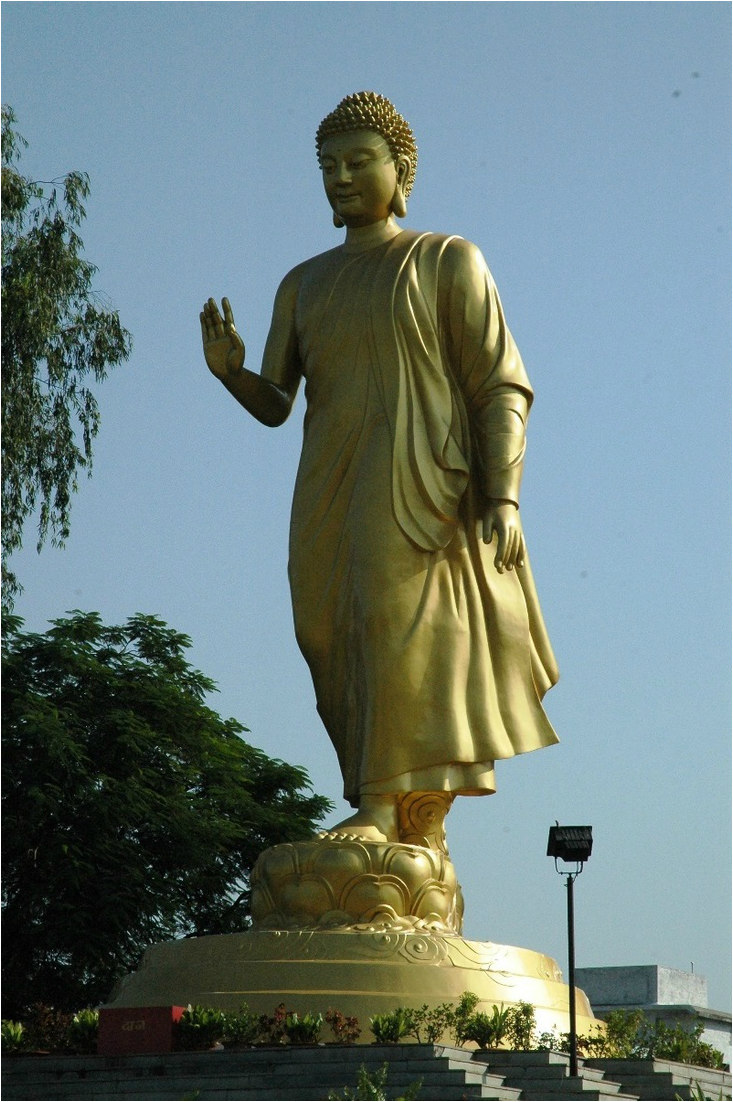
The Walking Buddha at Nagaloka
Picture
Statue of Dr Ambedkar at Nagaloka
Does the person you are with right now need some more time or attention from you? OK, go ahead and give it, everyone else will understand if you are not there quite yet. From an academic culture where not being at least 10 minutes early for your class is tantamount to publicly declaring your inefficiency as a teacher, this is indeed a relief. That’s not to excuse tardiness or suggest a lack of care, simply to recognise that things should get done when it’s best for them to get done, not because the clock hands have reached a certain position. The clock is a guide, not a dictator, a tool used to help people synch their lives, not to bind them and everything seems to flow in a far more natural, almost delicate fashion as a result, if only one can let go of Western cultural biases. Equally, having carried out an hour of successful class, rediscovering the feeling that I really could teach people things and feeling energised as a result, I suggested to Shakyajata that we could carry on. ‘Shall we swap pairs again and have another practice?’ I asked enthusiastically. She considered this politely before responding ‘Hmmmm, no. They will get tired and confused. We have done enough.’ And so class ended; with smiles, not sighs. Feeling we’d achieved the one step forward without having pushed on until the point of two steps back. Finishing a class without feeling like I’d drained every last drop of energy and enthusiasm from myself and my students was an almost entirely new experience and for not the first time I equated teaching with theatre when I reminded myself of the phrase “Leave them wanting more!” So I have learned the value of ‘when’ and ‘enough’.
In recent days I have been comparing my native society with those few observations I have so far made in my adopted one and feel that the biggest difference is in the area of need. Indian poverty is financial but the UK is clearly not fully satisfied, despite its comparative riches. I believe the UK to be experiencing an epidemic of emotional poverty, with mental ill health on the increase, suicide rates sadly spiralling. Political fracturing is simply a symptom of wider social alienation; our family units have crumbled, an unrealistic emphasis is placed on romantic and sexual liaisons, which we use to demand impossible things of one another and we find ourselves increasingly isolated. Indian families and friendships seem to be at the core of daily life, and while I recognise that this is not without its pitfalls (it can easily become oppressive, especially for women) it does seem to provide a structure and support that is palpably absent from many UK lives. Spirituality is also far more present in the Indian society, be that Hindu, Sikh, Jain, Buddhist, Christian, Muslim, whatever. It is safe to assume that an individual is in some way engaged in religious practice, which is more important than which teaching exactly one uses to go about it, as opposed to a British approach where secularism is pretty much assumed as standard, a religious conviction perhaps an interestingly unexpected piece of personal data.
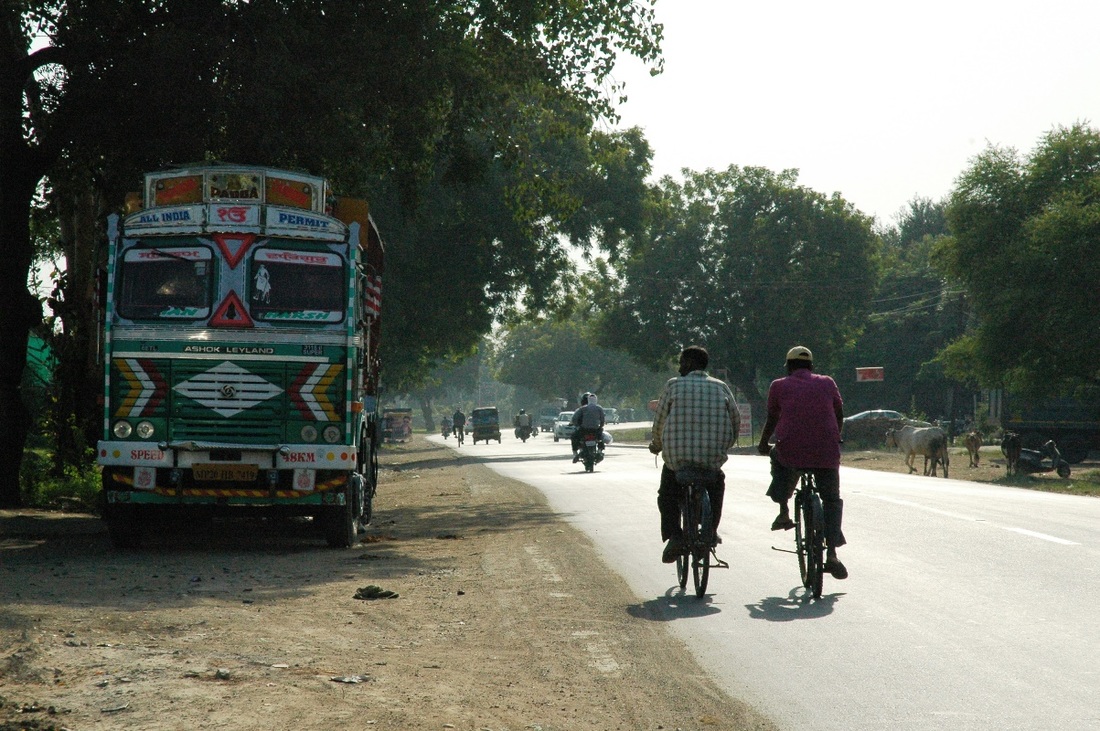
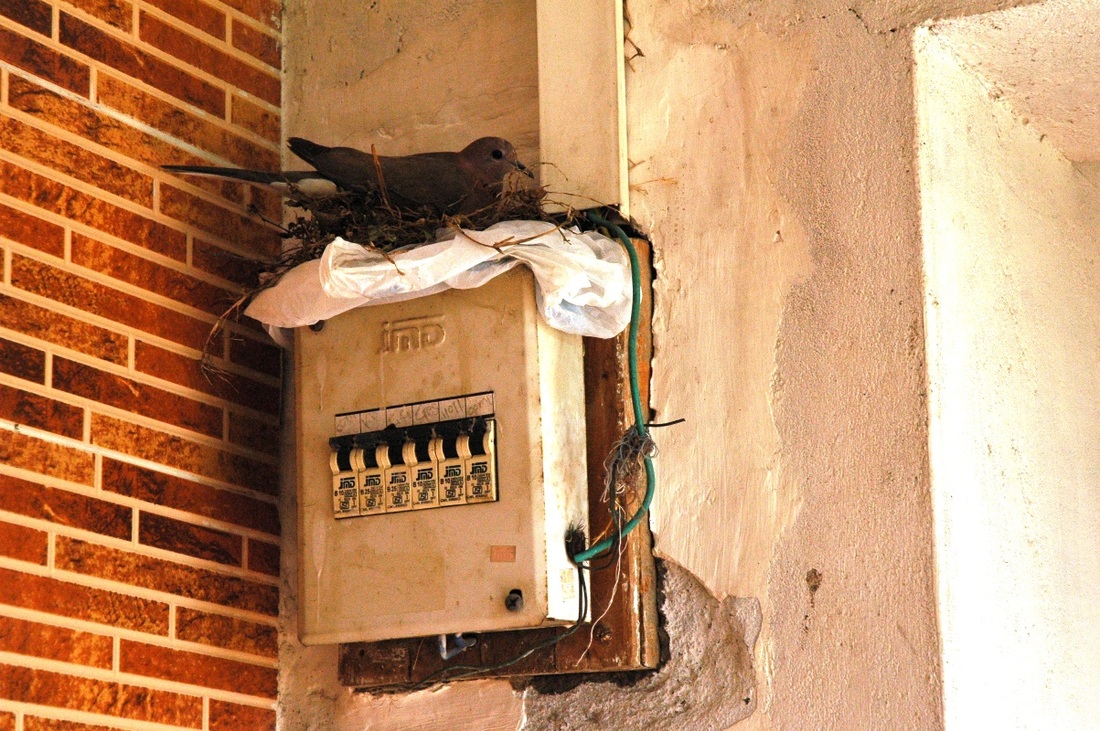
Such were my musings as I continued exploring beyond the boundaries of the Nagaloka complex and back out on to the good old Kamptee Road, finding an alternative route back to the house which ended my constitutional in a neat loop. Though I noticed a steady increase in the amount of traffic coming into the village as schools ended their day, all was just as calm as I had left it at home and I was back just in time for a cup of tea and a chat with Shakyajata, who was feeling rejuvenated after resting. We discussed amongst other things, the content of the evening puja and Dhamma class, sipped spiced black tea and watched a nesting dove patiently incubating her clutch in the nest above the fuse box.
Later that day, as I enjoyed the sunset and star rise from the gentle motion of the swing chair while it cradled me in an evening breeze, I realised that I may finally be learning how to do nothing. In the West, we almost obsessively fill every minute with some kind of activity, even if that activity is passively consuming during our leisure time. We are so loathe to simply be with our thoughts and sit in our experience without some form of distraction, yet it occurred to me today, almost like a revelation, that when there is not anything you have to do then you do not actually have to do anything. The universe truly is a construction of our mind and the way we describe our experiences to ourselves is critical. ‘Sitting on the balcony of a Buddhist colony in India, listening to children playing in Hindi’ seems like quite an idyllic way to spend an evening; however, in my mind, the parallel experience back home might read something like ‘sitting on the balcony of an housing estate in London, listening to kids screaming like cockneys’, which wouldn’t be half so pleasant. Really however, the differences are minimal so I shall make a point of reminding myself that I alone am responsible for my interpretation of the world around me as I process my awareness and translate my experience into feelings.
Picture
A lone pedestrian on the Kamptee Road...
Picture
Meeting a neighbour on the way home...
Picture
Home, sweet home!
Even when the novelty of my new environment wears off, as it is certain to do, I still have the capacity to notice reality from a perspective that enables me to recognise the inherent joy that is existence. Especially when I’m watching the sunset whilst swinging in the evening breeze on the balcony of a Buddhist colony in India!
3 Comments

The Boys at Indora

16/10/2016

0 Comments

 
Our main scheduled activity for today was the visit to Indora; a district of Nagpur where there is another Aryaloka Computer Education centre, also home to the boys’ residential course. I had mixed feelings about the journey; normally I would be relishing the opportunity to engage with the real ‘nitty gritty’ of daily life, jumping on a bus with the locals to get about and explore, even if that would be hot, sweaty, dusty and uncomfortable. However, due to my residual sniffly thing (which does seem to be subsiding now but of which I am still aware) I was feeling a little low energy and I had also picked up on some of Shakyajata’s travel anxiety so I wasn’t feeling as up for it as I’d have expected. I was then, quite relieved when having just missed the bus, she negotiated our transit by rickshaw and we were at our destination very fast and really quite comfortably.

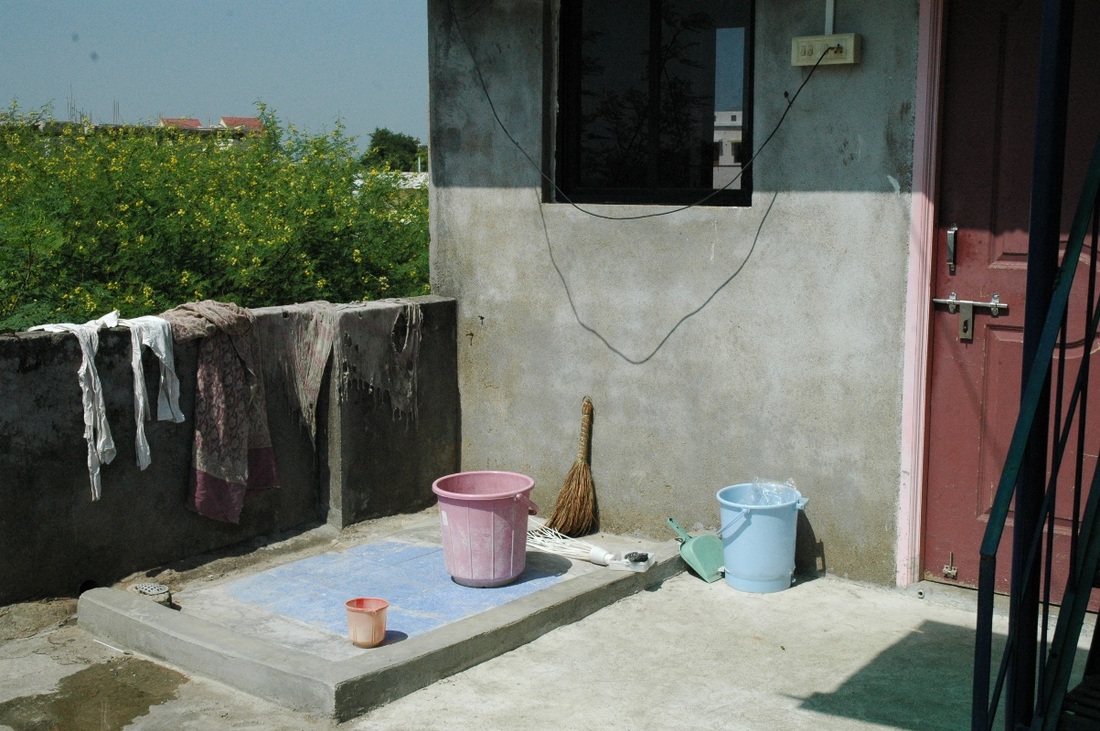
The building at Indora was purchased by Aryaloka as an incomplete structure; a project that had been abandoned by two brothers who had encountered irreconcilable differences half way through! They may as well have started from scratch though; there was no electricity, plumbing, glazing or any kind of finishing in the space. They purchased the property in February 2015 and began using the spaces for teaching in July of the same year. At that time the boys were accommodated in local rented rooms. While I had not seen the building works, aside from a few photos that were difficult to contextualise in abstract form, I could tell from Shakyjata’s reaction just how much had changed and how improved the rooms were. With a fully functioning computer lab and teaching space downstairs, the upstairs rooms are very close to completion and the boys are now living reasonably comfortably on site, though their bathing and toilet facilities do still require improvement.
After being shown around by some very enthusiastic young people, one of whom was almost as dangerous as I am with a camera, and given shockingly sweet, gingery black tea, we settled into meeting and delivering an introductory class to the boys. Following the same structure as our previous session with the girls, it went just as smoothly and while we had to focus perhaps a little more on some areas of pronunciation, I feel every bit as optimistic that we have a really strong group of learners there. I will not be so close to the young men, nor would it be appropriate in a culture that still recognises more formal distinction between genders; however, I am confident that the relationships I do build with them shall be strong and productive. I have never taught in a single sex environment before and was unsure how I would feel in situ as I have always held to the belief that learning to interact with a group is every bit as important as the academic content of a course but I must say that I’m feeling fairly convinced so far! It certainly seems to be an easy way to cut out a lot of distraction and the inevitable dramas that often coagulate in the heady hormonal soup of the mixed teenage classroom.
With our work done, it was time to head home but we managed to get our rickshaw driver to stop off at a couple of shops for some errands and provisions; thankfully, I have discovered that my bankcard does work in at least one atm so I now have some cash (it will be interesting to see if I have correctly calculated the charges and exchange rate when that comes out of my account!), I now have a yoga mat (it seemed like unnecessary weight to bring from the UK), and we got a good selection of fresh banana, pomegranates and papayas for breakfast!
Picture
The Plaque at the Door
Picture
Our Eager Guide!
Picture
The Enthusiastic Young Men
Picture
Tomorrow's Lesson!
We got in a good chunk of lesson planning before supper too; so we are all set up for our next class with the girls on Tuesday; question forms to complement the introductory phrases we covered on Saturday. We’ve also started introducing English to the puja and meditation sessions in the mornings and evenings so gradually we’re settling in to the swing of things and I’m almost developing a routine already. A flexible one though; we are in India after all..!

0 Comments

Maggamouse iii - The Path

15/10/2016

1 Comment

 
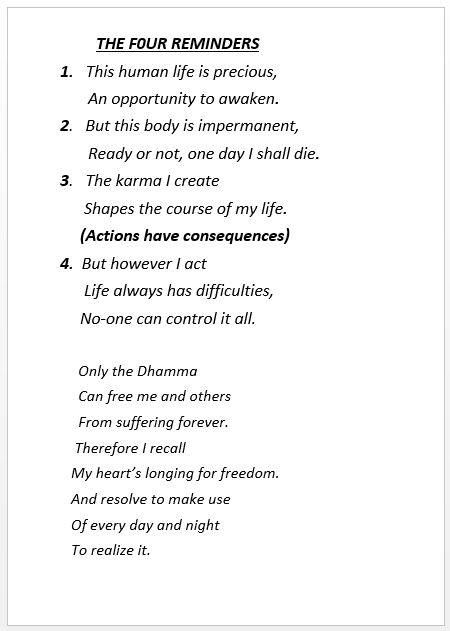
We had nothing planned until the evening ‘checking in’ with the girls today and I have been feeling somewhat snotty (I’m assuming this to be an initial reaction to alien atmospherics), so I decided to take it gently and do some Dhamma (Indian version of Dharma) study after our morning meditation. After Shakyajata had refreshed my memory of the Four Reminders (OK, so that was a minor bit of lesson preparation, but still counted), I listened to a talk I had downloaded by Subhuti on the Five Niyamas. It’s pretty fundamental Buddhism but is perhaps a little weighty to make any detail appropriate on this platform so I’ll leave you to research that further if it inspires you. However, it’s all linked to the concepts of conditioned co-production, which is perhaps best explained with a phrase that may be familiar;
 This being, that becomes;
From the arising of this, that arises.
This not being, that does not become;
From the cessation of this, that ceases.


This could all get very deep, very fast, but whilst I have no desire to inflict that on you, it did seem to set the tone for my day and I began considering the conditions that have led me to be here. This is on a practical level, the unfolding of events that have resulted in my arrival in India, as well as from a potentially more mysterious angle as I reflected on Subhuti’s references to structured patterns in reality. These, he explains, mean that your intentions modify the world around you and may affect what comes back to you, possibly even across lifetimes. Now, it is important here to reference the fourth reminder; ‘However I act, life always has difficulties, no-one can control it all.’ This is not saying that ‘bad things happen to good people’ (sure, they do, but they happen to good people too), nor that if you experience suffering in your life it is somehow, distantly your fault.
Picture
The Four Reminders (as typed by Hema)
The young people at Aryaloka have been brought up in communities who for generations have been oppressed by a different approach to Khamma (Karma), with the belief that to be born outside the privileges of the caste system is simply your lot in life due to your past unskilful actions. This is not how Buddhism interprets it, certainly not in Triratna, but still we accept that our conscious, deliberate actions, affect a natural process that governs our experience of everything around us. The third reminder tells us that ‘The karma I create shapes the course of my life. (Actions have consequences)‘, which is the essence of this concept and led me to again consider the analogy of the ‘path’ by which we travel through life.

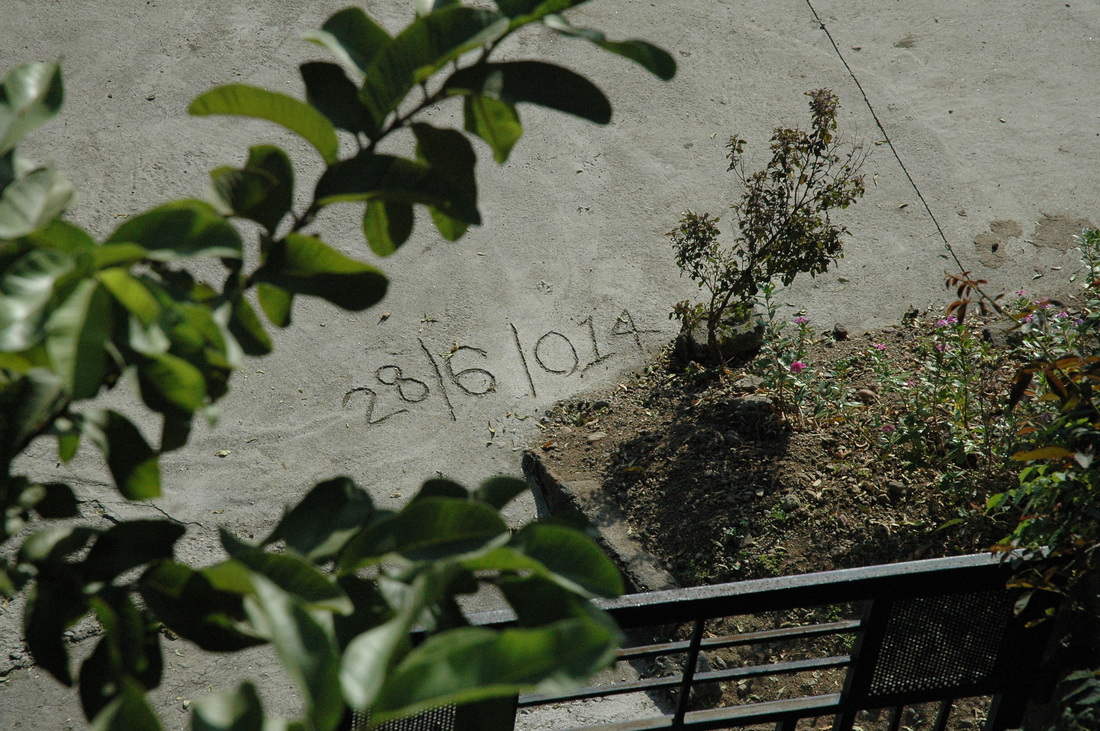
On the day I arrived, I asked Aryaketu why the date of June 28th is inscribed into the cement outside his house. That’s my birthday, so it caught my attention.  He explained that was the date the road had been laid.
Picture
No excuses for forgetting my birthday in this household!
Now, some superstitious types might latch on to that as an indication of some force of fate at work, whilst more logical types might manage a wry smile as they explained how we seek patterns in things to explain the universe and that any meaning in these are merely human inventions. I don’t think Buddhist teaching would disagree with that statement, we are taught that we create the world with our minds after all; however, it would not dismiss a more mysterious perspective either. We know reality is ordered and things do not arise randomly. Whatever thoughts it’s poetic at least that my birthday is inscribed in the path, or ‘magga’ that leads to Aryaloka.
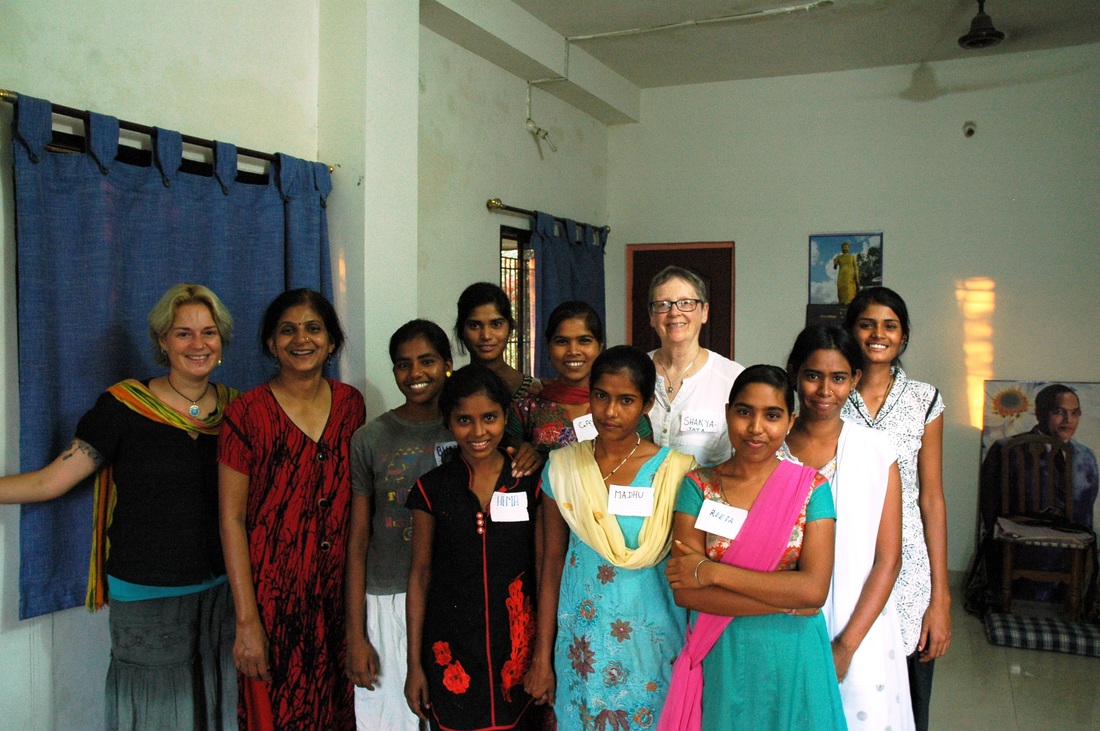
At 4pm, we gathered the girls into the shrine room (it was cooler than the classroom) for a group chat, to ‘check in’ and share how we were all feeling. This is a common practice in Triratna teams and a really useful way to build trust and mutual awareness. Sheetal kindly interpreted for us, seamlessly switching between Hindi and English. As well as providing an opportunity for us to get to know the group a little better, it was also nice for Shakyajata and me to rejoice a little in each other’s merits and to publically recognise things we value in one another. The girls’ stories were on a whole different level though and they seemed very keen to share them with us. Each described her initial apprehensions around leaving her home and family with similar sentiments yet clearly differing flavours of individuality and despite being one stage removed by the translation, it was easy to get a palpable sense of their longing for opportunity and freedom from an otherwise bleak future. None of the girls have been away from their homes before and in the close-knit familial culture of India, this is in its self a very big deal. Most of them have come to learn computing skills having never before even set her eyes on a computer, a fact I think pretty much every British teenager would find quite unimaginable. Several girls described the long, arduous train journeys from their home states as the first time they had even been on a train. UK commuters (myself included) may grumble about the aftermath of privatisation but I reckon we’d be silenced pretty swiftly by five hours in an Indian sleeper berth, a pleasure I’ve yet to savour. These journeys are especially unsafe for women, even those who aren’t as vulnerable as an eighteen year old independently travelling for the first time. Each girl had her own story of overcoming significant but natural anxieties to get to Aryaloka, but each concluded by expressing how she had since discovered such genuine joy and optimism that it was easy to forget the reality of the backgrounds from which they have come. Hemlata’s concluding tale of a determination to travel completely alone, (even having convinced her mother to allow it!) when it seemed her friend, Pinky, would not come after all, simply underlines the sheer yearning and determination of these intrepid, yet gentle souls. It wasn’t until she went on to describe how she had called her mother to say she mustn’t worry for her safety as she had found ‘a new family’ at Aryaloka that I realised just how much I identified with their stories.
Picture
Me, Sheetal, Shakyajata and the Young Women of Aryaloka 2016!
My being here has come about as the result of my own  suffering, albeit of a very different flavour, and I too have recently sent messages to a (mildly) worrying mum to let her know I am safe and cared for after a long journey. I too, have committed to the longest time away from home I shall ever have known, in a foreign place and with little knowledge of what awaits. Happily, I can also share that deep sense of relief, joy and eager anticipation of what is to come that Hemlata and her new sisters all communicated today. I too have found a new family, and while I may think of those I have left behind, I am safe in the knowledge that I am also now forging new friendships for life.
Tomorrow, we face the bumpy, dusty, crowded bus ride up the Kamptee Road to the centre where the young men live and study and I am sure we shall be treated to expressions of much the same degree of commitment and motivation to self-improve. Though we may, or may not have arrived at our current experiences of life as a result of our own actions, what is true is that the actions we take now will certainly affect our experiences of the future. These young people seem instinctively aware of this, be it Dhamma teaching or not and I’m so keen to meet yet more of them that I’m even looking forward to donning my dust mask and getting on that rickety bus!
1 Comment

To the Deekshabhoomi and a First Class in English!

14/10/2016

0 Comments

 
The experiences are coming in so thick and fast here at Aryaloka that it seems hard to keep on top of the priorities in so far as my aims for this blog. I set it up primarily to record, but then also communicate my time exploring the unfamiliar geographical and psychological landscape of my new position as a volunteer teacher in a foreign social project. This is because I could see before I even applied for the visa that the new perspectives I was bound to encounter could be of value to many people, if only I could articulate them. I hope my western friends and contacts may be able to understand their privileges and challenges with more clarity in a global context and believe the work being undertaken by my Indian colleagues to be anyway so very deserving of recognition, broadcast and celebration. It can be a complex operation to separate this genuine desire to broaden horizons from the almost voyeuristic impulses of the travelling photographer; look at this photo of a funny crisp packet, this description of a strange social norm, this ‘tragic’ symptom of disadvantage and poverty. I shall be clear; however, that whilst none of my observations are intended to judge, condemn or laud either my own or another’s culture, I am aware there will be times when I shall find it difficult to avoid some apparent poignancy.
The people I have met so far though, are far from in need of western sentimental sympathy and in fact we could learn a great deal from their resolve, their generosity and their extensive application of remarkable energy and steadfast determination to achieve what must done. They appear to be, in many respects far happier and more grateful for far less than many of the most challenged British citizens.

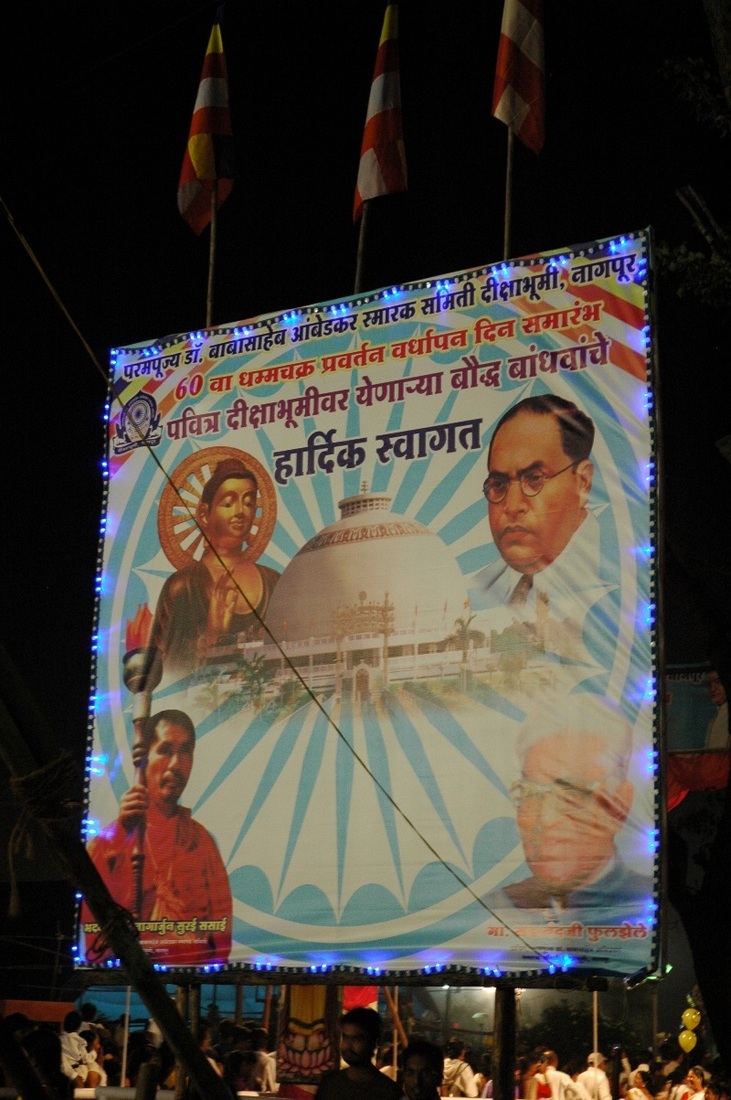
Things have, of course, improved dramatically for many local people in recent decades, due in part to the reason for our attendance last night at the Deekshabhoomi, to celebrate the 60th anniversary of the mass conversion to Buddhism of Dr Ambedkar and his followers. This genuine social liberation and increased prosperity found in education and spiritual development is not just a credit to a remarkable man and those who continue his work, but an ongoing trend to be treasured, shared and cultivated.

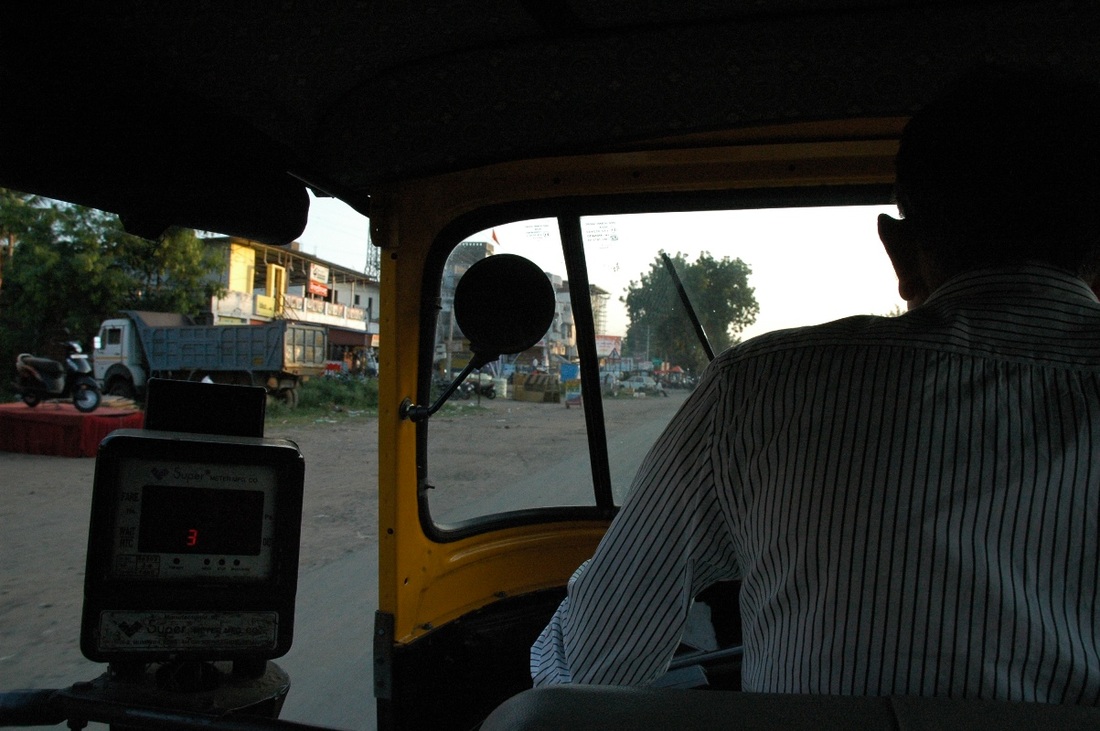
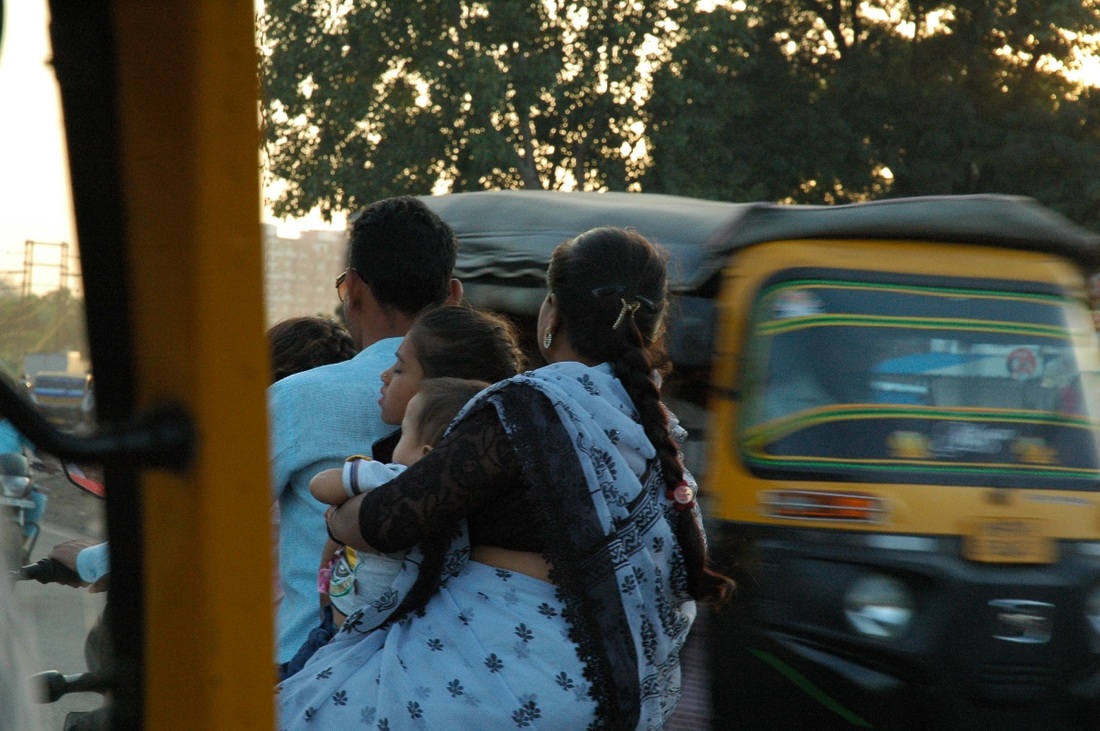
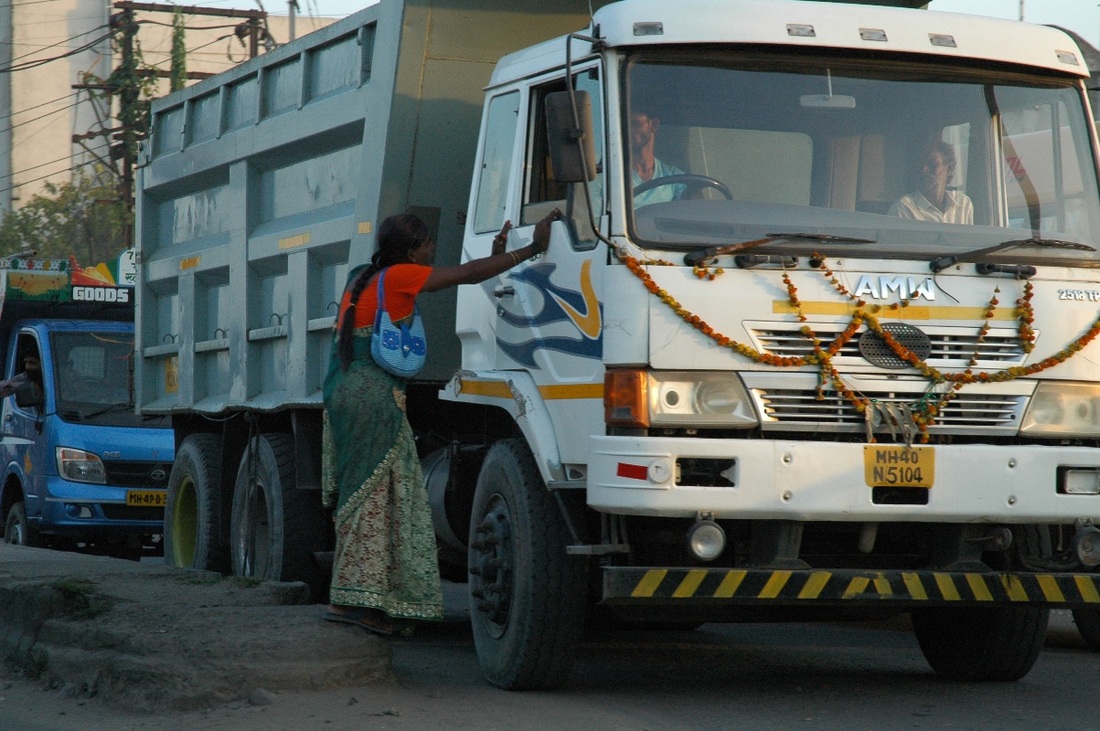
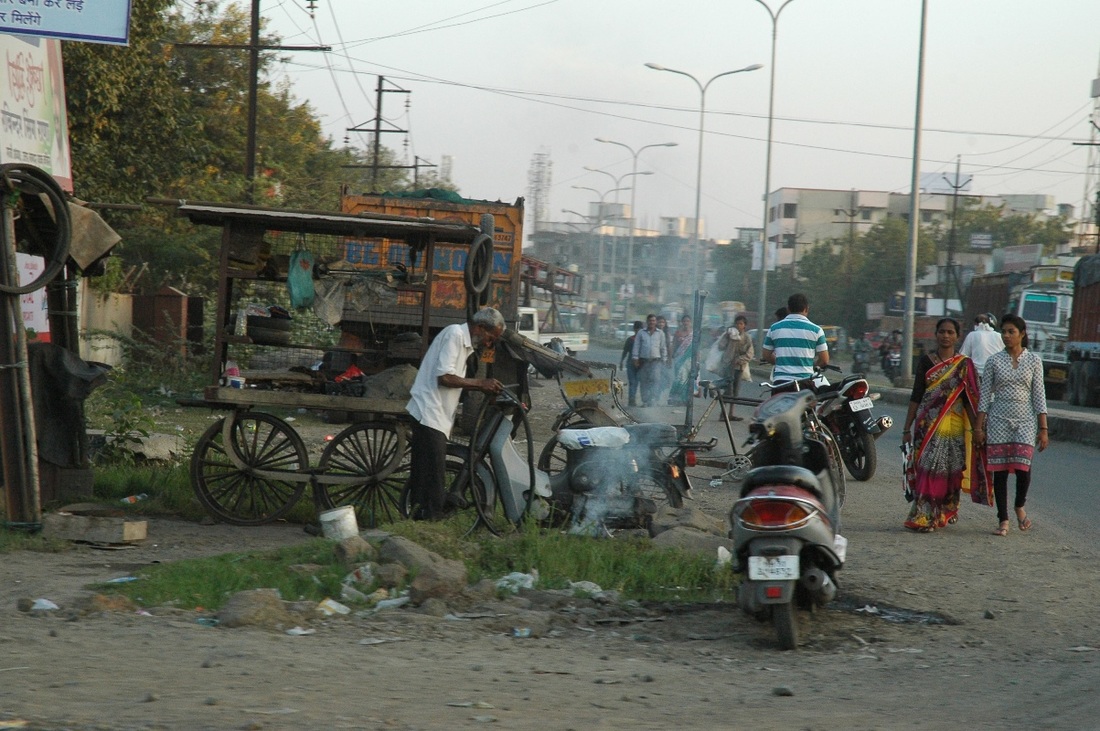
We travelled to the Deekshabhoomi by auto rickshaw, an experience enough in its own right, as the father of our friend and ex-Aryaloka student Neha, battled through fleets of oncoming traffic and intrepidly held his own amidst entire families clinging to scooters, impatient cars, and streams of the large, brightly decorated lorries that are such a feature of the dusty Kamptee Road. Neha’s ‘Papa’ is fortunate today; as a result of the generosity of many donors, it was possible to purchase the tatty, beat-up vehicle and relieve him of the back-breaking work of endless daily pedalling. My friends and I might have been one of his lighter loads too, though this has not eradicated the health risks of his profession; the pollution is enough to cause western visitors to seek the limited protection of dust masks, even for a thirty minute journey, and with an unpredictable response rate to what rules of the road do exist, traffic accidents are common.

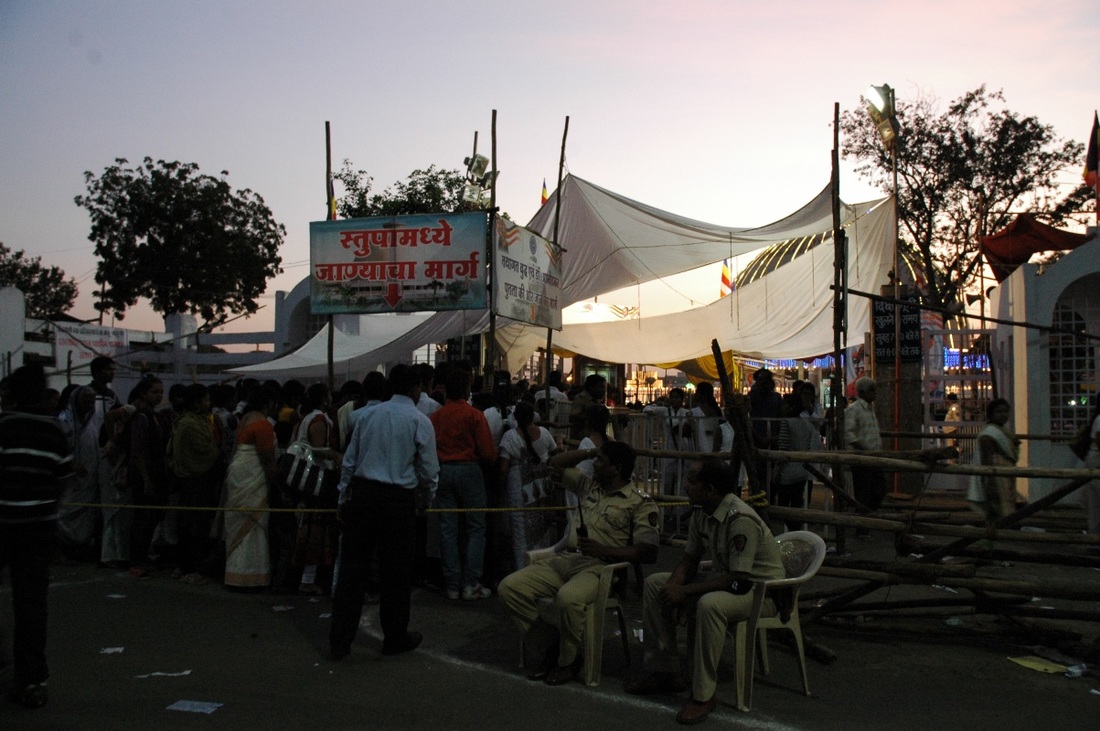
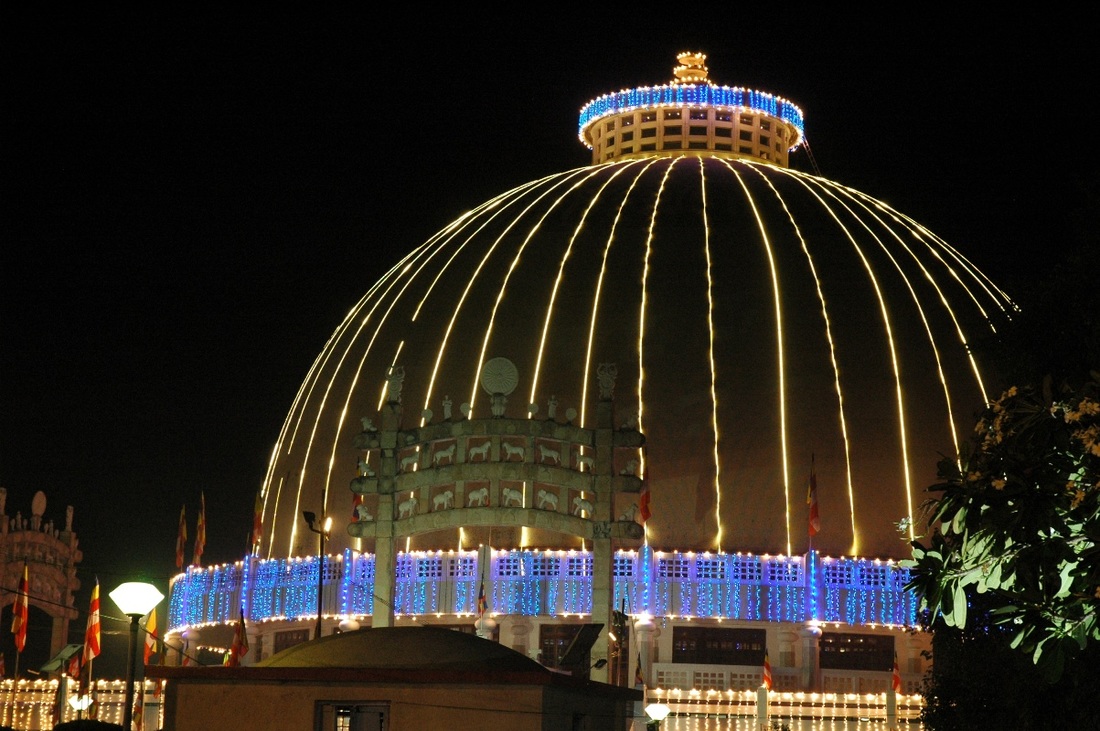
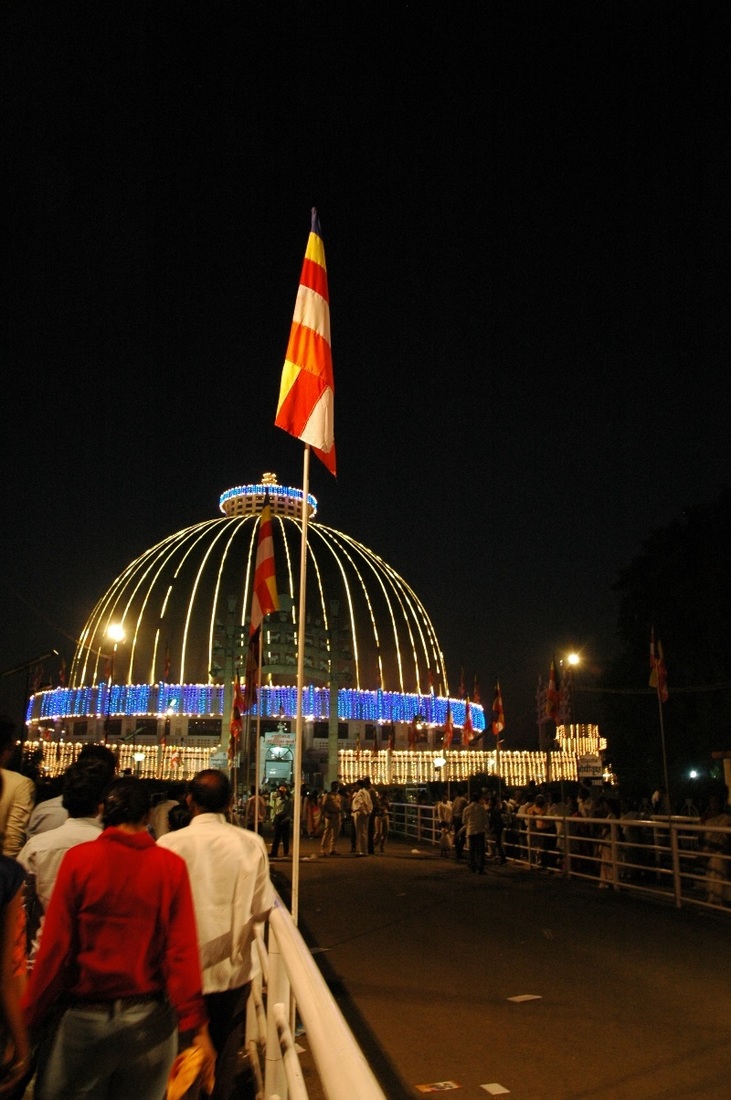
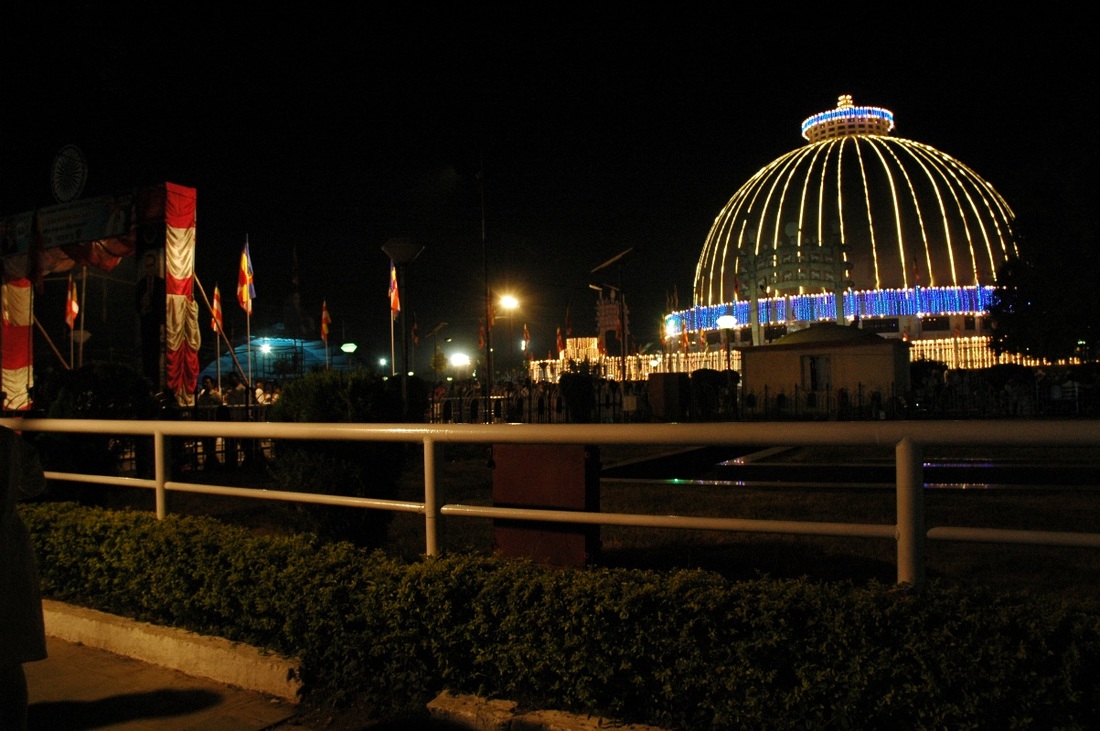
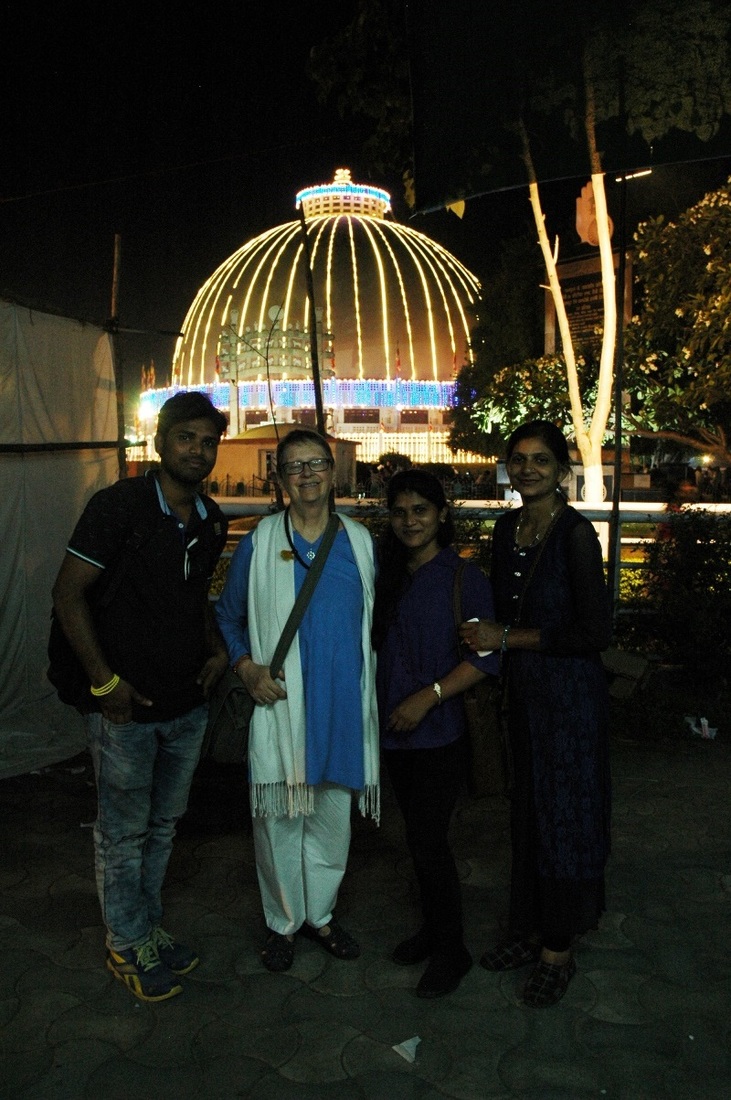
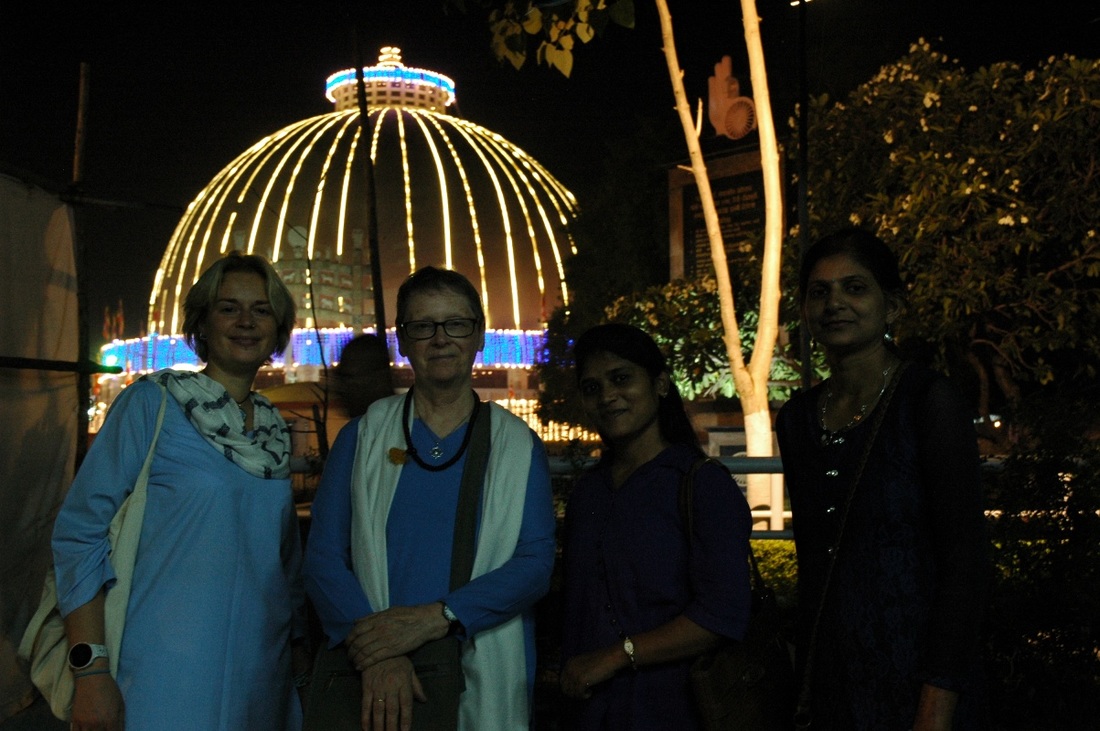
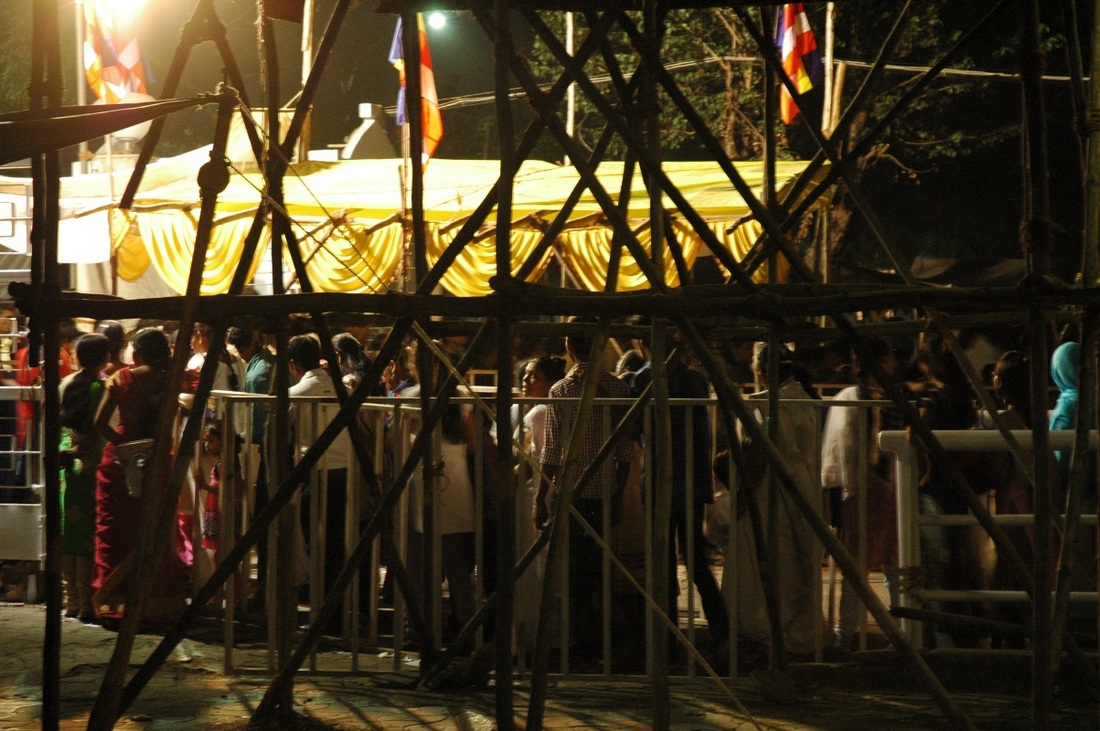
It was busy as expected when we arrived at the road leading to the Deekshabhoomi (literally ‘conversion ground’) and it was not for the meek or faint hearted foreigner to walk with purpose and conviction to the entrance in the sea of curious stares. The soon to be familiar call of ‘Please, Ma’am, just one photo?’ quickly started up and whilst I was sorry in some respects that I could not photograph inside the monument,
Picture
Picture
Picture
Picture
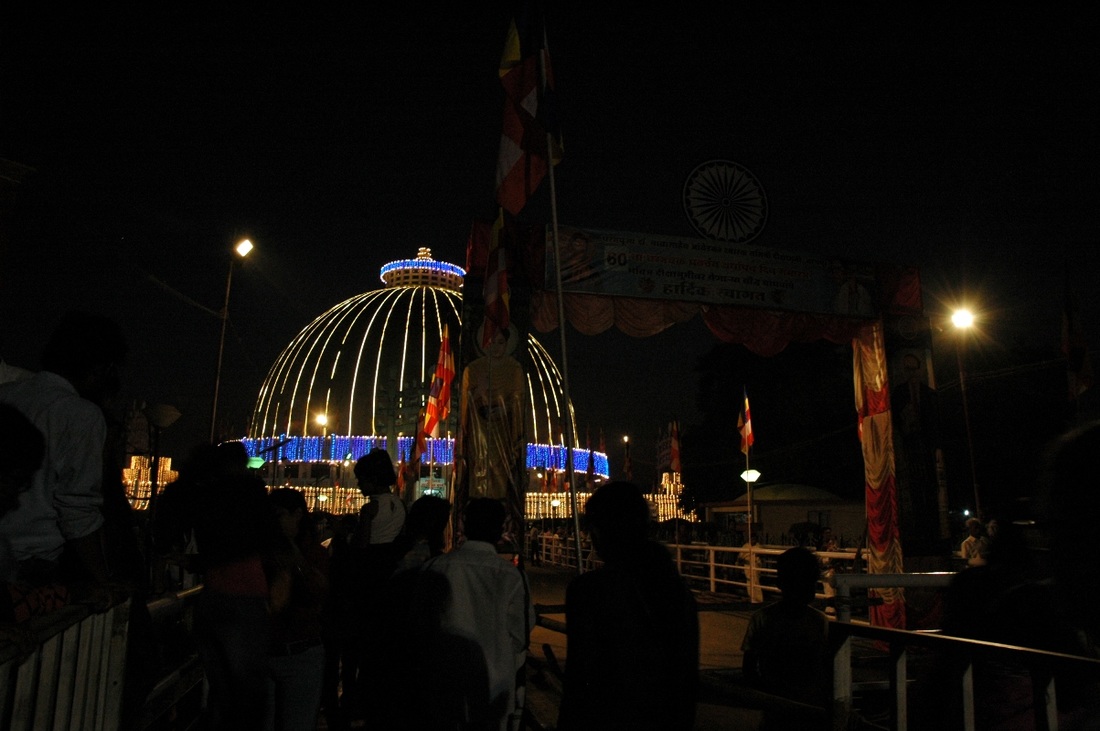
 it did at least provide an excuse to decline without appearing unfriendly. Unfortunately; however, using this rule as protection from the lens did not prevent an awareness of the crowd building outside, eagerly awaiting our exit from the stupa with camera phones at the ready for ‘just one selfie with my kids!” As a result, it was hard to focus or really develop a sense of appreciation for the purpose of the reliquary; the ashes of Dr Ambedkar himself, in a grand cask, under a glass dome and set on a highly decorated platform at the centre of the marble hall. Still, we managed a brief moment taking this in before the encroaching tide of devotees washed us back out into the night. We had hoped to conduct a short puja in the hall, and there were indeed a few people resolutely chanting in small groups or pairs, at the side of the walkway, but we were causing enough of a distraction as it was, so Shakyajata wisely guided us to a spot outside where we perched on a wall as she bravely lead our group in chanting the refuges and precepts in Hindi and English. This at least provided an opportunity for people to come and have a good stare and snap away to their hearts content, which made me feel far less impolite for having refused earlier requests while taking shots of my own. It occurred to me as we took a short meditative pause following the chant, that less than a year ago I was still privately struggling to come to terms with my own spiritual identity and yet now, here I was, practicing more publically then I could ever have anticipated, in the land of the origination of my faith. Never say never. After this, we took a stroll around the bustling complex, taking in the Bodhi tree, part of an intricate web of stories regarding the generations grown from seeds of the original tree under which Siddhartha Gautama, the historical Buddha, is said to have achieved Enlightenment.
Picture
The entrance queue to the Deekshabhoomi...
Picture
...which was dark by the time we got through it!
In the small shrine room, we were approached by a polite but curious monk whom, my friend interpreted for me, had expressed gratitude to us as British visitors for the role of the Empire in preserving Buddhist temples and relics from destruction by Hindu oppressors. This gratitude was a new experience for me; I have grown up, as have many, with a clinging sense of guilt for the colonial activities of the British Empire, so I found this perspective pleasantly refreshing. After some time to catch up, it was time to weave our way back down the crowded street, flanked by temporary market stalls of all kinds, to await our collection by Neha’s papa, who, we were assured, was very close by in the jam of traffic. Some street snacks of hot roasted peanuts and sweet sesame brittle fuelled our continued conversation until it was time to dive across the road where he waited for us, unflinchingly bearing the brunt of a traffic policeman’s aggression for having stopped where he should not. For the first time I began to genuinely fear for our safety as the official punctuated angry shouts by jabbing at our poor driver, even pulling at his shirt to drag him from the seat. Thankfully, through the placations of his children, the swift physical intervention of Shakyajata, and his sheer determination to achieve a quick getaway, we managed to escape the frustrated wrath of the law and sputtered off into the traffic once more, leaving our friends behind with scant farewell.
Upon our safe arrival back at Aryaloka, it seemed at least ungrateful, if not quite disrespectful to pay this man for both our journeys with the equivalent of about £7.50, however I was assured this was quite generous and he certainly seemed surprised when we refused any change. We left him also with the remains of our snacks; he had a long night of work ahead of him and it was unlikely that he would have had any meal break in what had already been a hard shift.
The commitment of our hosts to our wellbeing did not stop at the means to travel, against all odds, to and from the Deekshabhoomi though, and as soon as we were through the door, Sheetal began cooking for us, despite the late hour. She did at least allow us to help chop the vegetables for a delicious pilau, which we ate with gratitude after a tiring trip. After this dinner, Shakyajata retired, and I was considering a similar course of action when Sheetal sat down with a pile of papers and turned on her laptop. She explained that she had not found time during the day to enter the data from the student’s application forms onto the system operated by the government agency who certify the qualifications, and that the deadline for doing so without incurring a fine was the next day. Though the specifics of the context may be alien to me, the situation itself was almost comfortingly familiar and I was glad she was receptive to my further offer of help. I don’t think it took too long for her to show me how to use the software to infill the necessary information for upload and I consider myself to be quite a fast learner as well as a reasonably speedy typist, but still the job took until nearly midnight. I was glad to do this though, as Sheetal then had time to rub some Ralgex-like smelling ayurvedic ointment on to sore legs to ease her arthritis, which she explained without a trace of self-pity, was the result of a dietary calcium deficiency.
Picture
Picture
Picture
Picture
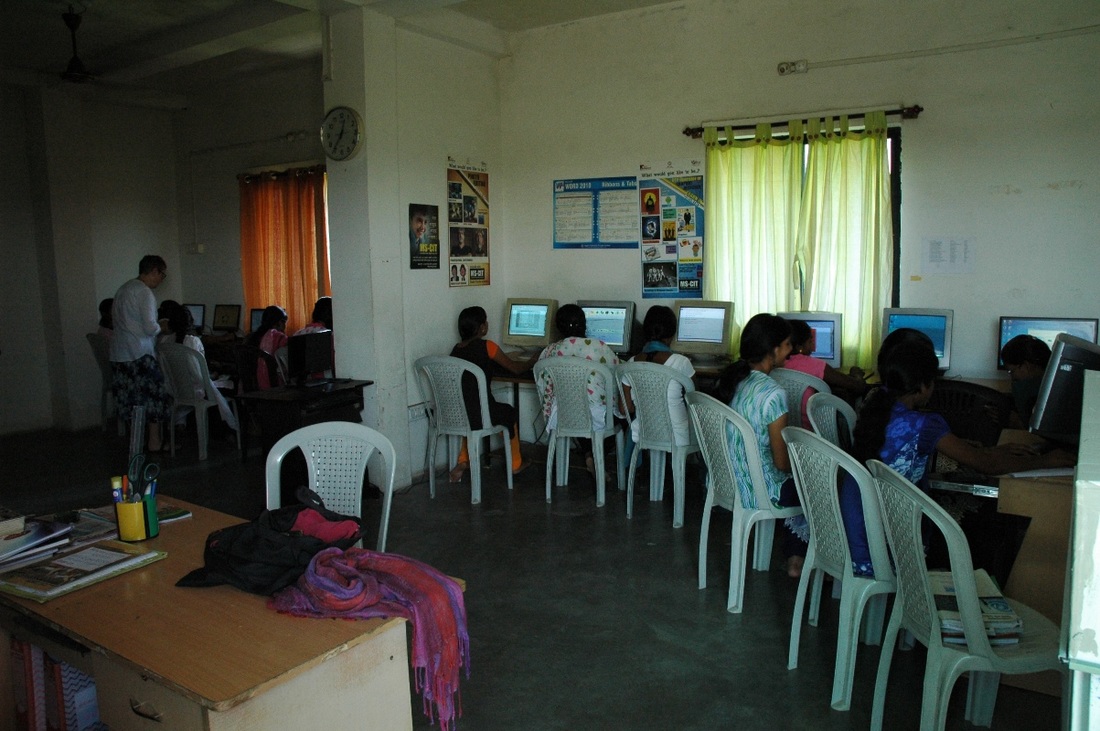
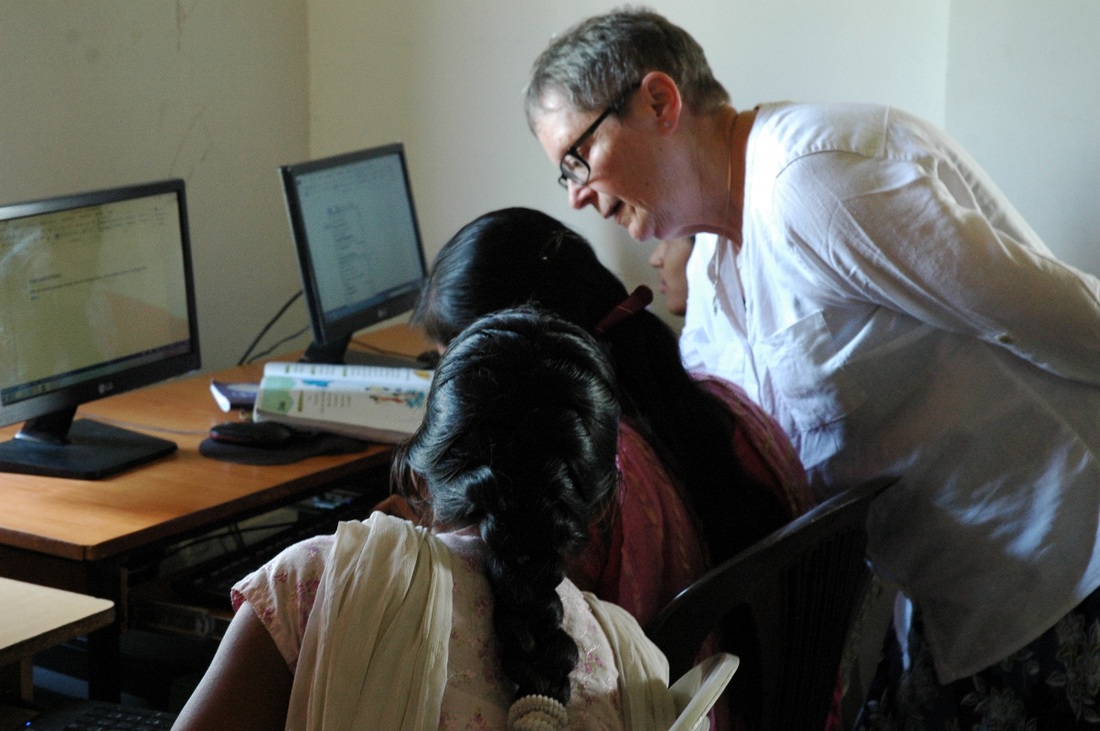
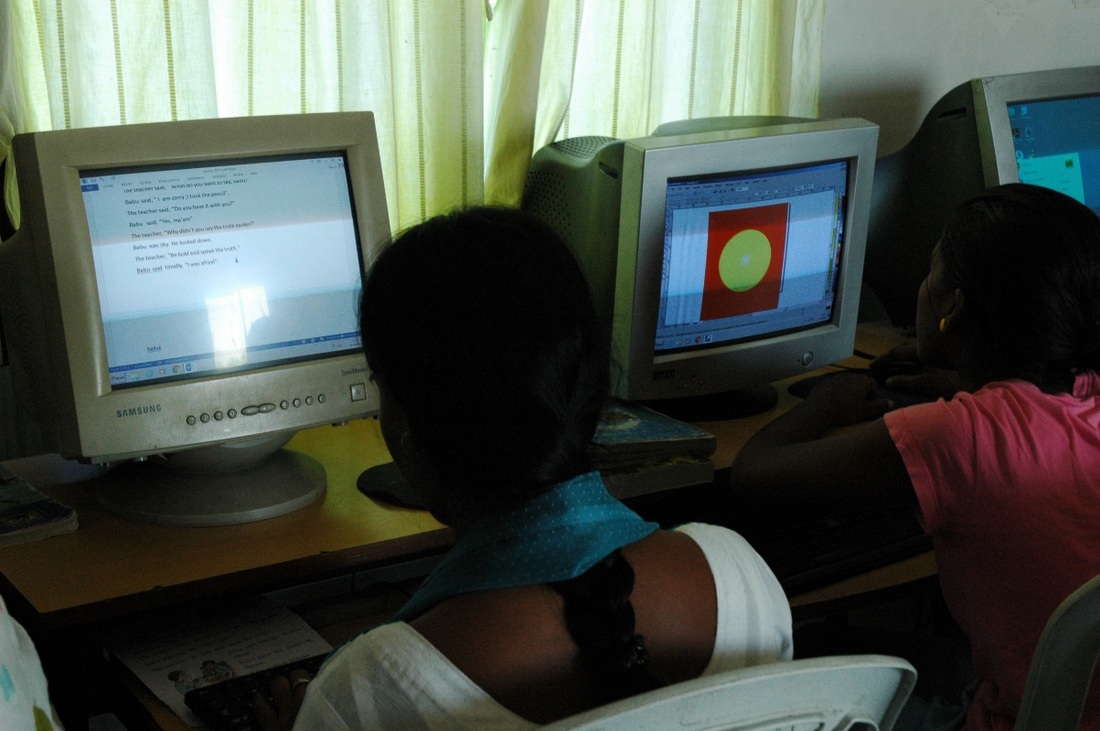
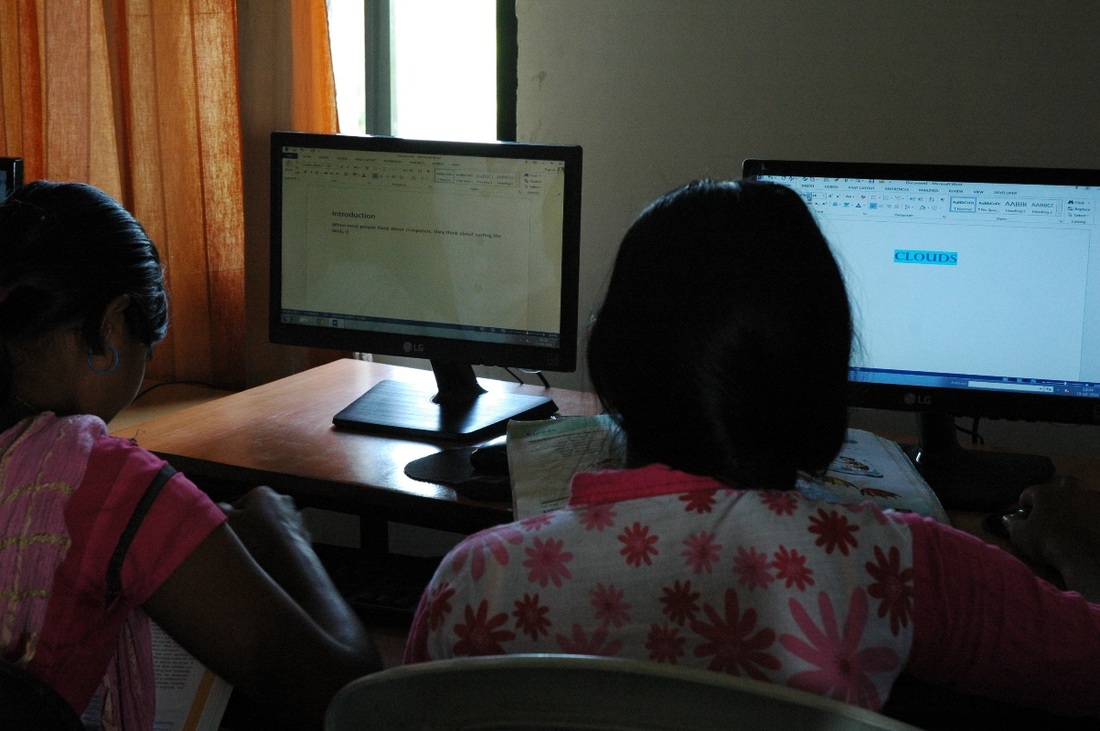
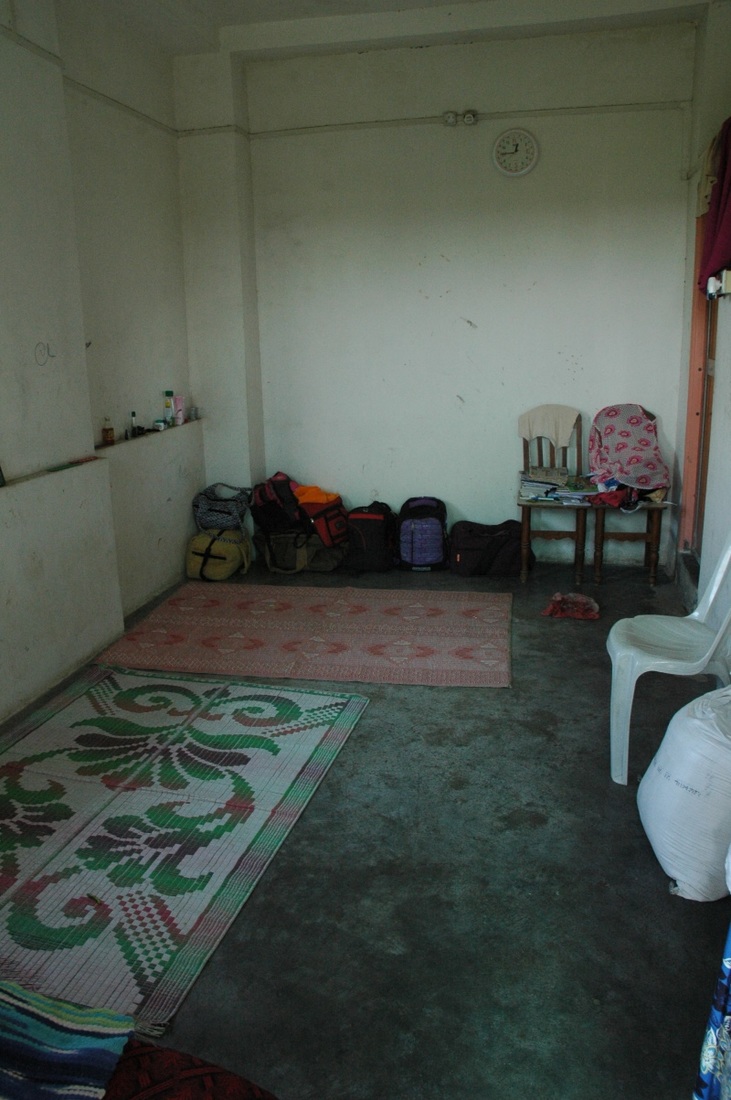
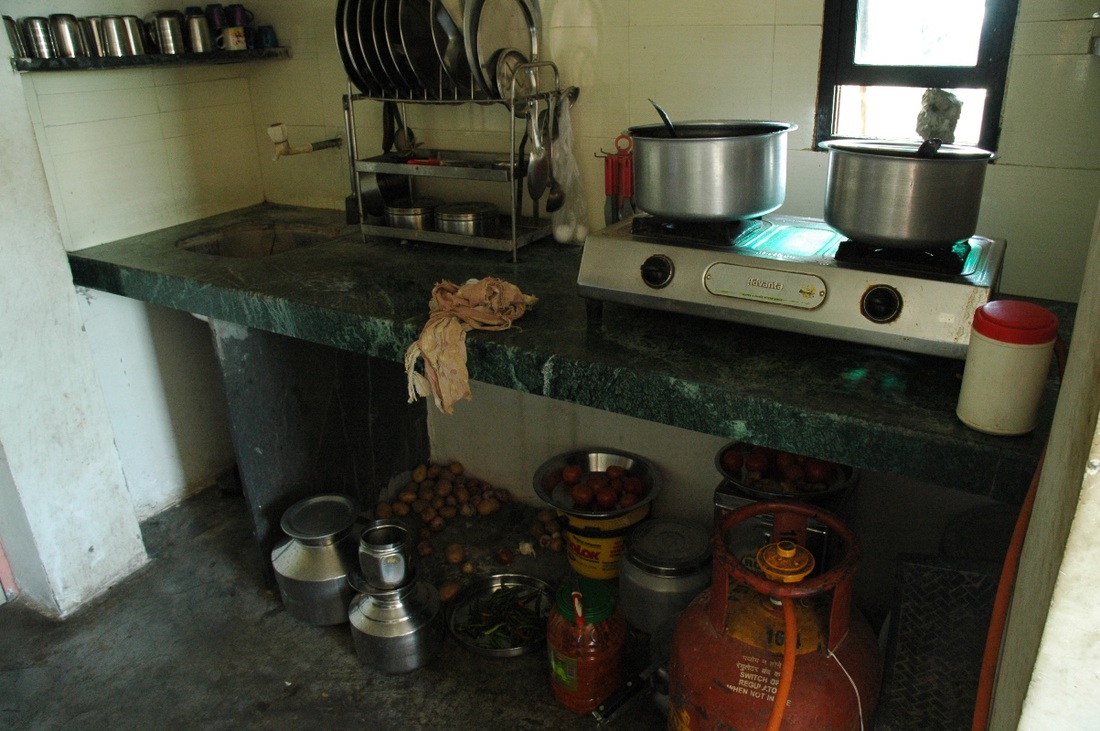
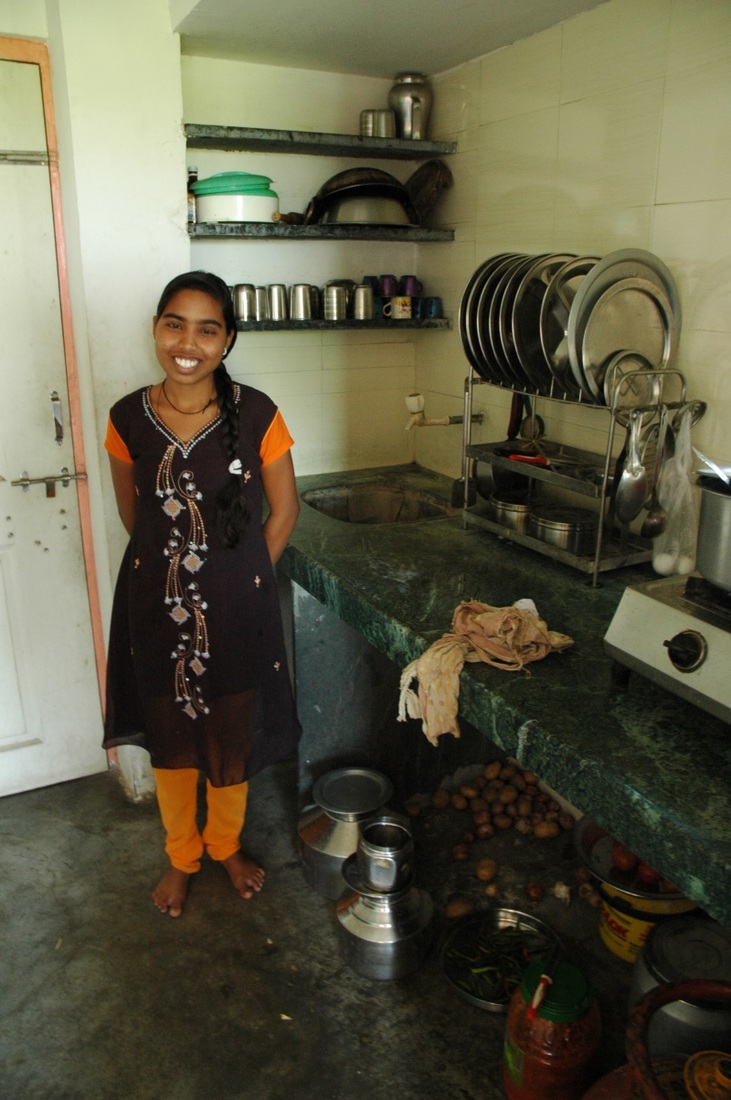
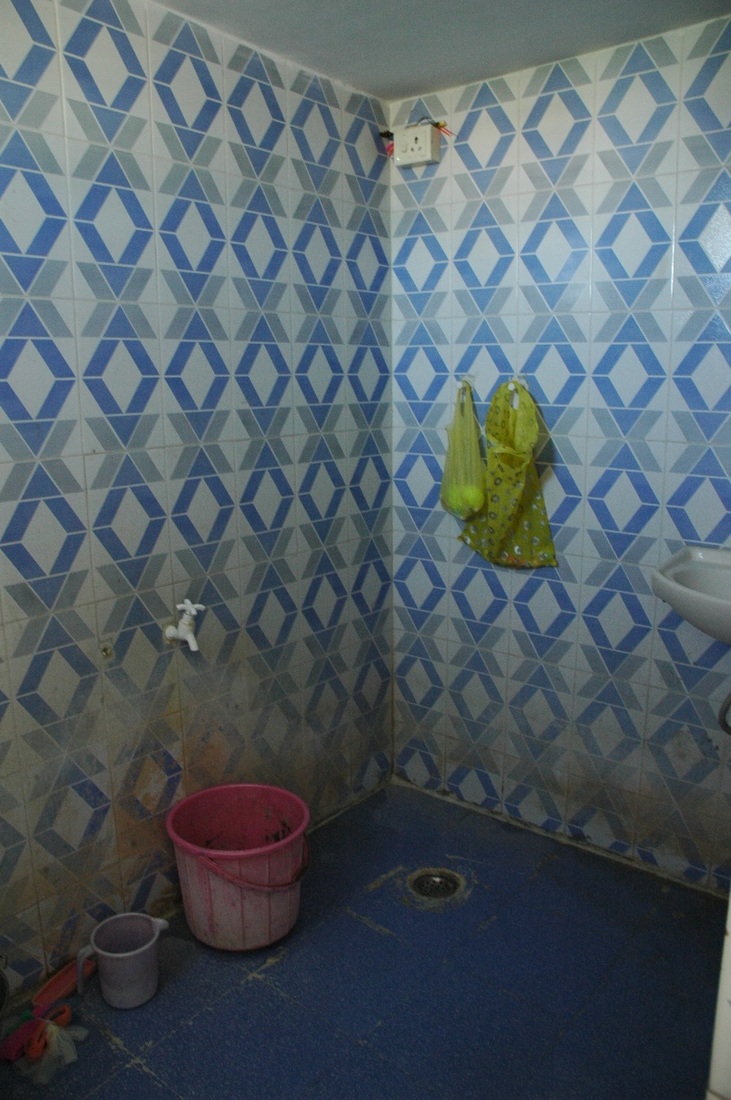
I could easily leave it there as enough of an update and it’s hardly surprising that after such an evening our plans for Saturday morning became somewhat derailed by our fatigue. There’s more to say of course; we taught our first class on Saturday afternoon! In the morning, we delayed our planned meditation and postponed a trip to nearby Nagaloka Centre, until later in the day, opting instead for some impromptu Dharma study and a little more rest. After meditating, we snuck in at the back of the class to see what the girls were doing. Some were typing out passages of English text, while others began familiarising themselves with Corel Draw, a drawing programme I have not used since my days experimenting with the laser cutter on my MA in Manchester. We also checked up on the girls’ living space; a small room that sleeps up to ten that Shakyjata was disappointed had not been re painted since last year. She was pleased though to see that the girls appeared to be keeping the kitchen and toilet facilities clean and tidy. We planned an introductory session before lunch and then rested further until meeting at four for the first English class.

When we returned for this in the afternoon, the girls were quick to leap from their plastic garden chairs and leave the dusty old CRT monitors to form a circle in front of the board, which one young woman carefully cleaned before the start. The first task, making and displaying name badges, was soon followed by the predictable group introductions with “My name is ______________” written clearly on the board. We then progressed through a series of phrases communicating personal information; our ages, the occupations of our parents, numbers of brothers and sisters, building on each in complexity and sometimes testing memories by linking phrases and removing the text from the board. My favourite part of the session was at the end, when having been finally allowed to copy the written text from the board, the girls were so eager to show us their books for corrections to their fastidious handwriting. The opportunity this gave for genuine interaction was a delight and so we picked up on various errors such as the capitalisation of proper nouns with a grateful acceptance from a group of young women so hungry for knowledge and so ready and able to learn, if only someone would teach them. This, of course, being far from my experience of sullen British teens, often attending under duress and defensive at a flash as soon as they are questioned or corrected.
I’m not yet sure how I feel about the contrasts between both the learning environment and attitude of the students in my UK and Indian roles and think it would be wise to spend some more time becoming acquainted with my new environment and assimilating the experiences before making too many comments but I can certainly tell it’s going to be a very different experience. Needless to say, although Sunday is supposed to be their day off, I am very much looking forward to meeting the group again tomorrow evening for a ‘checking in’ workshop session, when we hope to learn more about the group, at a deeper level than the initial personal facts.
Picture
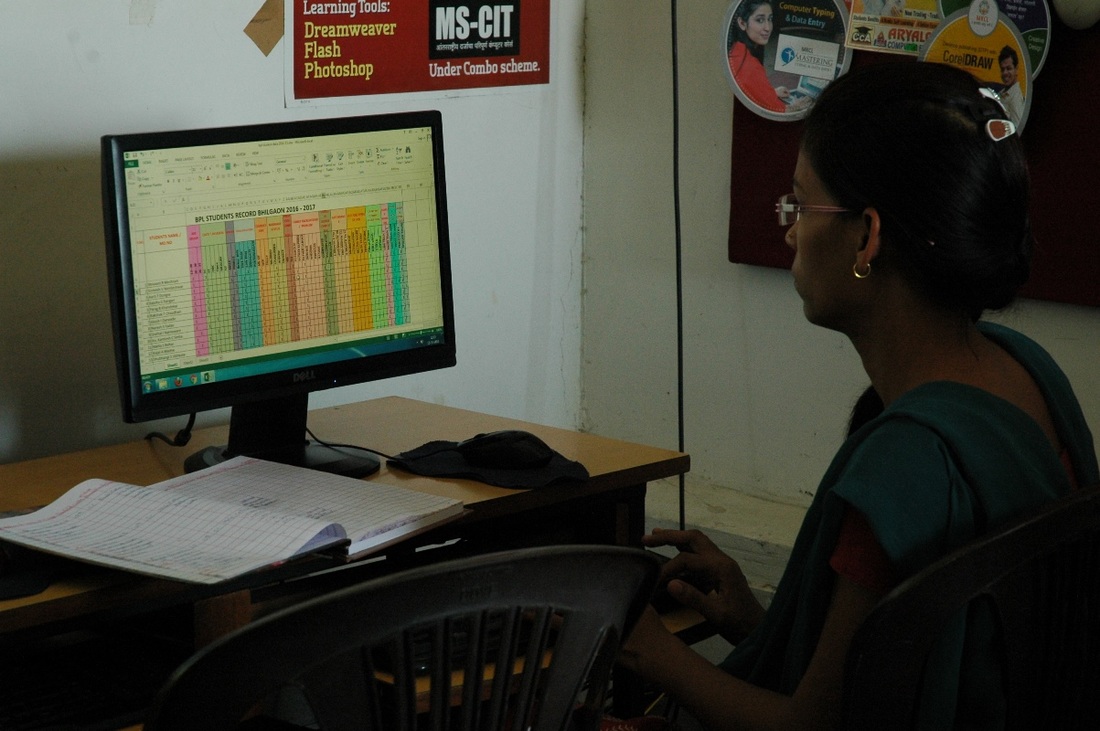
Teacher Vaishali inputs grades to the strangely familiar tracking system!
After such a successful class, the first time I have stood in front of a whiteboard for 15 months, I felt relieved and energised, as I think did Shakyajata, so we made the most of the cool evening air to stroll through the village to Nagaloka before dinner. After so many days of relative physical inactivity, it felt good to gently stretch the legs in the gathering dusk. As well as our group chat with the girls tomorrow, we hope to run similar session with the boys group on Monday, when we hope to have a bit more energy to tackle the bus into town, where they are resident. I can’t say the prospect of traveling there is stimulating my appetite for exploration as much as I’d have expected but I think this is largely to do with the only physical ill affect I’m currently aware of; a rather sore throat! I think a combination of dry air, dust and smog is responsible for the mild cold-like symptoms, but I’m confident that these will settle in time, when I’ve had a week or two to acclimatise. There’s plenty to distract me from it in any case and I’ve been very comfortable so far with no sign yet of the apparently inevitable ‘Delhi Belly’, though since I have been lucky so far to enjoy only good, home cooking, I’m far from complacent about that!
0 Comments

Jai Bhim!

14/10/2016

0 Comments

 
I am mindful as I sit down to write my first update from India, in the calm domesticity of a warm afternoon that it would be all too easy to succumb to the temptation of trying to record and share every detail. Since our arrival, 29 hours ago, I feel I have been through a whole world shift. The tectonic plates of respective cultures, so fundamental to the foundations of our assumptions and responses to experience, have indeed been grinding together but the resulting quake was not unexpected, nor has it been at all unpleasant. I have not yet encountered any difficulties. I have been very well looked after. I am well in body, well in mind and very well fed and watered!
Picture
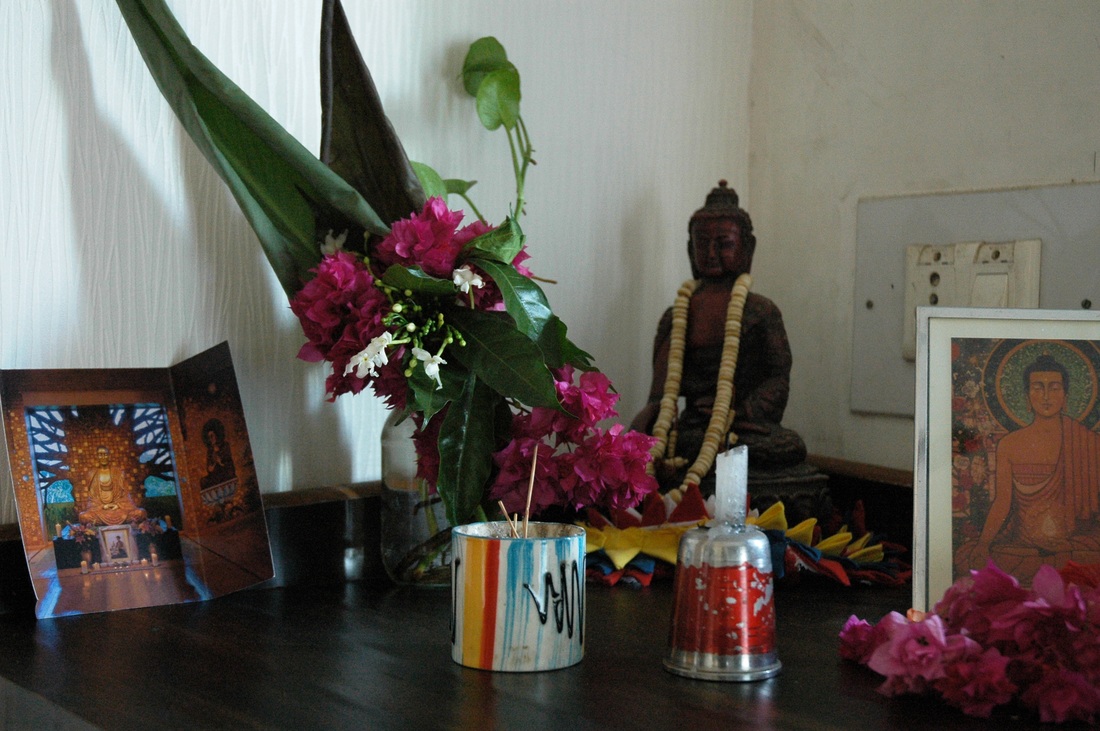
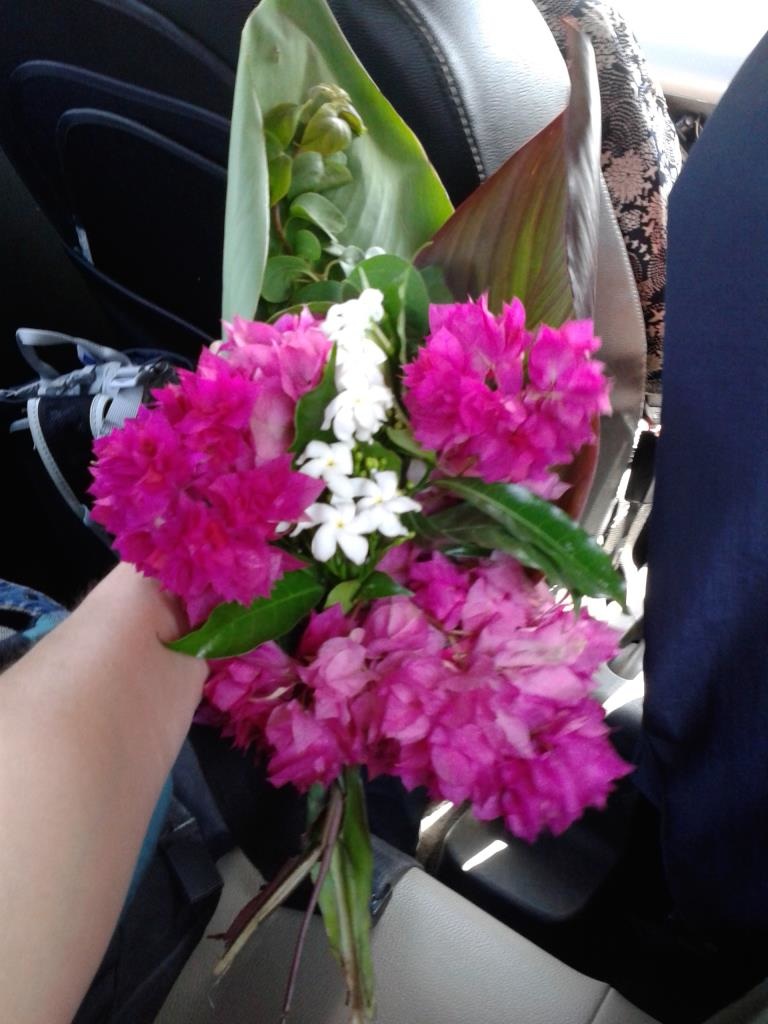
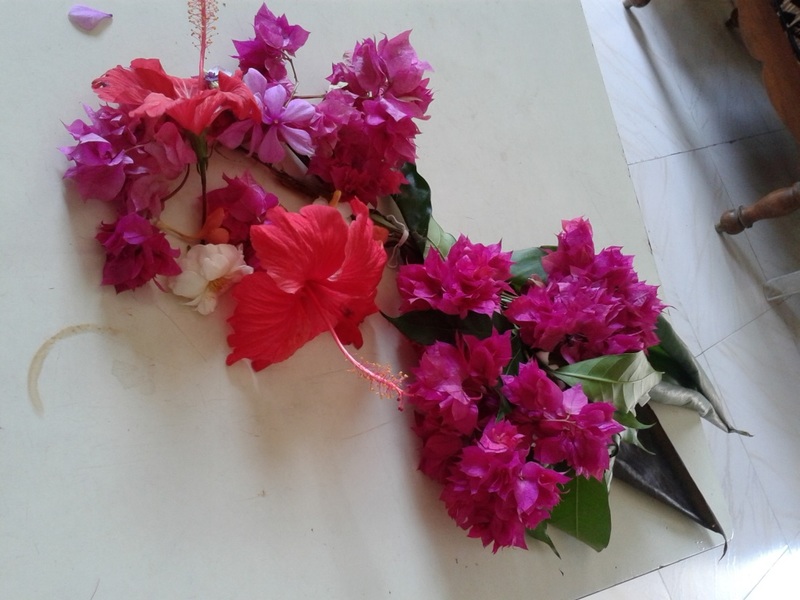
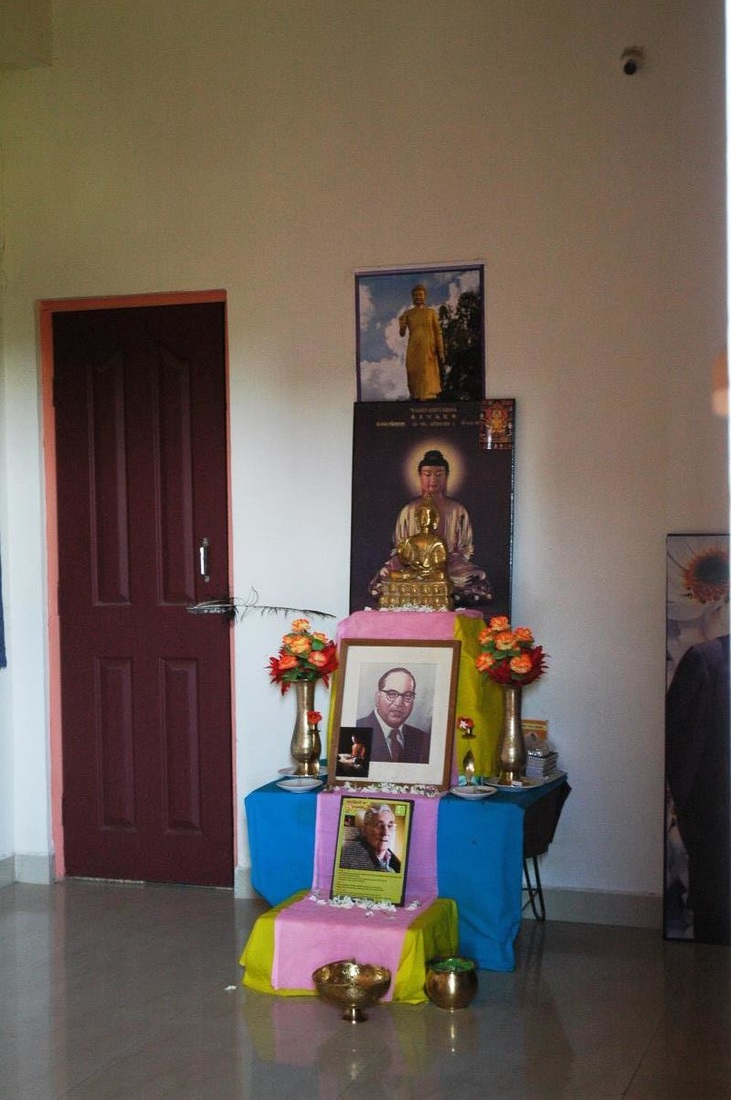
Greeting bouquet on living room shrine.
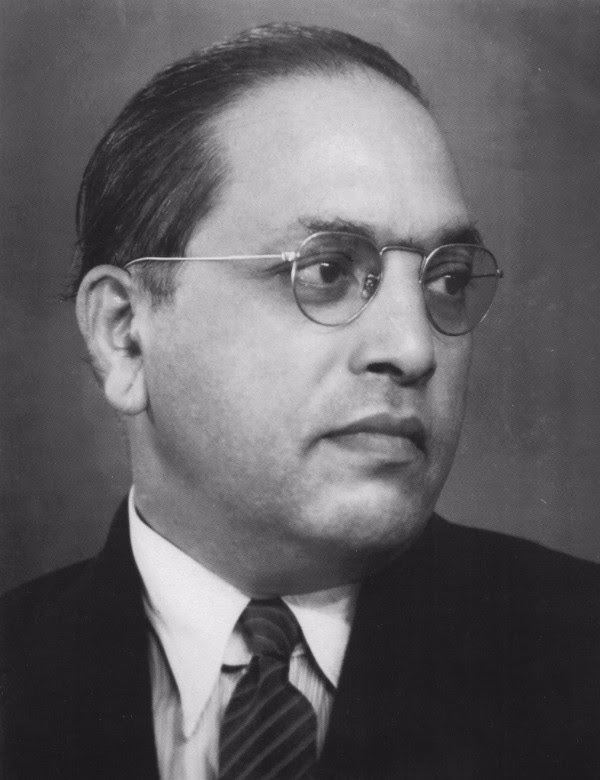
Following a delicious lunch, at which I gratefully discovered that Indian food does not have to be heavy or bloating as I have sometimes found UK Indian meals to be, I have the luxury of a few hours rest to myself. Later, I shall travel with Shakyajata, and Sheetal (one of the directors at Aryaloka and my very generous and talented hostess) to the Deekshabhoomi, to celebrate the 60th anniversary of the mass conversion to Buddhism of Dr Bhimrao Ramji Ambedkar with his about 600,000 followers on 14 October 1956. I know this is likely to be an evening full of experiences I shall very much want to share and so I’m going to take the opportunity for my first update before there’s too much more to say. I am unable to resist a desire to start at the very beginning, but in the interests of making this post manageable to read, I shall, really truly try to keep things succinct!
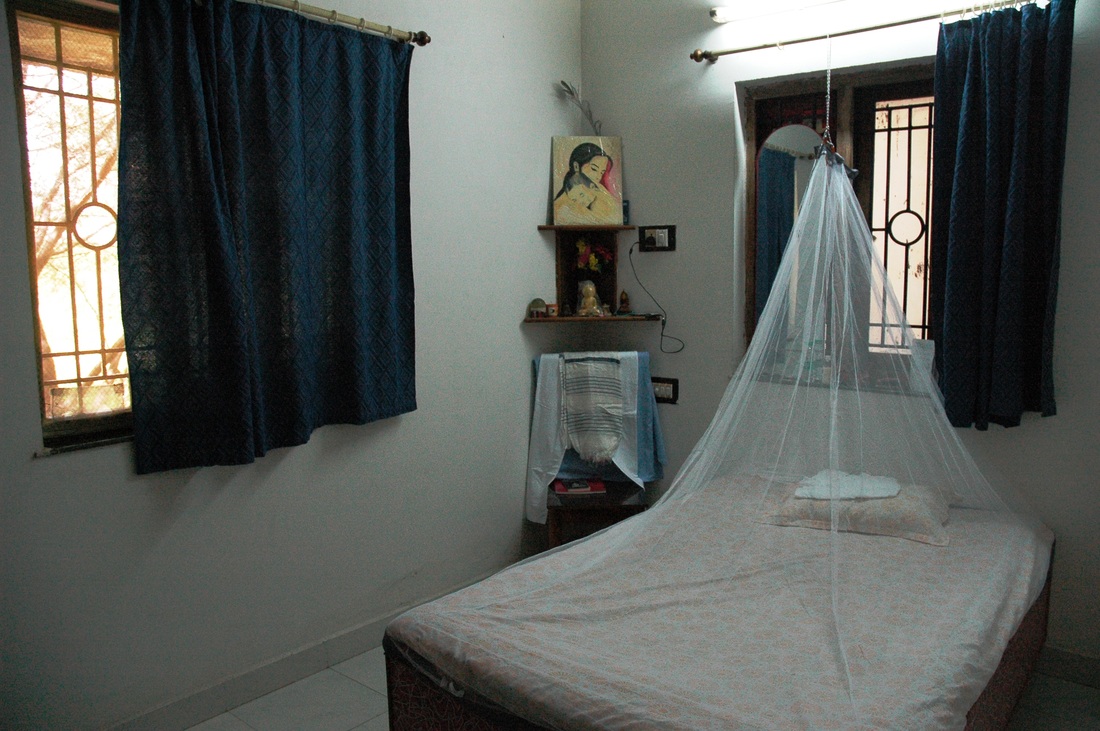
We were greeted at the airport yesterday morning by Aryaketu, Triratna order member and Director at Aryaloka, who is also husband to Sheetal and whose home I shall be living for the coming months. It was wonderful to see his familiar smiling face again (we met at London Buddhist Centre a couple of months ago) and after giving us each a beautiful posy, we were driven straight to the family home. We were welcomed by what felt like a huge crowd of family members as well as the girls on the residential course, each of whom greeted us personally in an informal procession, presenting us each individually with a flower. We shared some tea and chatted a little before I was shown to my room. I was very grateful to unpack my heavy bag and wash before taking lunch! The afternoon was spent resting and recharging the batteries with 40 winks. In the evening, I met and chatted (as much as language barriers allowed; I have my work cut out!) with the 8 girls who are living here. We established a few basic facts, though I have no hope of remembering how many brothers and sisters each have! At 18:30, Aryaketu’s mum led the girls in puja (Buddhist devotional ritual) and meditation, which I attended. Though much of the Triratna chants are in Pali or Sanskrit wherever you are in the world, still there are differences, and much of the actual lesson or direction is delivered in the native language, so I was not able to participate as fully as I liked. I did enjoy watching though and felt like an honoured guest when I was presented with yet more flowers by each girl after she had made her offering to the shrine. I was then able to make my own. Meditation was Metta Bhavana, which I managed to understand, but I felt uncomfortable in my body, hot, sticky, tired and not very able to focus. Having participated however, I felt refreshed and was glad to walk into a living room of English speaking visiting order members who had been attending a local Triratna conference titled Social Engagement and Liberation. We had dinner together (I am finding the dining customs easier than I feared but still it is a skill yet to master to eat rice and very runny dhal with the fingers of only my right hand!) and then some of us walked to the nearby Nagaloka Centre, for an open air concert of Indian classical music in front of the famous 36 foot high walking Buddha. That was really quite enough for one day, in which I’d done little more than snooze since leaving the UK at 05:30 the following morning and so it was to bed! Negotiating the new challenges of sleeping with a mosquito net wasn’t too awkward until I forgot it was there during the inevitable midnight toilet trip and ended up looking something like a spider’s breakfast. Still, I appear to have only one bite this morning so it must have done the trick!

Despite my instinctive urge to get out and start seeing this new world around me, I have tried to be very inactive today. I didn’t get up early for morning puja and meditation with the girls as I had half planned, opting to get another hour in bed instead! Shakyajata did the same, so we meditated together after breakfast and I was actually quite relieved to chant the refuges and precepts in our accustomed style as part of a Threefold Puja in English. I shall attempt to learn the appropriate customs here but one step at a time! My meditation was much more enjoyable than last night and I had a sense that I was floating in a river of my experience, with a myriad of thoughts present but simply bumping off me gently before floating off their own way, like only so much flotsam and jetsam. Shakyajata and I then did a little ‘checking in’ with each other, discussing our feelings about the trip so far as well as our expectations. After lunch, I managed to find out how to access clothes washing facilities and gave my travel clothes a good scrub! That they can only be air dried should not be an issue in this heat, but I think I shall need to learn that less is more when tucking into the washing powder; it is harder to rinse by hand and I think I shall find they are rather streaky when I take them off the line! We leave for the Deekshabhoomi by auto rickshaw in a little under 90 minutes, leaving me just enough time to post this (washing facilities may seem primitive by Western standards but we’re not wanting for Wi Fi!) before changing into appropriate attire for what will be a joyful but serious celebration. Goodness only knows what I shall encounter; I can only guess with excited anticipation!
Picture
Dr Bhimrao Ramji Ambedkar
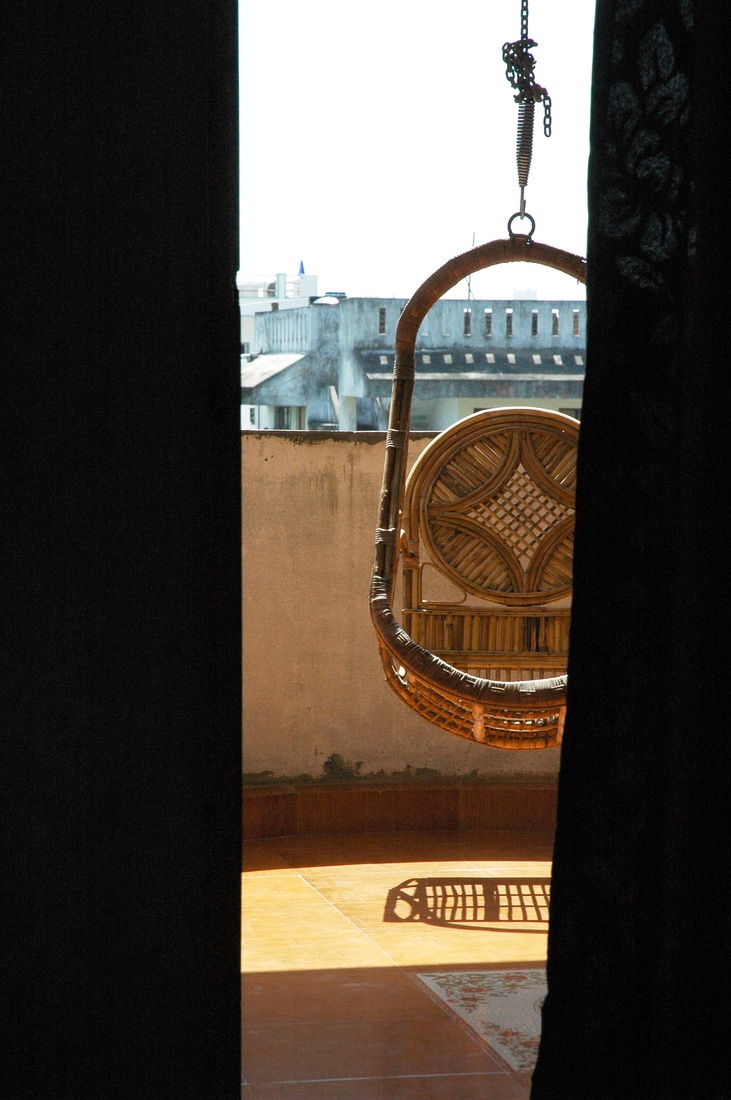
I was struck this morning, as I sipped coffee from a hanging chair on the terrace and looked down onto puja and meditation being performed on a platform in the community square, how palpable is my sense of liberation from the difficulties that were so painful to me only a year back. I was immediately trouble then by a wave of guilt that this has only come about for me because of the organised efforts of others to relieve a far greater degree of suffering and oppression than I have ever experienced. I was soon able to resolve this for myself however; perhaps this is simply a little karmic reward for the lesser efforts I have exerted myself in the organisation of fundraising and travel before I could even be here. A gentle easing of my own troubles that will better enable me to work for the easing of others’ and a little taste to fuel my faith that if I am resolute in my actions here that far greater things than I once thought possible will unfold not just for me, but also for those with whom I work, study, practice and live.
So, on the 60th anniversary of a very important event, I am eager now to really get stuck in with our work here. May we all be well, may it make many beings happy and may all be free from suffering as we grow and develop. Jai Bhim!

0 Comments

The Final Countdown

11/10/2016

0 Comments

 
 I do love a bit of cheesy pop and never get tired of quoting Europe. The Final Countdown really is upon us! This time tomorrow we shall be well on our way, somewhere in transit, possibly already in, or at least over, India. Up until today, I have surprised myself with how calmly and patiently I have been managing all the things that have needed arranging, how balanced I have kept my moods and how little I have wasted energy on indulging in pre-emptive fantasising about my imminent experiences, however this morning I began to feel a sense of impatience for the first time. “Oh enough of this, let’s just get there already!” Knowing that today would need to be a fairly hectic mix of admin and domestic tasks, starting the day with a Mindfulness of Breathing meditation seemed like a pretty good idea, though I really wasn’t sure I’d have much luck focusing! In reality, I found my meditation experience actually quite fruitful and when I started thinking of tasks to be carried out, or anticipating the content of the coming months, I was able to manage these moments with equanimity.

At various times throughout today, I have been recalling the reason for our efforts, in the immediate, medium and then in the longer term. This afternoon, I have been mainly helping with domestic tasks like cleaning and cooking so that Shakyajata (the inspirational order member who runs the charity and with whom I shall be travelling and working) can focus on her own ‘To Do’ list and may feel reassured that there are not outstanding jobs at home, that she can return in January to a pleasant living space. Her peace of mind is important to me, not just because I care for her wellbeing but because I will be relying on her experience, guidance and friendship in unfamiliar territory, physically, professionally and spiritually.
 Knowing that we are prepared to be the strongest possible team is then not only in the interests of our own health and happiness but directly relevant to our medium term aim. I was reminded of this recently, especially when seeing a photograph of the young women with whom I am to be living, learning and teaching. We are undertaking this trip, and the activities of the next six months to play our part in supporting them, as well as ten young men and some non-residential students, from backgrounds of oppression and hardship that I can only imagine. We hope that with our teaching and pastoral care, these twenty plus lives will be happier, richer and more fulfilled.
Young Women at Aryaloka
While we are there, we shall also be engaging in dharma study. I will be learning a lot on my path to ordination, and I shall also be helping to share the dharma with the students at Aryaloka. This is an important part of our longer term aims; to strengthen and develop the integrity and reach of the order, help others to develop and find the dharma and ultimately, to achieve enlightenment for the benefit of all beings. I feel it is important not to lose sight of this overarching goal and if nothing else, it certainly helps me put everything into perspective whether planning a lesson, saluting a shrine, preparing a shared meal or cleaning a kitchen! I am, I think, as ready as I can be. I’ll just be off to check I’ve packed my passport and get an early night for the 05:30 taxi… but if you would like to do a little thing yourself to support us, we are always in need of donations, which may be made at www.justgiving.com/fundraising/youngindianfutures. Thank you.

0 Comments

Going Forth...

30/9/2016

0 Comments

 
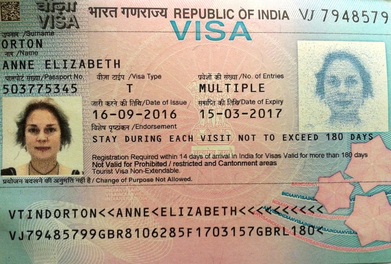
Visa
It often feels that new beginnings are inextricably tangled with old ends and this imminent journey is by no means any exception to that rule. I am where I am now, writing this first blog of a new adventure only because I have shut down and moved away from other phases in my life, which, in their time, were their own new beginnings.

But we build on our experiences, learn from our mistakes and gain confidence from our successes. My ‘old ending’ has a fair share of each of these, a goodly mulch of experiential compost in which to germinate new seeds of promise.

About a year ago, in September 2015, I decided to leave a 12 year career in teaching. You can read in far more detail about the reasons for this in my blog post of the time, initially penned for Education Support Partnership to share on World Mental Health Day. Titled ‘Why I’m Leaving Teaching’, it explains exactly that, but you can guess from the rest of that sentence, the crux of why I left. I then moved 200 miles from where I had been settled for 8 years and started a ‘new life’. In truth, this was less of a new beginning than a holding pattern while I did a lot of very important thinking, a lot of decision making and a lot of not much else. A much needed rest for a battered system. I had a few demons to chat with. I’ve learned recently that fighting them achieves nothing. It’s far better to make peace with them and get them and their energies on your side.

During this time, I deepened and consolidated my burgeoning relationship with a newfound spirituality and came to identify as a practising Buddhist. It didn’t seem coincidental that the only thing my mind kept returning to with any enthusiasm as a possible new direction in life was a Buddhist social project that I had first heard about at a talk only a short time after I decided to hand in my notice. This talk, on Dr Ambedkar day in October 2015 was delivered by Shakyajata, a member of the Triratna Buddhist Order who has been working with oppressed young people in India for many years. Her description the work of the small charity she runs, Young Indian Futures, and their work at Aryaloka Computer Education Centre in Nagpur, offering subsidised education to some of India’s poorest and most marginalised young people, moved me deeply. Her words and the affectionate enthusiasm with which she spoke of the students, reminded me of the true purpose of teaching; a way of improving lives, not a means of paying the rent. Time and again I found myself thinking of this talk and the work being done there, so, in April, I contacted her and we began a lengthy process of getting to know each other, deciding that I would travel with her to Nagpur and together preparing for me to teach English there on a voluntary basis. That is almost as much as I can say in this update about the practical side of it all really! Just a little background to set the stage for what is to come. The events that unfold over the next few months will be of as much surprise to me as to anyone following my updates; I really do not know what to expect. But, where once this would have caused me a good deal of worry, instead I find the open expansiveness of that unknown really very liberating. Anything, could indeed happen, but I’ve no reason to suppose it won’t be entirely wonderful.

During my year of ‘inactivity’ my website has been left largely untouched but as part of preparing to leave the UK, I’ve recently given it a spring clean, something of an overhaul. In so doing I’ve written a few blog posts to update the other strands of my activities, namely arts and running. In these, I’ve had a lot of space for reflection, quite painful reflection at times and have been open about my realisation that one thing I’ve been working through this year is the aftermath of an exercise addiction. Of course, my study of the Buddhist teachings has given me a great deal of support and strength with this, but one thing I have particularly benefited from is a new perspective on how I choose to invest my energy. For a good couple of years, I prioritised running and poured most of my passion for life into it as a source of escape and distraction. This left little of me remaining for anything else. It was part of a broader illness but still did nothing to help me recover. I felt tired. I had no enthusiasm. I had no purpose. The running as an activity was an expression of my anxiety and nervous agitation but even then, I knew I wasn’t achieving anything.

Though there has been much to organise in recent weeks, from visa to vaccines, flights to insurance, lesson planning and packing to domestic duties and farewells, and although I have been perhaps busier than for some months, I feel genuinely refreshed. I feel energised and ready to not just take on but to fully engage with whatever challenges lie ahead. Always, at the heart of this, I aim to maintain an awareness of the finite nature of this energy and to be as wisely discriminating as possible in how I utilise it. My aim, my purpose, is to help others achieve their potential, to reduce suffering, to spread a little love and lightness and laughter. If I can focus my dynamism like a shining beam of light to this purpose instead of squandering it on empty pastimes,  then I have no doubt that a pleasantly coincidental side effect will be my own continued flourishing and development. Over the last few years I have been on a very difficult journey. At times, I wasn’t at all sure it was one I’d get to the end of. There were days when, to misquote a misquote, the light at the end of the tunnel really did seem to be no more than the headlights of an hastily hurtling train. So it’s been tough, but sometimes the only way out is through and now I feel I have the wind on my face again, birdsong in my ears and soft grass beneath my feet. Perhaps most importantly, I wouldn’t be where I am now if I hadn’t made that challenging voyage through darkness and apparent disaster. A kind of death. A kind of rebirth. I’m here, I’m alive and I’m ready. And I just can’t wait to get on that ‘plane!

I was recently very fortunate to be invited to volunteer on the team that ran a weekend for beginners at Vajrasana, a beautiful new Triratna retreat centre in Suffolk. As part of this I was invited to speak in a talk titled ‘Why I am a Buddhist’ (you can read or listen to that talk). As well as the much needed boost to my confidence that I found this gave me (I’ve been not been in a classroom for over a year after all and am out of practice with public speaking!) it also gave me the privilege of standing alongside some very strong co speakers and the humbling opportunity to chat with many remarkable individuals afterwards.
In one such ‘post speech’ conversation that particularly touched me, I was advised to listen to ‘This is the Sea’ by The Waterboys, a band I happen to have been fond of for some time. It seems so beautifully poetic, in the context of this song, that I have spent my months of recuperation living on the Thames Estuary and frequently walking (or running!) past the Crow Stone; the point at which the river becomes the sea. This is to me a perfect analogy of the transition I am in the final stages of making and in the words of The Waterboys:
‘Once you were tethered.
Well, now you are free
That was the river
This is the sea!’


Twelve days and counting... A new beginning awaits!
0 Comments
Forward>>
    ‘Magga’ is the Pali word for ‘path’.  In Buddhism, this word is often linked to the Ariya Magga, or Noble Eightfold Path, the fourth of the Four Noble Truths, which is the path to the cessation of suffering.
    ‘Mission Maggamouse’ is the latest catalogue of the adventures of Glittermouse; a visual artist and educator. It has been initiated specifically to record and share her experiences at Aryaloka Computer Education Centre, a Buddhist social project in Nagpur, offering subsidised education to some of India’s poorest and most excluded young people. As a recent Dhammamitra (mitra who has asked for of ordination) of the Triratna Buddhist Order, this activity is an important step in integrating her teaching experience with her spiritual aspirations. You can read more about Glittermouse on the ‘home’ page of this site.

    Mandala

    Categories

    All
    Aryaloka
    Celebrations
    Deekshabhoomi
    Dhamma
    Domestic Life
    Dr Ambedkar
    Nagaloka
    NNBY
    Sangha
    Teaching
    Triratna
    Young Indian Futures

    RSS Feed

Powered by Create your own unique website with customizable templates.