Earth Heart Holistic
  • www.glittermouse.co.uk
  • Earth Heart About
  • Earth Heart Blog

Homemade Incense Blends

6/6/2024

0 Comments

 
Herbs, woods, resins and gums have been burned for centuries both in ritual settings and in domestic spaces to purify, cleanse, create sacred atmospheres and simply cover up cooking or, um, bathroom smells, though I once saw an interview with a Chinese Buddhist monk, who found it absolutely hilarious that the western home habitually reserved incense burning for toilets instead of devotional practices! He may have had a point!

I first encountered incense like many people, during my teens, in the form of dhoop (like stick versions of incense cones) then quickly moved on to the longer, thinner joss sticks but it wasn't until my adult years that I discovered the more natural incense blends that require a charcoal disc to burn. Sticks and cones certainly have their place but sometimes you just can't beat the 'real' stuff; actual burning of botanical materials with no artifical boosters, binders or bulking! I suppose it's the aromatic and ritual equivalent of loose leaves in a pot as opposed to the convenience of tea bags!
Incense Burning
Incense Preparation
Incense Preparation

​There are some totally gorgeous blends commercially available and when I'm visiting Glastonbury, I'll usually treat myself to a jar from Starchild but I'm also a firm believer in the power of homebrew and if I want to use incense ritually with a particular intention, I consider it far more powerful to make my own blend, using local homegrown or foraged ingredients where possible. 

Now I don't live in a place where I can forage frankincense or myrrh but you'd be surprised what you might have growing (or sitting in the kitchen!) ready to add to more exotic purchases for all sorts of fragrant delights and it doesn't take much to create your own blend. Depending on your ingredients, a pestle and mortar is perfectly adequate to crush and blend many ingredients though I do reach out to our electric coffee grinder at times. I try and keep that to a minimum though, as the heat it generates can compromise the aromatic compounds and hand-blending is a more effective method of investing the incense with your intention. You can't really get it wrong, but here are a couple of my favourite 'recipe' ideas to get you started; begin with roughly equal amounts of each ingredient and adjust to your tastes!
Incense Blends
Self Care Blend:

Rose petals, Lavender flowers (both home grown and dried gently if possible) and Myrrh
​

For 'me time' and helping cultivate self love and compassion, great for inner child work. I use it when I'm concentrating on healing around the heart and throat chakras
Cleansing Blend:

Frankincense, Sage (homegrown or use Taos/White Sages or a blend of all the above!) and Palo Santo chips
​

For energetically clearing a space, preparing the ground for other energetic work or simply to help clear out stuck and stagnant energy from your home, body or mind! A good way to prepare for meditation, I find.
0 Comments

Homemade Skin Care Balms

15/5/2024

0 Comments

 
Skincare Balms
In my last home skincare post, I described a process for making herb infused oils. These oils are great massaged into skin on their own but I also like to use them as base oils for simple balms. Typically, though they infuse the properties of the plant you've used, they don't have a strong scent so they also make really good carriers for blending stronger smelling essential oils into the balms without overloading the olfactory system!

Home made balms are wonderfully simple to make, you don't need any special kit or anything you're not already highly likely to have in your kitchen. They last well and make great additions to your selfcare routine as well as impressive little gifts! I use them as lip balms, moisturisers, semi-solid massage oils and first aid solutions for cuts, bruises, scratches and grazes. They're great for gardener's hands and chapped, weather worn skin. They can even be soothing for burns as long as you've properly treated the area with cold, running water first and have used a cooling oil.
To make balms, all you're doing is melting together roughly equal amounts of different fats, one that is liquid and one that is solid at room temperature. Together, they give you that lovely soft ointment that's easier to control than oil but quicker to melt into your skin than a solid fat. Of course you can tweak the proportions to give yourself a softer or harder product and there's much to be gained from blending different solid/liquid oils too. When I first learned to make these, I defaulted to the traditional beeswax as my primary solid oil but these days I like to make them vegan so I favour cacao butter and/or coconut oil. I find the chocolatey scent of the cacao butter quite strong so I often blend it with unscented coconut oil to knock it back a bit. Ayuervedically speaking, I also like that blend as cacao would be considered heating and coconut cooling, so they'd balance each other out a bit. Having said all that about plant based fats, I was recently gifted some beeswax from a local beekeeper, so I did add it to a blend and it was very lovely! In terms of the liquid oil, I quite often default to sweet almond. It's a classic, affordable, skin nourishing favourite that's widely available, but of course, it's not suitable for you if you have a nut allergy! Avocado and evening primrose oils have also worked well for me but really you could use anything you might select as a massage oil base. As with all fats, go organic if you can. I can't always afford it myself but it's so much better for your skin and for your planet!​

Homemade Balms:

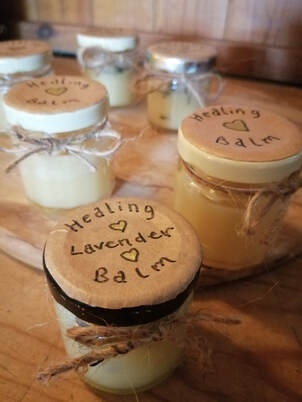
To begin, roughly measure your fats into a pan. If you're using your infused oil, of course you'll want to strain the bits out first. I find it easy enough to weigh them pretty vaguely but you could use a jug/cup measure or simply trust your judgement! Gently heat the pan until the solid fat melts into the liquid oil and they blend fully. If you're able to get a nice, low flame on a gas cooker this stage will present no problem but if you're using electric or it's quite an enthusiastic hob, you'd be better off using a bain marie or double boiler; a bowl over a pan of hot water would do it, to warm it gently enough to melt but not to over heat or burn it. Remember that plant based solid fats will likely melt just at average body temperature. You really aren't trying to cook it, and if you are using your precious herb infused oils you definitely want to avoid excess heat, which will risk degrading the active herbal properties that you so carefully infused! When your oils are blended, pour the mixture into sterile jars, I'd recommend pouring from your melting vessel into a jug first. I like to re use miniature jam pots for this which means I can then make a full range of different scents from just the one base batch. You can add essential oils or dried herbs and flowers directly into the pots at this stage but you'll need to move relatively fast to catch them before they solidify. You can take your time a bit in summer or if you have a cosy kitchen!
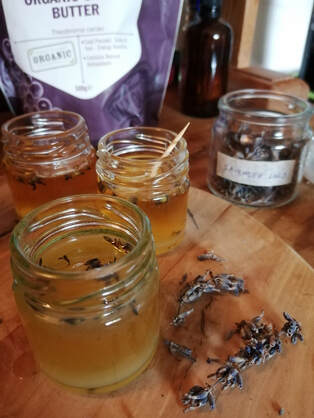
Lavender Balms
If you're using essential oils, remember that as volatile oils, they evaporate very fast so pop the lid on as soon as you can so you don't lose too much. For a small jar, you won't want more than about ten drops in total, depending upon what you've chosen to work with. Using dried flowers and herbs is lovely at this stage too but be warmed; less is more! The fragments of delicate petal or dry leaf will eventually be rubbed onto your skin with the balm and can be either scratchy or a bit clingy depending upon what you use. I once got carried away and put a whole dried rose into a balm pot, unwittingly awarding myself the job of picking tiny bits of rose petal off my skin and bathroom floor until the balm was no more! Whatever you're adding, give it a little stir with a cocktail stick or something similar, pop the lid on and allow it to cool to room temperature, slowly. If you've made sure your jars are properly dry after you've sterilised them, and you do need to let them fully air dry, then there'll be no problem with condensation on the closed lids as they cool. You certainly don't want water in there, hence the use of dried herbs; oil and water don't mix!
Once the balms are cool, you have the pleasant task of labelling and it's good to record the date you made them too. I find the balms keep very well, though fresh is best with plant products generally. Older balms won't do you any harm but they will be far less potent and oils will go rancid over time. I like to use mine within a year but I've stretched to two with no adverse effect! Remember they're heat sensitive and will remelt if you leave them in the sun, or any other warm place for that matter!

I find it as satisfying to use my own homemade skin care as I do to cook (and eat!) our own home grown veggies so I'd very much recommend having a play. Experiment with different oils and herbs, mix them up, try new combinations and though I'd suggest something more ethically sourced than eye of toad, a bit of kitchen witchin' can't be beat! Have fun until next time! Xx
0 Comments

Herbal Oil Infusions

17/4/2024

0 Comments

 
Round about this time of year, I usually start looking at my dried herb stock from the previous harvest and assessing what really needs using up to make way for the fresh growth promised in the coming months.

There are many ways to utilise the properties of dried herbs and my standard remedial quick fix is in simply brewing up a pot of tea but that's certainly not the limit of their application. As well as in teas and cooking, many plants can really come into their own in topical treatments and skin care. Fats are great carriers of nutrients such as vitamins and while using oil on your skin is certainly not going to give you the same kind of dose as ingestion, dermal absorption can still be effective. In fact, while I was studying aromatherapy, we were taught that around 60% of what goes on your skin will make its way in to your system.


Solar Infusion Method
Some Rather Optimistic Solar Infusion!
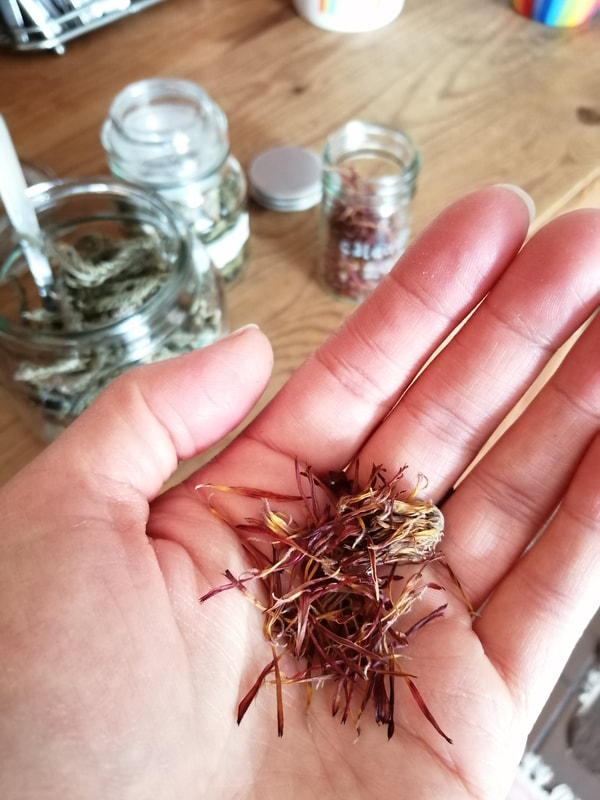
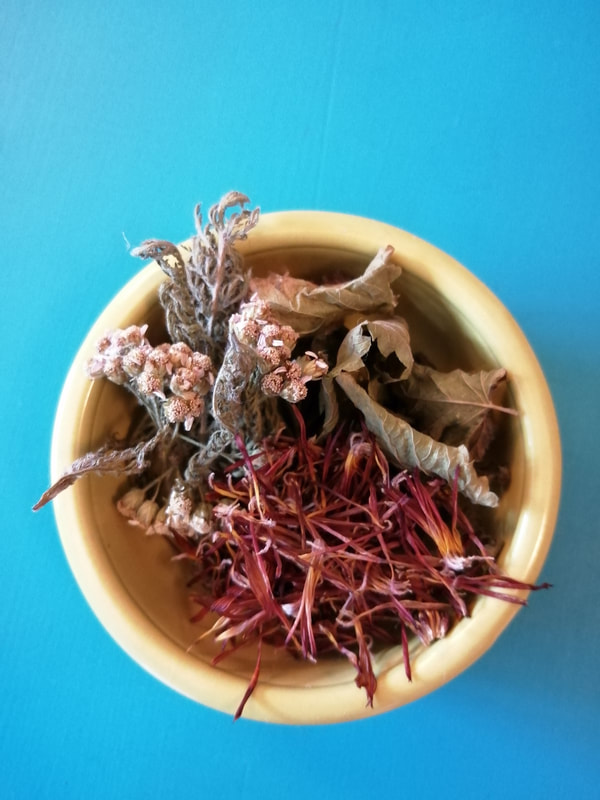
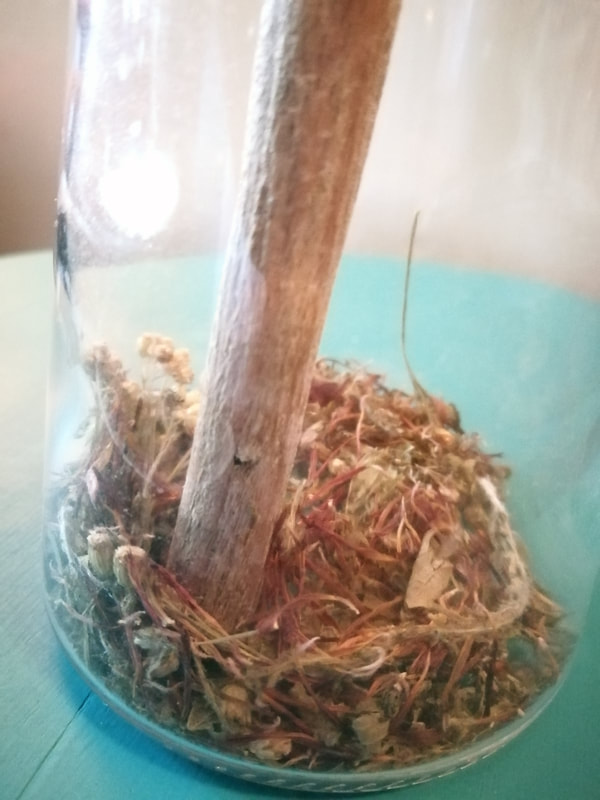
Herbs Waiting for Infusion
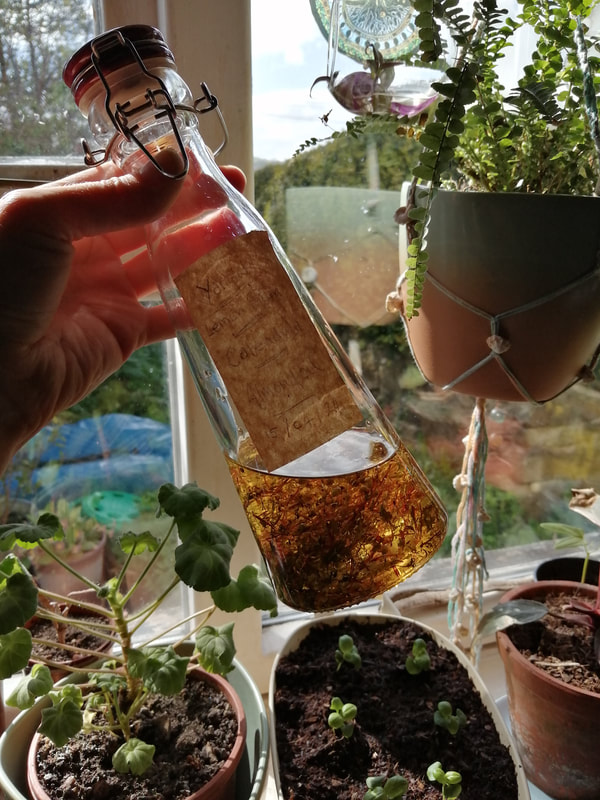
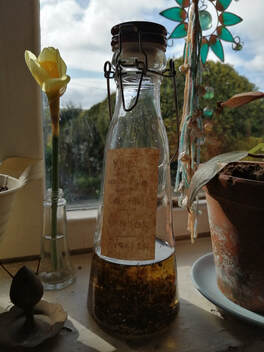
Distilled essential oils have their place but they're so volatile that you really need to use them pretty quickly before they've evaporated. An alternative that's also much more feasible for home production is oil infusion. There are a couple of easy methods that I employ, depending upon how much of a hurry I'm in; solar or heat infusion. Solar infusion simply requires your herbs and oil to be added to a glass vessel with a good seal and placed on a sunny window sill for a couple of weeks. It'll need a bit of monitoring to make sure the herbs stay below the surface of the oil. I also like to give it a good shake a couple of times a day, or whenever I remember, to help the process along. 
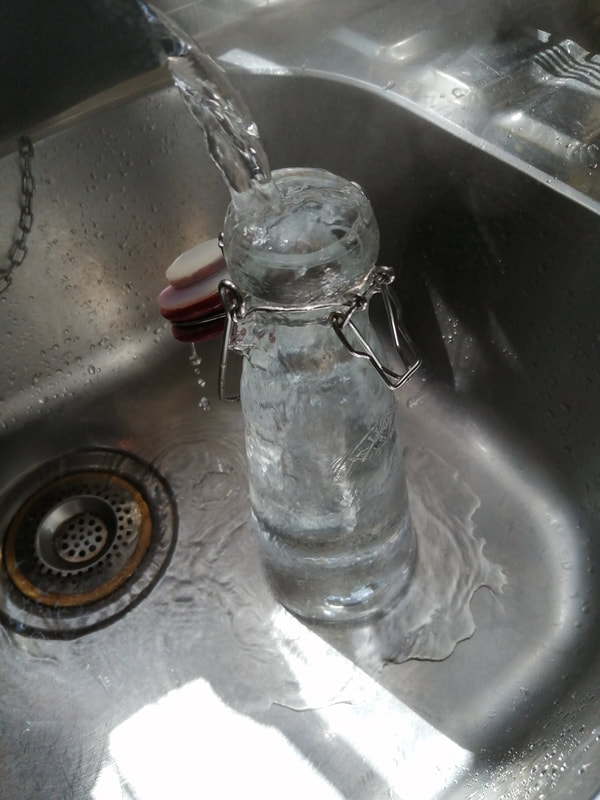
Heat infusion is a little more involved; with your herbs and oil in a good heavy saucepan, you need to be giving the blend enough heat for the herbs to release their compounds but you're certainly not aiming for a fry-up! Low and slow is the best method. Some sources even recommend heating to less that 40°C for three days! That's not practical enough for me so I'll just pop it on as low as I can while I'm pottering in the kitchen, maybe a few hours if it's a busy morning. When it's cool, it can be strained into bottles and used. For either of these methods, it's good practice to make sure your glass vessel is sterilised with boiling water but do make sure its completely air dried before adding any oil. With the solar method, you also want to allow plenty of space in your jar, to give it a shake every so often and to make sure the herbs don't swell so much they come above the level of the oil. If that happens, you'll need to top up with a bit more oil.

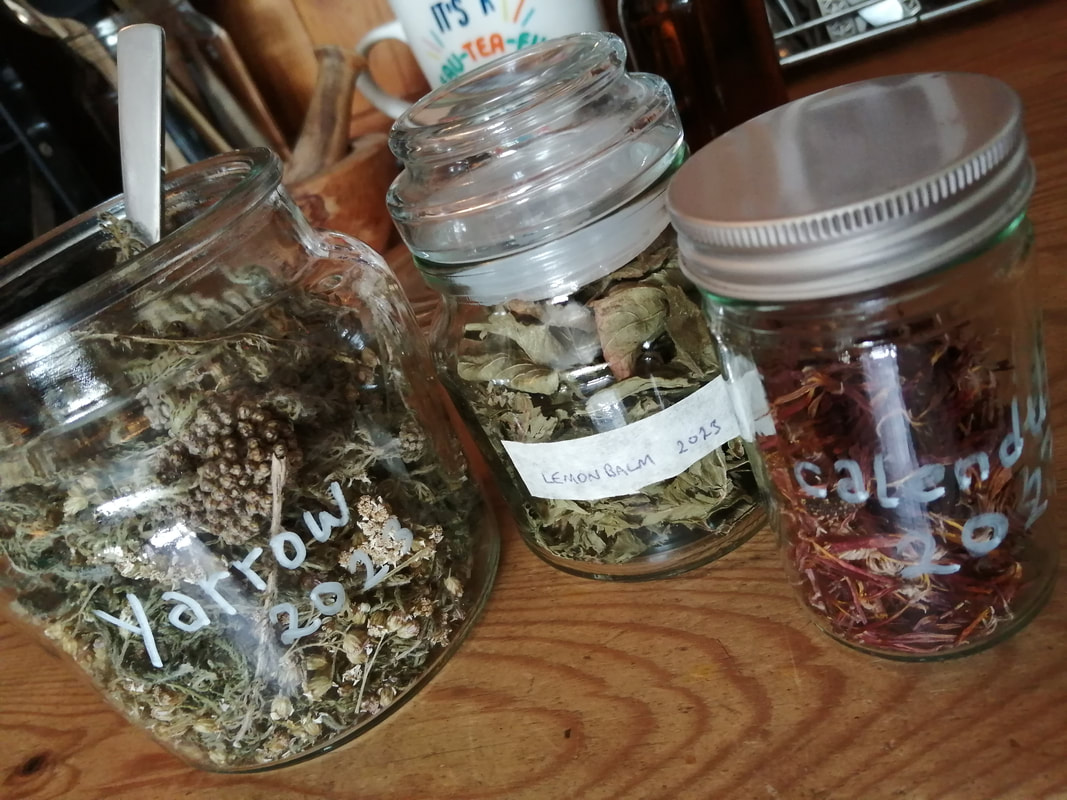
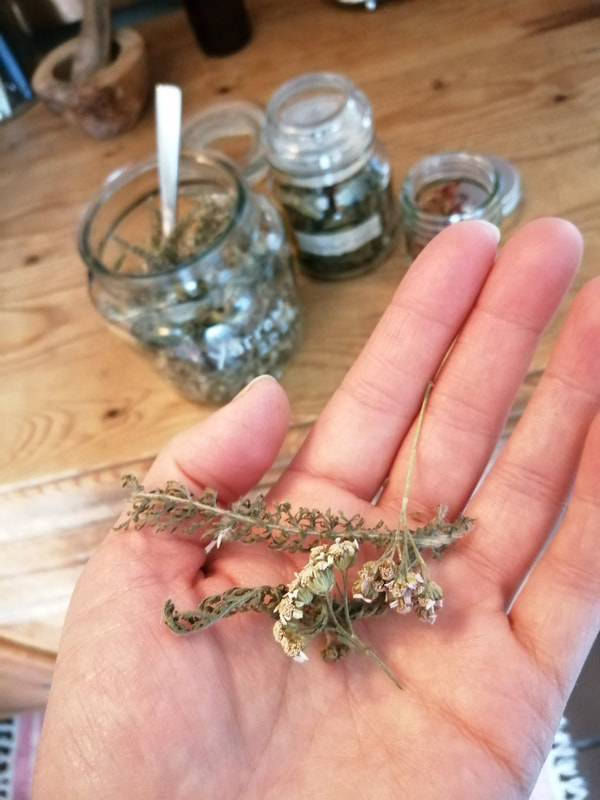
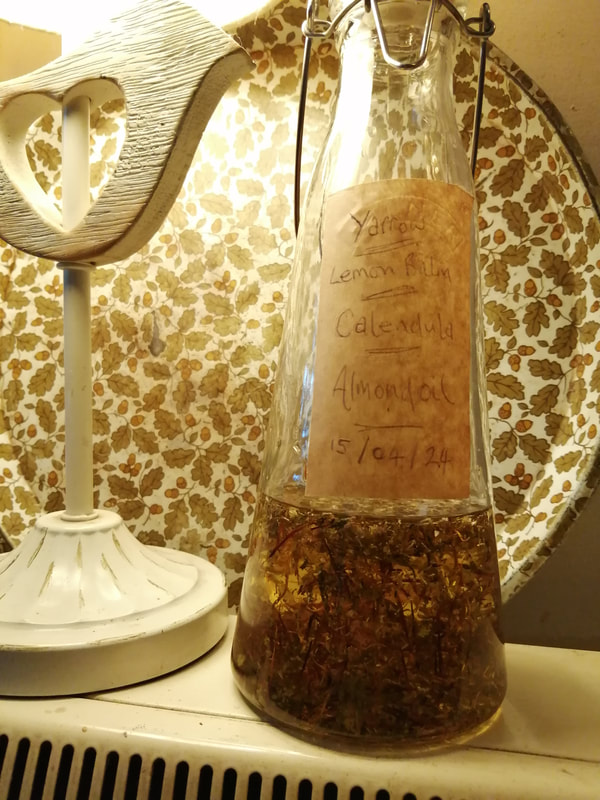
Yarrow, Lemon Balm and Calendula; Heat and Solar Infusion:


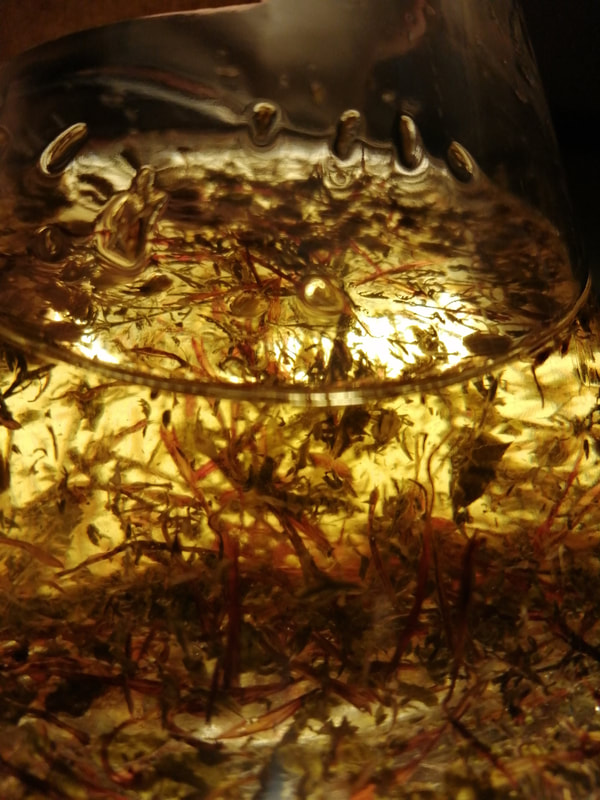
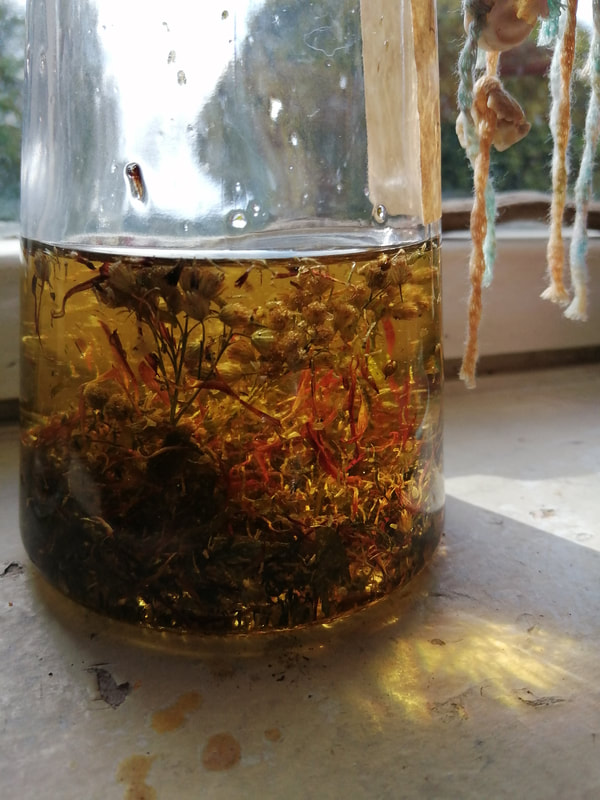
​For my latest infusion, I'm trying a mixture of both solar and heat methods! I've got my blend in a bottle that can sit on the window sill when the sun is out but I've been letting it sit on the storage heater in the kitchen at night and on cloudy, cold days, which, it seems we've been having more often than not! This time I'm using yarrow (leaves and flowers), lemon balm (leaves) and calendula (flowers), all of which are often used in skin preparations as soothing, uplifting and gladdening herbs. I'm using sweet almond oil as my carrier, a classic, nourishing, skin friendly tonic! After a week or two, when I'm happy that its had enough time, sun and gentle heat to do the work I'll be using it primarily as a topical oil for dry skin but it would also be totally safe to use as the base for a summery salad dressing...
Hmm. Summmery...
​Well, 
​we live in hope! It's got to come eventually!
0 Comments

    ​We're Nik and Annabeth. This is Earth Heart...

    Read about the Earth Heart Project here...


    Picture

    ​Reaching Out?
    [email protected]

    Categories

    All
    Buddhism
    Foraging
    Herbs And Healing
    Land
    Meditation
    Organic Gardening
    Placemaking
    Poetry
    Seasonal Eating
    Seasonal Festivals
    Sitar
    Upcycled Crafts
    Vegan Home Cooking

    RSS Feed

Powered by Create your own unique website with customizable templates.