Earth Heart Holistic
  • www.glittermouse.co.uk
  • Earth Heart About
  • Earth Heart Blog

Maggamouse iii - The Path

15/10/2016

1 Comment

 
We had nothing planned until the evening ‘checking in’ with the girls today and I have been feeling somewhat snotty (I’m assuming this to be an initial reaction to alien atmospherics), so I decided to take it gently and do some Dhamma (Indian version of Dharma) study after our morning meditation. After Shakyajata had refreshed my memory of the Four Reminders (OK, so that was a minor bit of lesson preparation, but still counted), I listened to a talk I had downloaded by Subhuti on the Five Niyamas. It’s pretty fundamental Buddhism but is perhaps a little weighty to make any detail appropriate on this platform so I’ll leave you to research that further if it inspires you. However, it’s all linked to the concepts of conditioned co-production, which is perhaps best explained with a phrase that may be familiar;
 This being, that becomes;
From the arising of this, that arises.
This not being, that does not become;
From the cessation of this, that ceases.


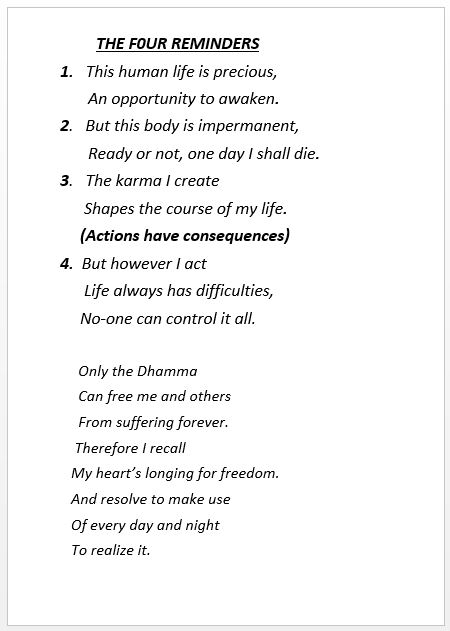
This could all get very deep, very fast, but whilst I have no desire to inflict that on you, it did seem to set the tone for my day and I began considering the conditions that have led me to be here. This is on a practical level, the unfolding of events that have resulted in my arrival in India, as well as from a potentially more mysterious angle as I reflected on Subhuti’s references to structured patterns in reality. These, he explains, mean that your intentions modify the world around you and may affect what comes back to you, possibly even across lifetimes. Now, it is important here to reference the fourth reminder; ‘However I act, life always has difficulties, no-one can control it all.’ This is not saying that ‘bad things happen to good people’ (sure, they do, but they happen to good people too), nor that if you experience suffering in your life it is somehow, distantly your fault.
Picture
The Four Reminders (as typed by Hema)
The young people at Aryaloka have been brought up in communities who for generations have been oppressed by a different approach to Khamma (Karma), with the belief that to be born outside the privileges of the caste system is simply your lot in life due to your past unskilful actions. This is not how Buddhism interprets it, certainly not in Triratna, but still we accept that our conscious, deliberate actions, affect a natural process that governs our experience of everything around us. The third reminder tells us that ‘The karma I create shapes the course of my life. (Actions have consequences)‘, which is the essence of this concept and led me to again consider the analogy of the ‘path’ by which we travel through life.

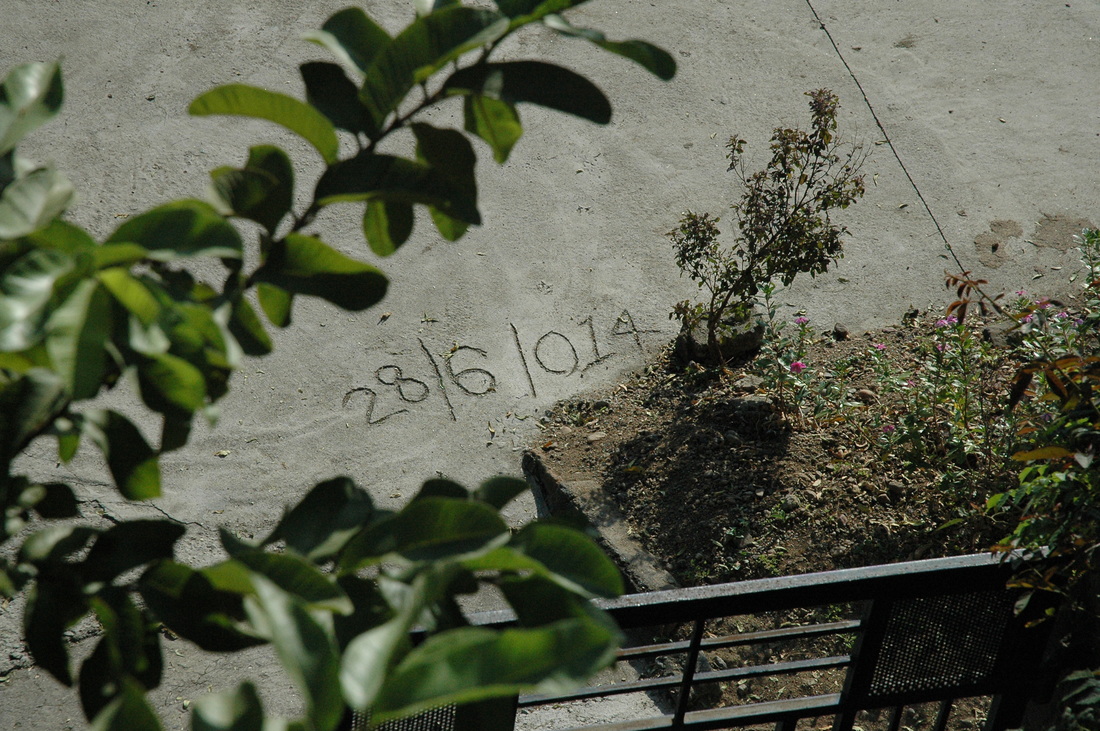
On the day I arrived, I asked Aryaketu why the date of June 28th is inscribed into the cement outside his house. That’s my birthday, so it caught my attention.  He explained that was the date the road had been laid.
Picture
No excuses for forgetting my birthday in this household!
Now, some superstitious types might latch on to that as an indication of some force of fate at work, whilst more logical types might manage a wry smile as they explained how we seek patterns in things to explain the universe and that any meaning in these are merely human inventions. I don’t think Buddhist teaching would disagree with that statement, we are taught that we create the world with our minds after all; however, it would not dismiss a more mysterious perspective either. We know reality is ordered and things do not arise randomly. Whatever thoughts it’s poetic at least that my birthday is inscribed in the path, or ‘magga’ that leads to Aryaloka.
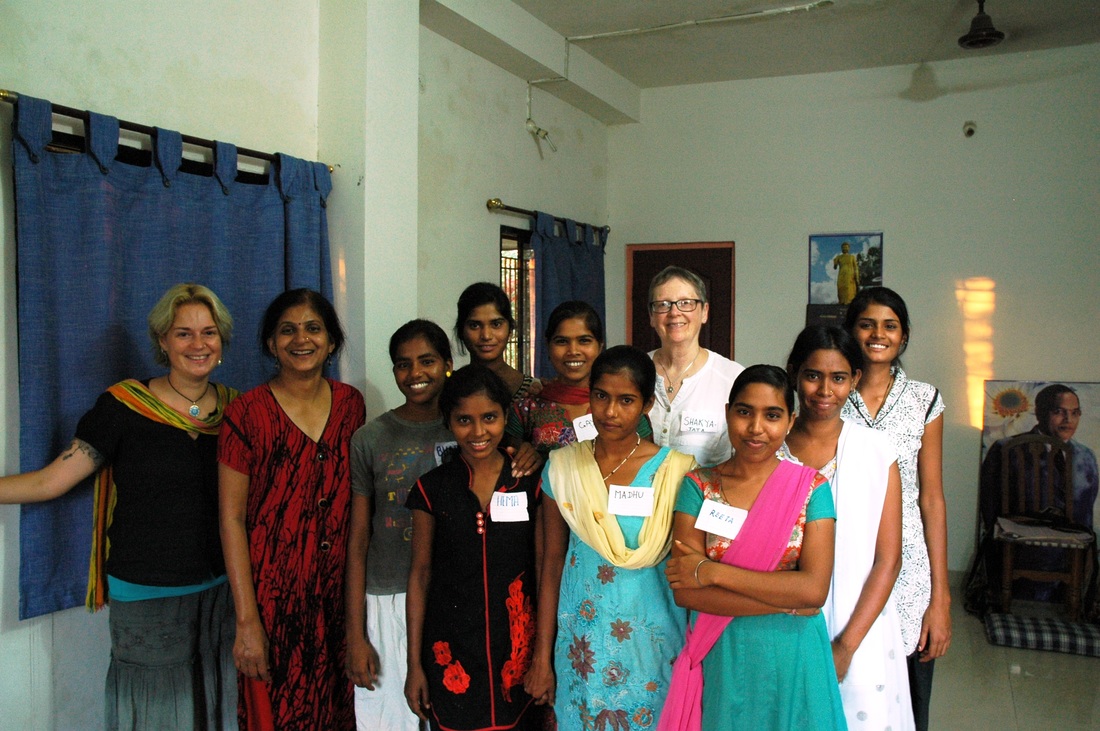
At 4pm, we gathered the girls into the shrine room (it was cooler than the classroom) for a group chat, to ‘check in’ and share how we were all feeling. This is a common practice in Triratna teams and a really useful way to build trust and mutual awareness. Sheetal kindly interpreted for us, seamlessly switching between Hindi and English. As well as providing an opportunity for us to get to know the group a little better, it was also nice for Shakyajata and me to rejoice a little in each other’s merits and to publically recognise things we value in one another. The girls’ stories were on a whole different level though and they seemed very keen to share them with us. Each described her initial apprehensions around leaving her home and family with similar sentiments yet clearly differing flavours of individuality and despite being one stage removed by the translation, it was easy to get a palpable sense of their longing for opportunity and freedom from an otherwise bleak future. None of the girls have been away from their homes before and in the close-knit familial culture of India, this is in its self a very big deal. Most of them have come to learn computing skills having never before even set her eyes on a computer, a fact I think pretty much every British teenager would find quite unimaginable. Several girls described the long, arduous train journeys from their home states as the first time they had even been on a train. UK commuters (myself included) may grumble about the aftermath of privatisation but I reckon we’d be silenced pretty swiftly by five hours in an Indian sleeper berth, a pleasure I’ve yet to savour. These journeys are especially unsafe for women, even those who aren’t as vulnerable as an eighteen year old independently travelling for the first time. Each girl had her own story of overcoming significant but natural anxieties to get to Aryaloka, but each concluded by expressing how she had since discovered such genuine joy and optimism that it was easy to forget the reality of the backgrounds from which they have come. Hemlata’s concluding tale of a determination to travel completely alone, (even having convinced her mother to allow it!) when it seemed her friend, Pinky, would not come after all, simply underlines the sheer yearning and determination of these intrepid, yet gentle souls. It wasn’t until she went on to describe how she had called her mother to say she mustn’t worry for her safety as she had found ‘a new family’ at Aryaloka that I realised just how much I identified with their stories.
Picture
Me, Sheetal, Shakyajata and the Young Women of Aryaloka 2016!
My being here has come about as the result of my own  suffering, albeit of a very different flavour, and I too have recently sent messages to a (mildly) worrying mum to let her know I am safe and cared for after a long journey. I too, have committed to the longest time away from home I shall ever have known, in a foreign place and with little knowledge of what awaits. Happily, I can also share that deep sense of relief, joy and eager anticipation of what is to come that Hemlata and her new sisters all communicated today. I too have found a new family, and while I may think of those I have left behind, I am safe in the knowledge that I am also now forging new friendships for life.
Tomorrow, we face the bumpy, dusty, crowded bus ride up the Kamptee Road to the centre where the young men live and study and I am sure we shall be treated to expressions of much the same degree of commitment and motivation to self-improve. Though we may, or may not have arrived at our current experiences of life as a result of our own actions, what is true is that the actions we take now will certainly affect our experiences of the future. These young people seem instinctively aware of this, be it Dhamma teaching or not and I’m so keen to meet yet more of them that I’m even looking forward to donning my dust mask and getting on that rickety bus!
1 Comment

To the Deekshabhoomi and a First Class in English!

14/10/2016

0 Comments

 
The experiences are coming in so thick and fast here at Aryaloka that it seems hard to keep on top of the priorities in so far as my aims for this blog. I set it up primarily to record, but then also communicate my time exploring the unfamiliar geographical and psychological landscape of my new position as a volunteer teacher in a foreign social project. This is because I could see before I even applied for the visa that the new perspectives I was bound to encounter could be of value to many people, if only I could articulate them. I hope my western friends and contacts may be able to understand their privileges and challenges with more clarity in a global context and believe the work being undertaken by my Indian colleagues to be anyway so very deserving of recognition, broadcast and celebration. It can be a complex operation to separate this genuine desire to broaden horizons from the almost voyeuristic impulses of the travelling photographer; look at this photo of a funny crisp packet, this description of a strange social norm, this ‘tragic’ symptom of disadvantage and poverty. I shall be clear; however, that whilst none of my observations are intended to judge, condemn or laud either my own or another’s culture, I am aware there will be times when I shall find it difficult to avoid some apparent poignancy.
The people I have met so far though, are far from in need of western sentimental sympathy and in fact we could learn a great deal from their resolve, their generosity and their extensive application of remarkable energy and steadfast determination to achieve what must done. They appear to be, in many respects far happier and more grateful for far less than many of the most challenged British citizens.

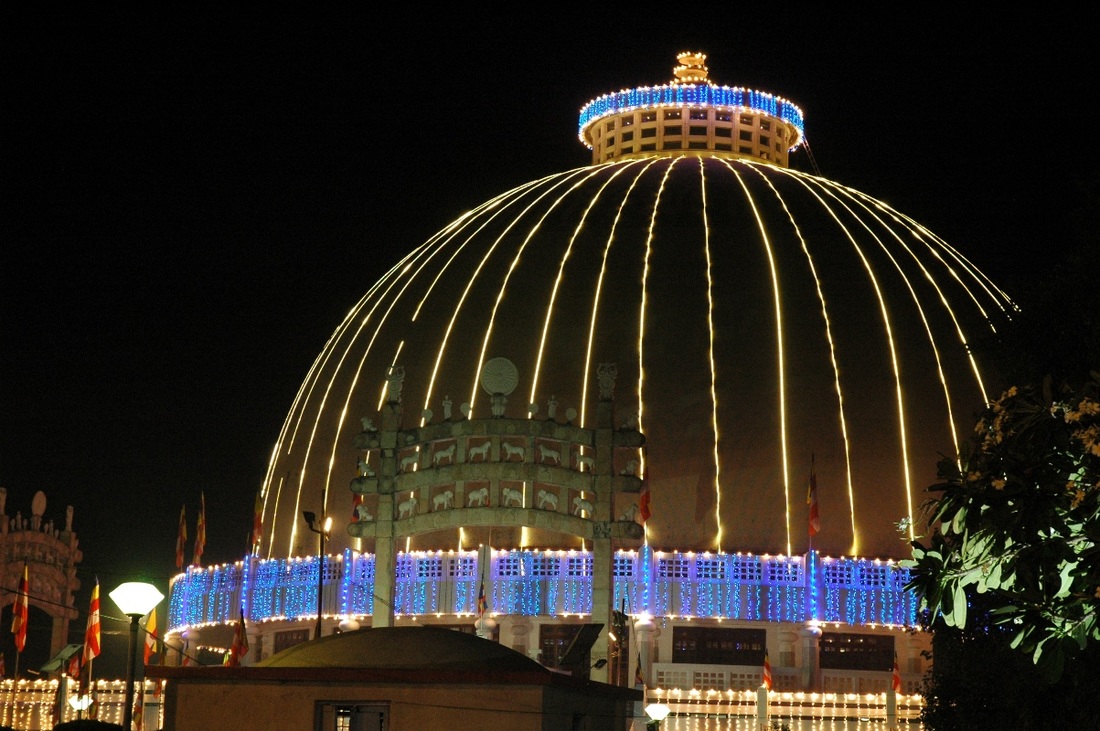
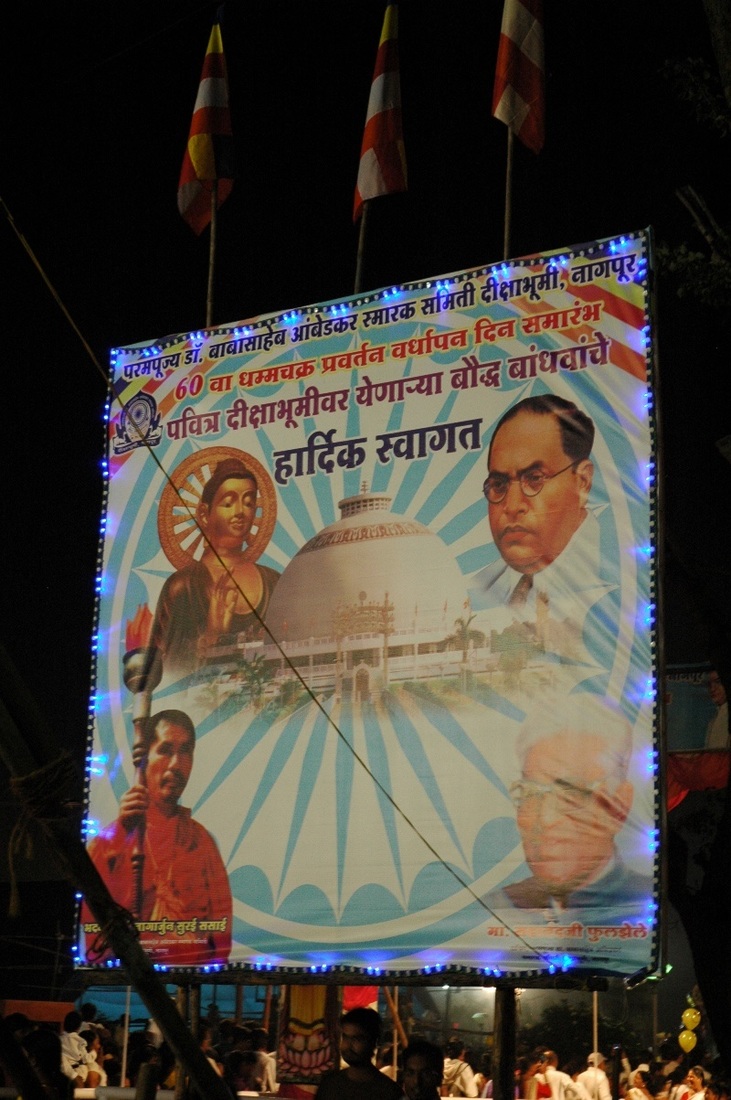
Things have, of course, improved dramatically for many local people in recent decades, due in part to the reason for our attendance last night at the Deekshabhoomi, to celebrate the 60th anniversary of the mass conversion to Buddhism of Dr Ambedkar and his followers. This genuine social liberation and increased prosperity found in education and spiritual development is not just a credit to a remarkable man and those who continue his work, but an ongoing trend to be treasured, shared and cultivated.

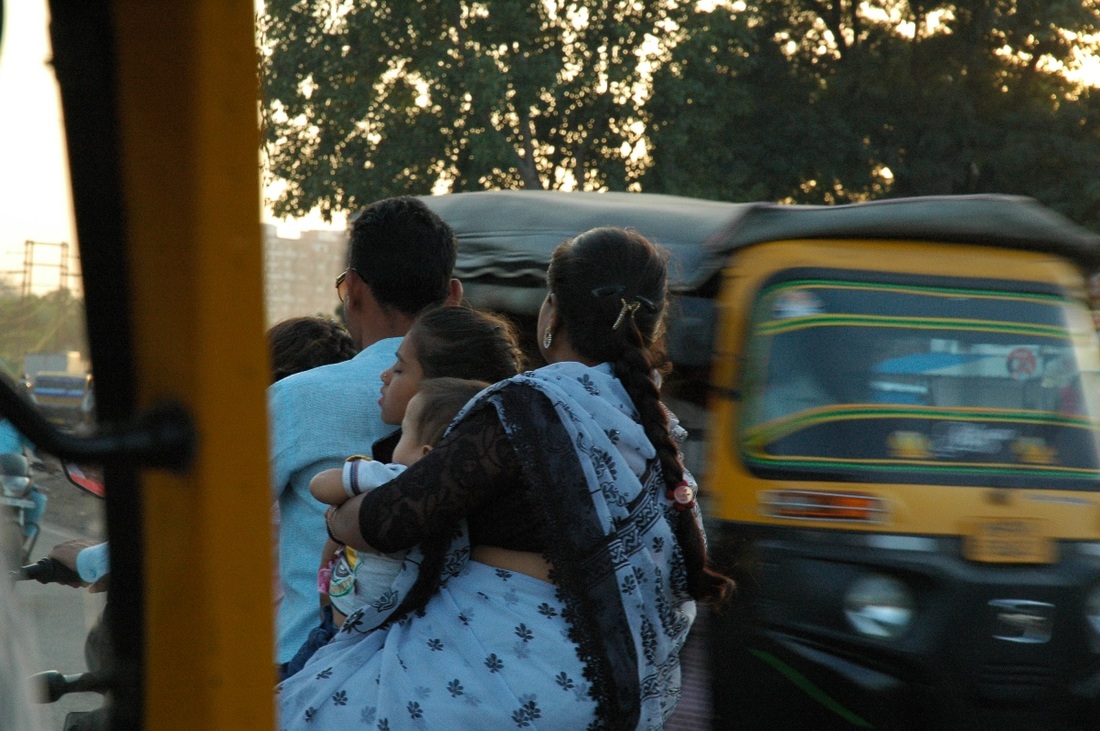
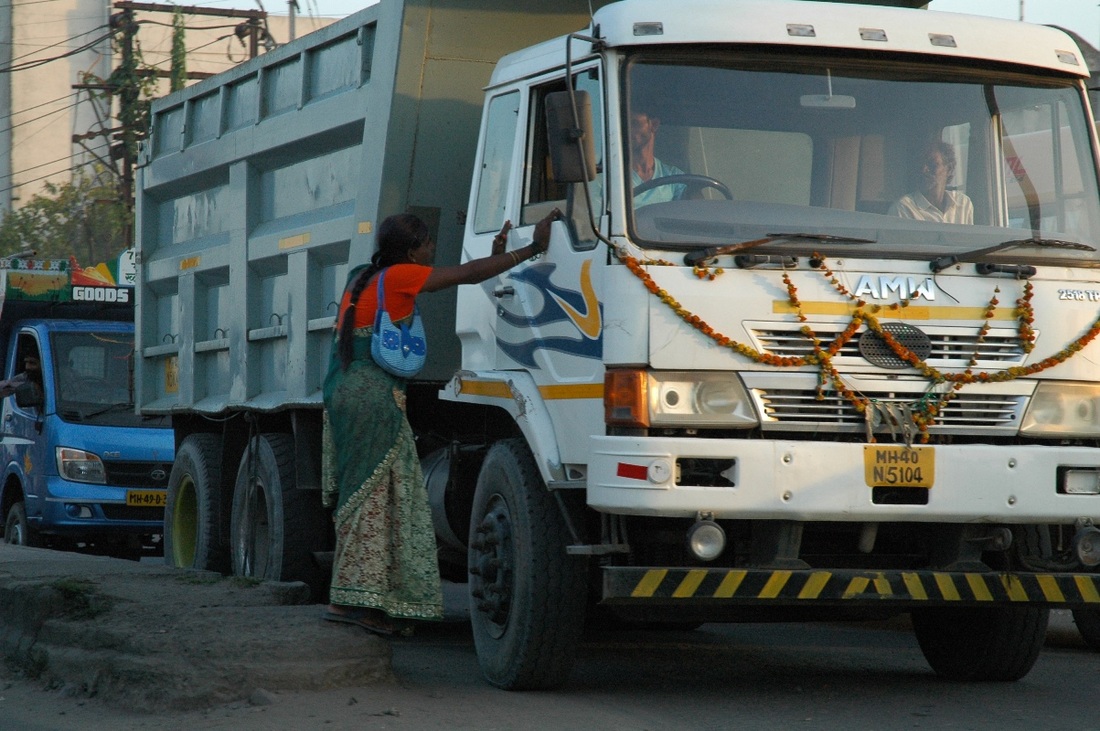
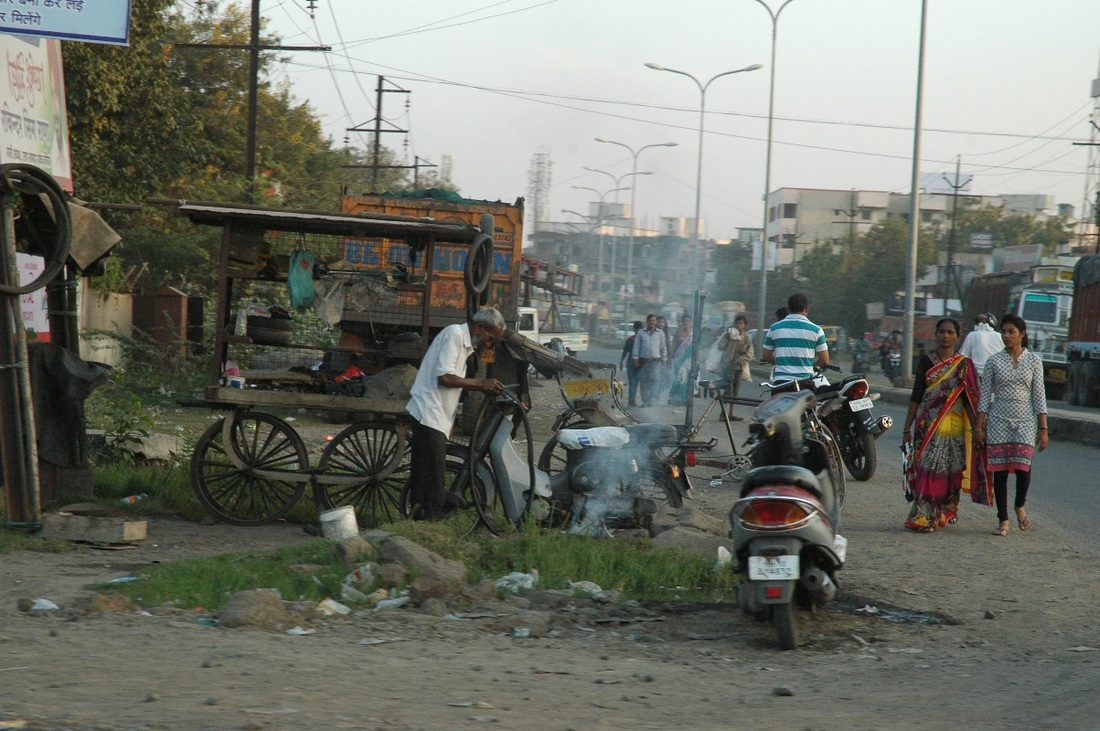
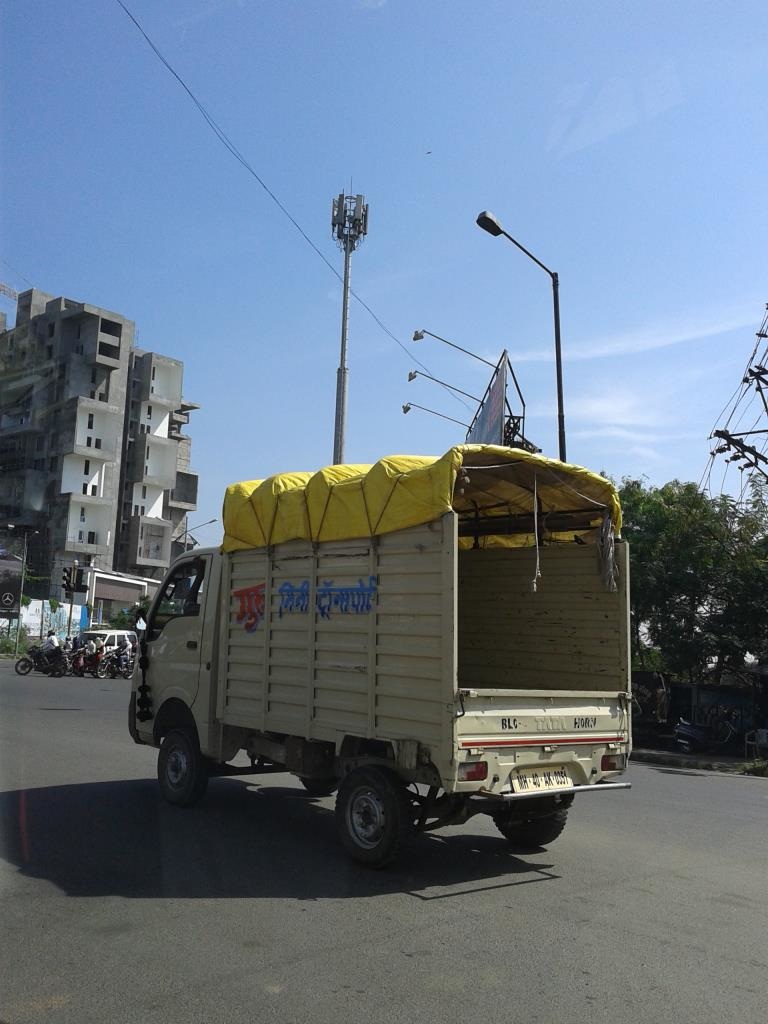
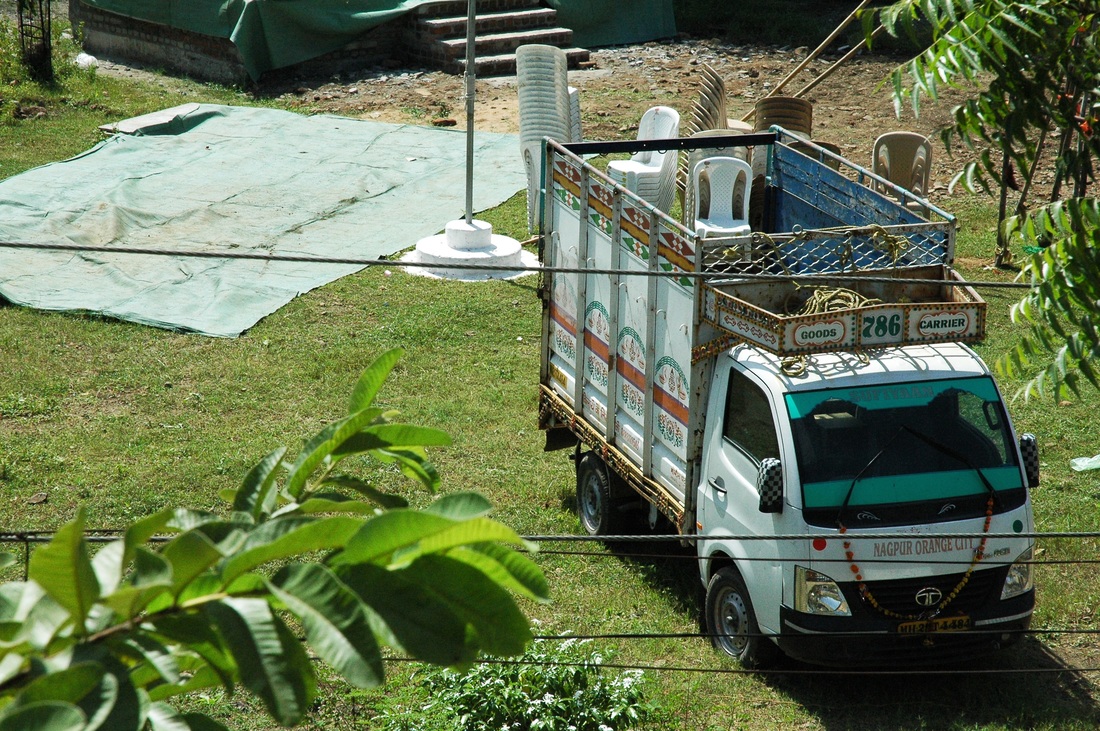
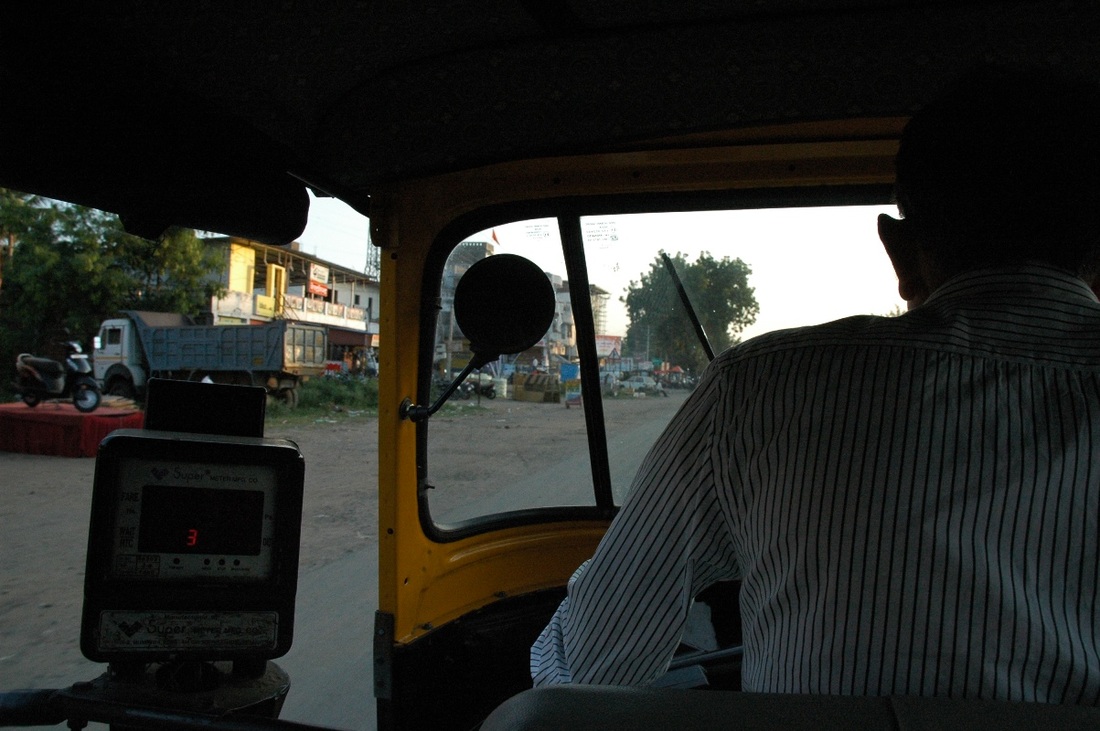
We travelled to the Deekshabhoomi by auto rickshaw, an experience enough in its own right, as the father of our friend and ex-Aryaloka student Neha, battled through fleets of oncoming traffic and intrepidly held his own amidst entire families clinging to scooters, impatient cars, and streams of the large, brightly decorated lorries that are such a feature of the dusty Kamptee Road. Neha’s ‘Papa’ is fortunate today; as a result of the generosity of many donors, it was possible to purchase the tatty, beat-up vehicle and relieve him of the back-breaking work of endless daily pedalling. My friends and I might have been one of his lighter loads too, though this has not eradicated the health risks of his profession; the pollution is enough to cause western visitors to seek the limited protection of dust masks, even for a thirty minute journey, and with an unpredictable response rate to what rules of the road do exist, traffic accidents are common.

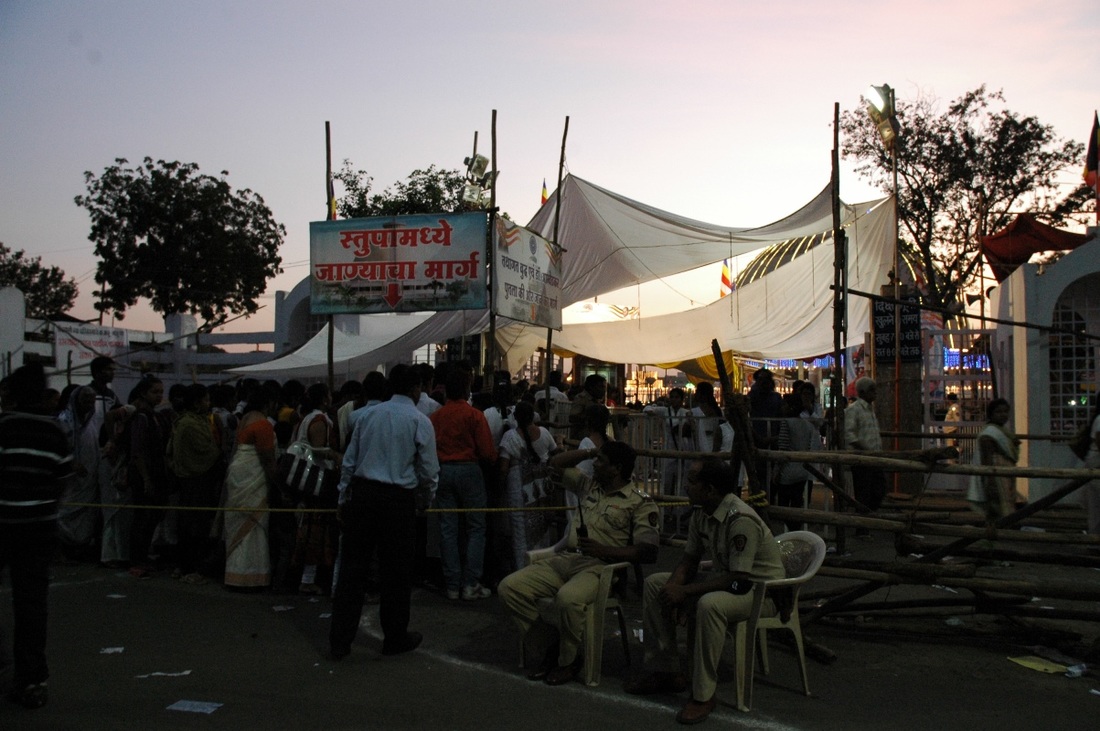
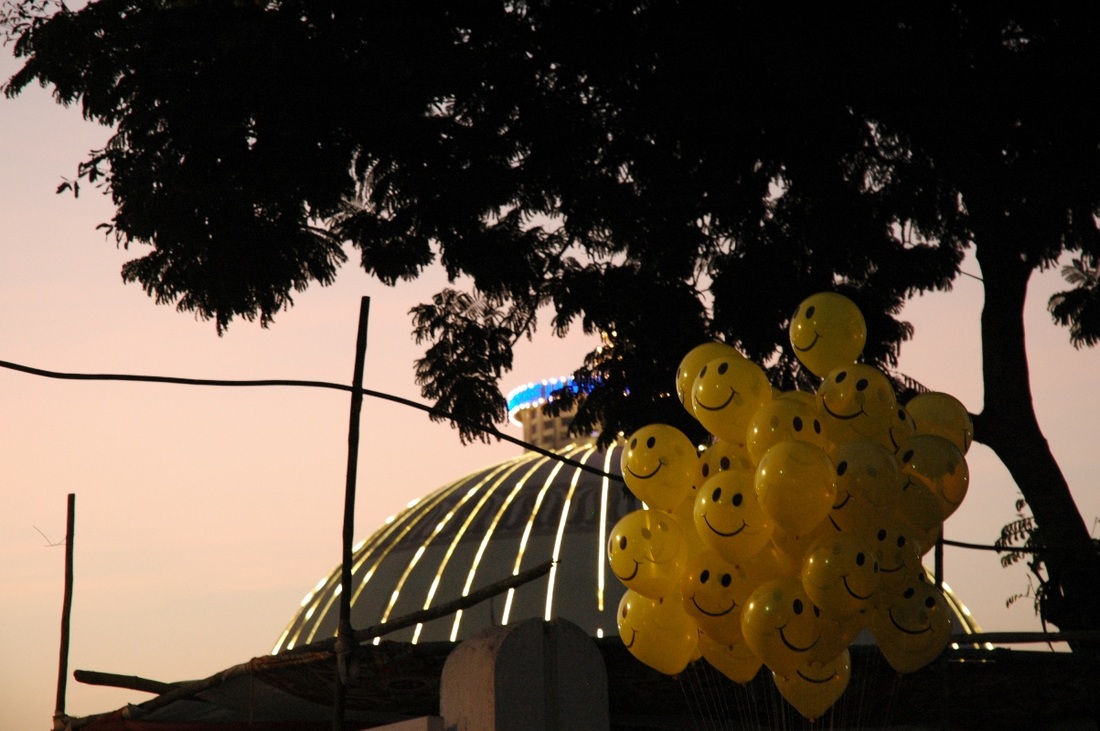
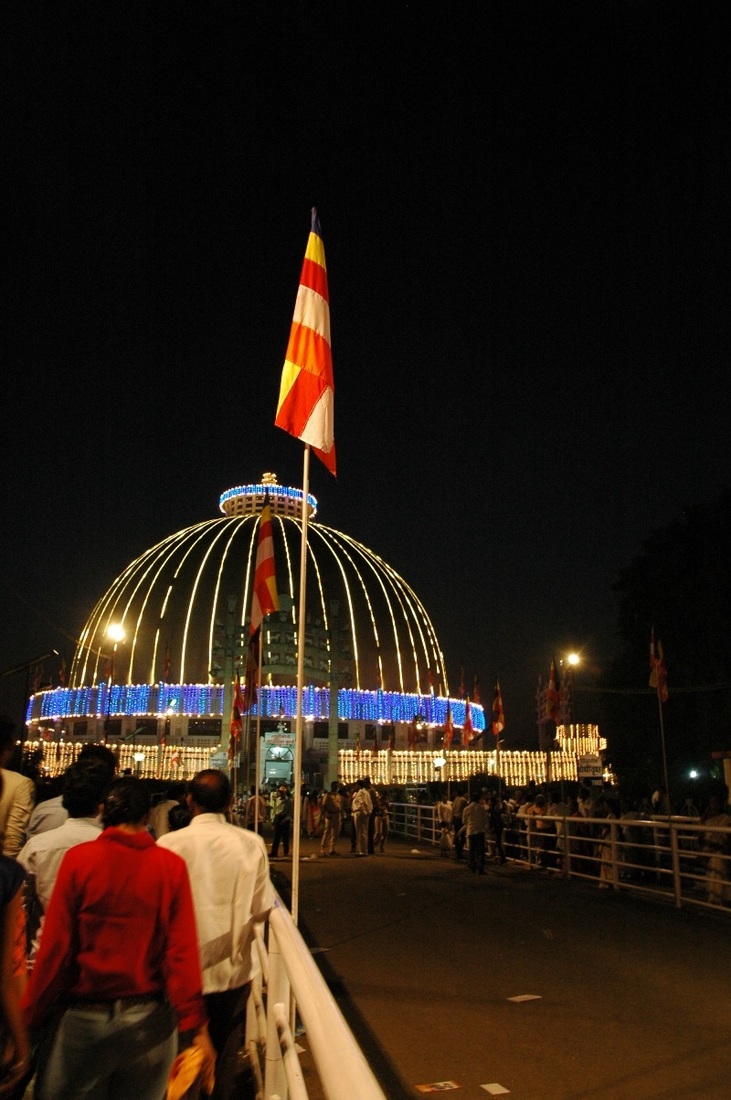
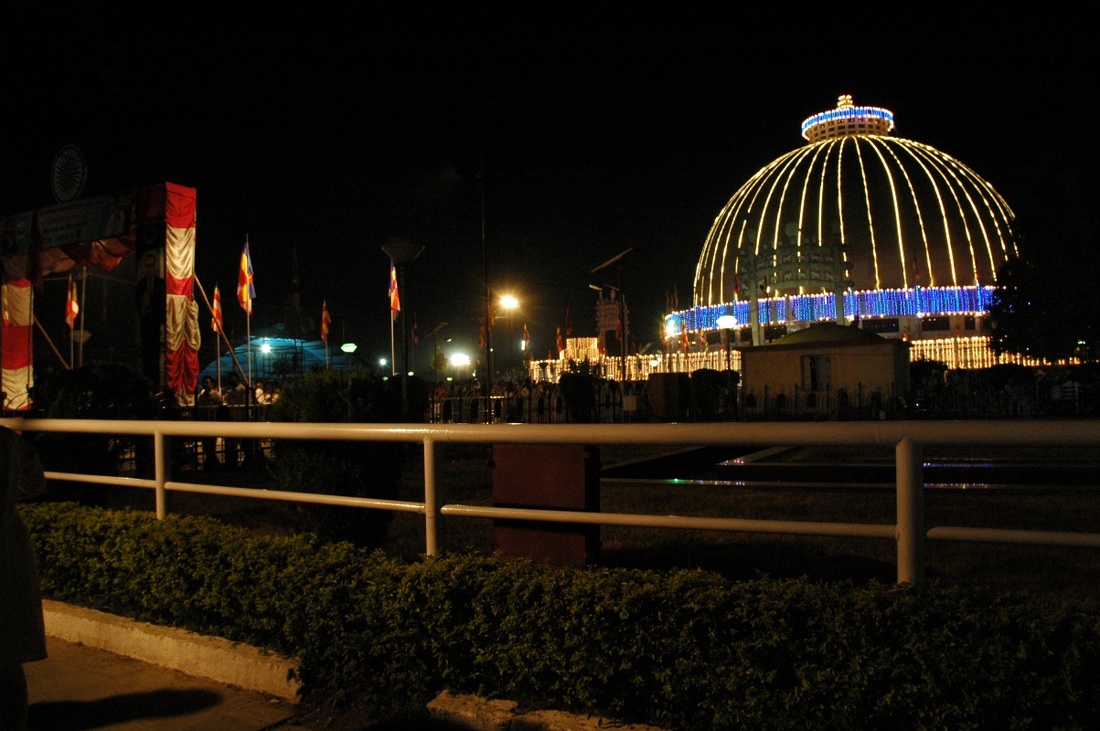
It was busy as expected when we arrived at the road leading to the Deekshabhoomi (literally ‘conversion ground’) and it was not for the meek or faint hearted foreigner to walk with purpose and conviction to the entrance in the sea of curious stares. The soon to be familiar call of ‘Please, Ma’am, just one photo?’ quickly started up and whilst I was sorry in some respects that I could not photograph inside the monument,
Picture
Picture
Picture
Picture
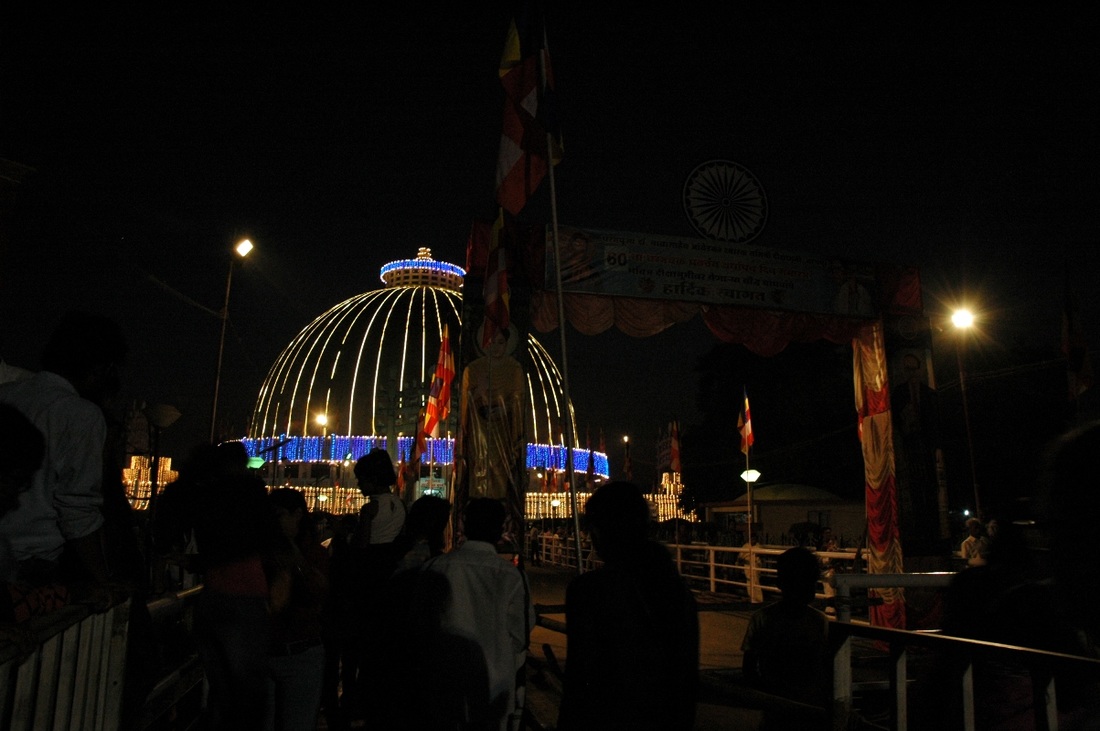
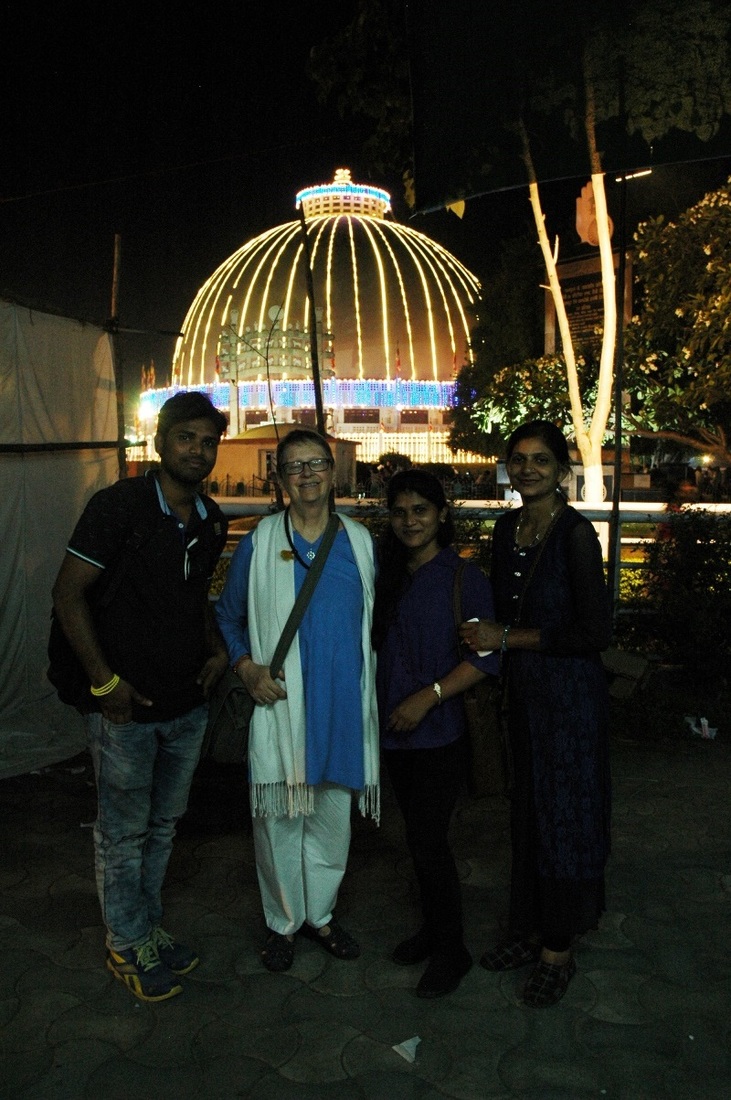
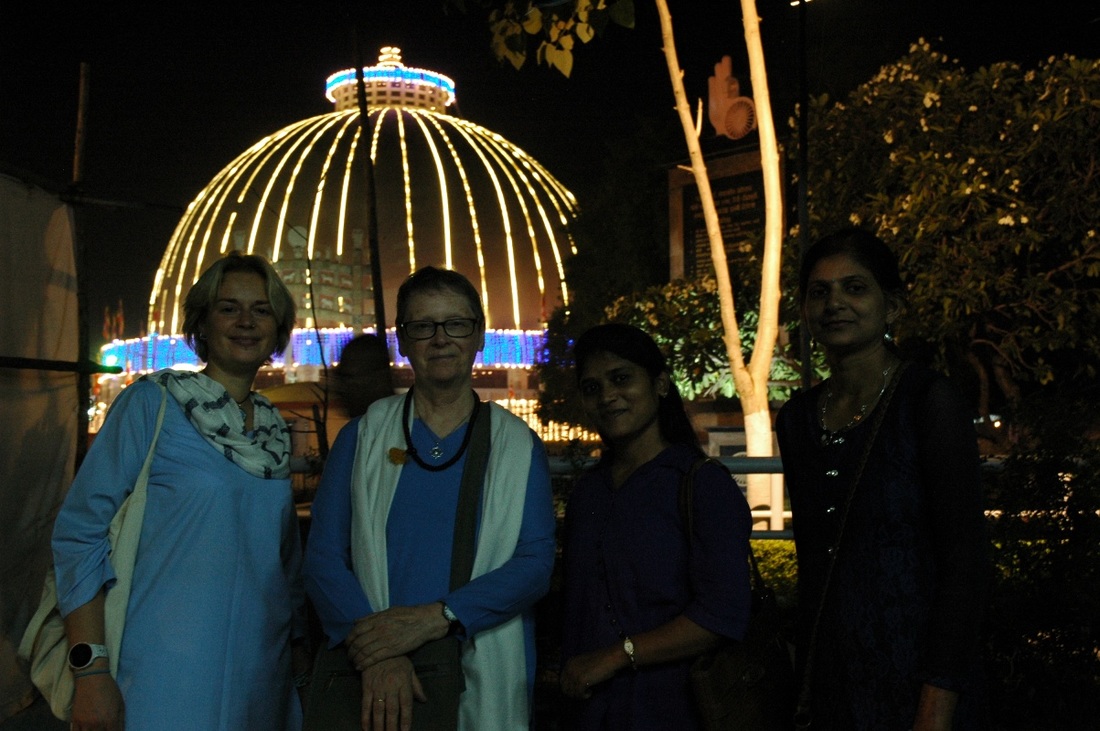
 it did at least provide an excuse to decline without appearing unfriendly. Unfortunately; however, using this rule as protection from the lens did not prevent an awareness of the crowd building outside, eagerly awaiting our exit from the stupa with camera phones at the ready for ‘just one selfie with my kids!” As a result, it was hard to focus or really develop a sense of appreciation for the purpose of the reliquary; the ashes of Dr Ambedkar himself, in a grand cask, under a glass dome and set on a highly decorated platform at the centre of the marble hall. Still, we managed a brief moment taking this in before the encroaching tide of devotees washed us back out into the night. We had hoped to conduct a short puja in the hall, and there were indeed a few people resolutely chanting in small groups or pairs, at the side of the walkway, but we were causing enough of a distraction as it was, so Shakyajata wisely guided us to a spot outside where we perched on a wall as she bravely lead our group in chanting the refuges and precepts in Hindi and English. This at least provided an opportunity for people to come and have a good stare and snap away to their hearts content, which made me feel far less impolite for having refused earlier requests while taking shots of my own. It occurred to me as we took a short meditative pause following the chant, that less than a year ago I was still privately struggling to come to terms with my own spiritual identity and yet now, here I was, practicing more publically then I could ever have anticipated, in the land of the origination of my faith. Never say never. After this, we took a stroll around the bustling complex, taking in the Bodhi tree, part of an intricate web of stories regarding the generations grown from seeds of the original tree under which Siddhartha Gautama, the historical Buddha, is said to have achieved Enlightenment.
Picture
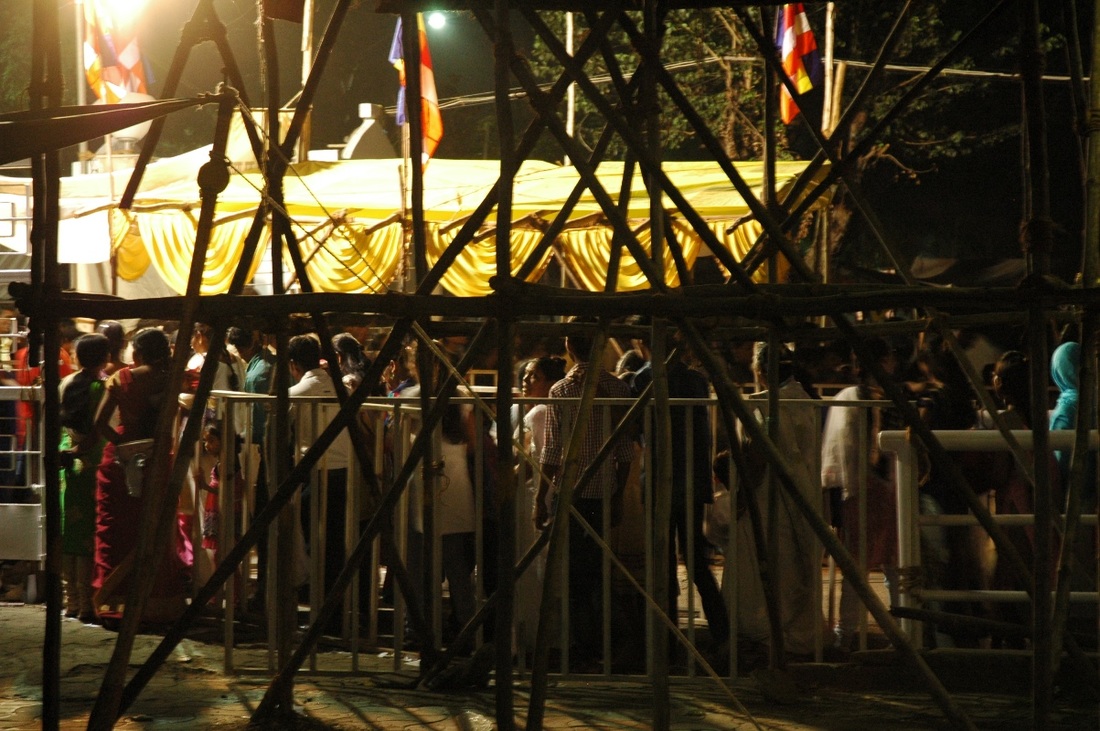
The entrance queue to the Deekshabhoomi...
Picture
...which was dark by the time we got through it!
In the small shrine room, we were approached by a polite but curious monk whom, my friend interpreted for me, had expressed gratitude to us as British visitors for the role of the Empire in preserving Buddhist temples and relics from destruction by Hindu oppressors. This gratitude was a new experience for me; I have grown up, as have many, with a clinging sense of guilt for the colonial activities of the British Empire, so I found this perspective pleasantly refreshing. After some time to catch up, it was time to weave our way back down the crowded street, flanked by temporary market stalls of all kinds, to await our collection by Neha’s papa, who, we were assured, was very close by in the jam of traffic. Some street snacks of hot roasted peanuts and sweet sesame brittle fuelled our continued conversation until it was time to dive across the road where he waited for us, unflinchingly bearing the brunt of a traffic policeman’s aggression for having stopped where he should not. For the first time I began to genuinely fear for our safety as the official punctuated angry shouts by jabbing at our poor driver, even pulling at his shirt to drag him from the seat. Thankfully, through the placations of his children, the swift physical intervention of Shakyajata, and his sheer determination to achieve a quick getaway, we managed to escape the frustrated wrath of the law and sputtered off into the traffic once more, leaving our friends behind with scant farewell.
Upon our safe arrival back at Aryaloka, it seemed at least ungrateful, if not quite disrespectful to pay this man for both our journeys with the equivalent of about £7.50, however I was assured this was quite generous and he certainly seemed surprised when we refused any change. We left him also with the remains of our snacks; he had a long night of work ahead of him and it was unlikely that he would have had any meal break in what had already been a hard shift.
The commitment of our hosts to our wellbeing did not stop at the means to travel, against all odds, to and from the Deekshabhoomi though, and as soon as we were through the door, Sheetal began cooking for us, despite the late hour. She did at least allow us to help chop the vegetables for a delicious pilau, which we ate with gratitude after a tiring trip. After this dinner, Shakyajata retired, and I was considering a similar course of action when Sheetal sat down with a pile of papers and turned on her laptop. She explained that she had not found time during the day to enter the data from the student’s application forms onto the system operated by the government agency who certify the qualifications, and that the deadline for doing so without incurring a fine was the next day. Though the specifics of the context may be alien to me, the situation itself was almost comfortingly familiar and I was glad she was receptive to my further offer of help. I don’t think it took too long for her to show me how to use the software to infill the necessary information for upload and I consider myself to be quite a fast learner as well as a reasonably speedy typist, but still the job took until nearly midnight. I was glad to do this though, as Sheetal then had time to rub some Ralgex-like smelling ayurvedic ointment on to sore legs to ease her arthritis, which she explained without a trace of self-pity, was the result of a dietary calcium deficiency.
Picture
Picture
Picture
Picture
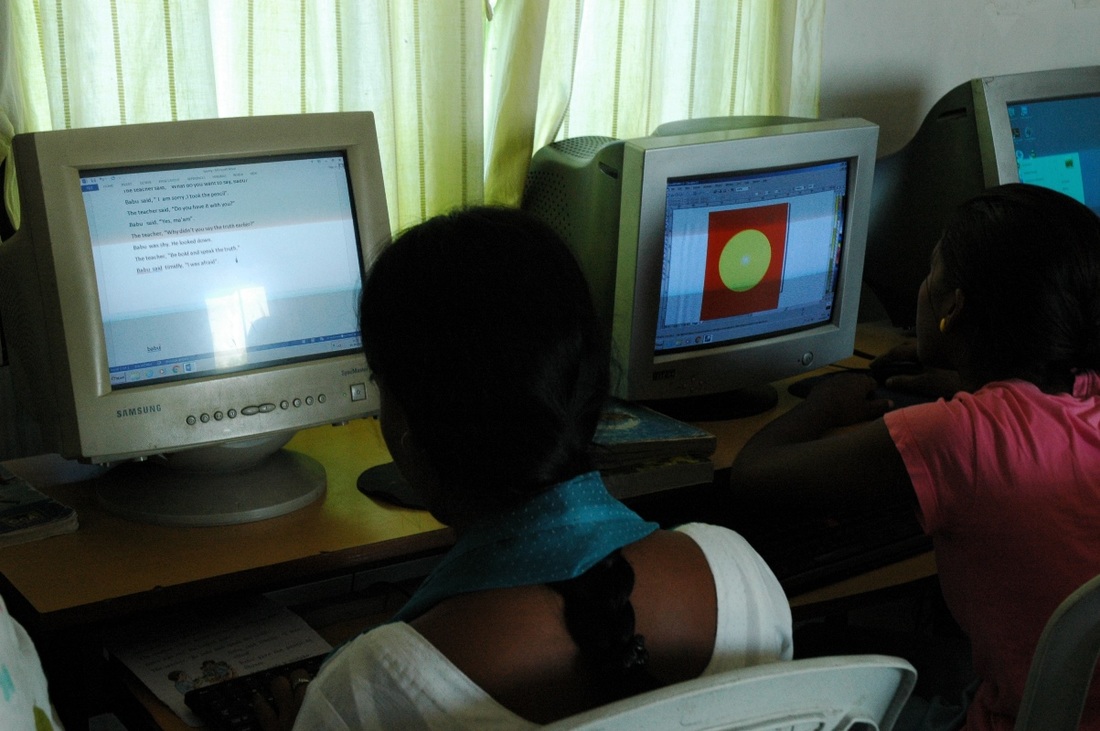
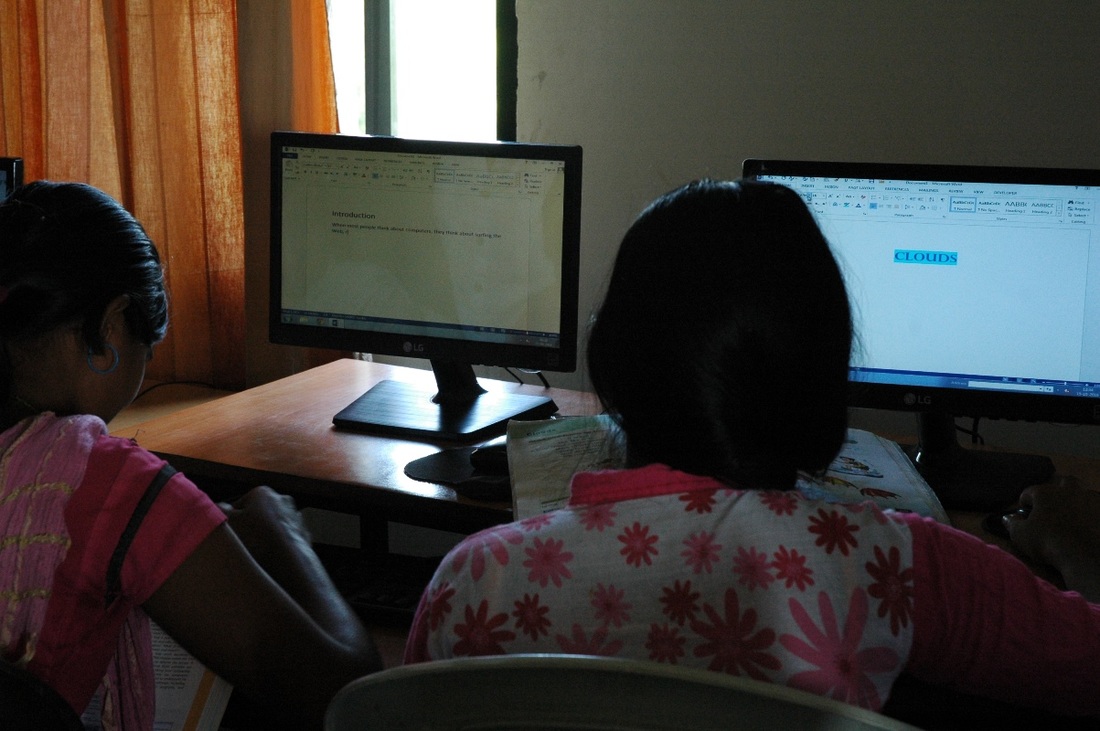
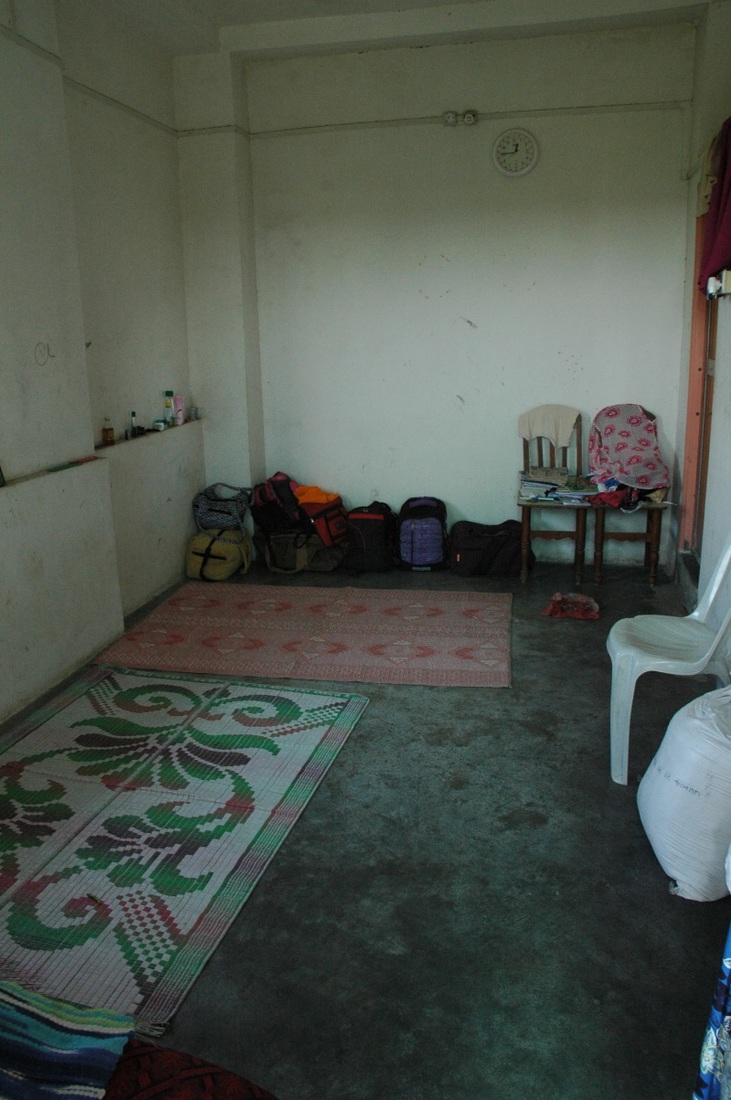
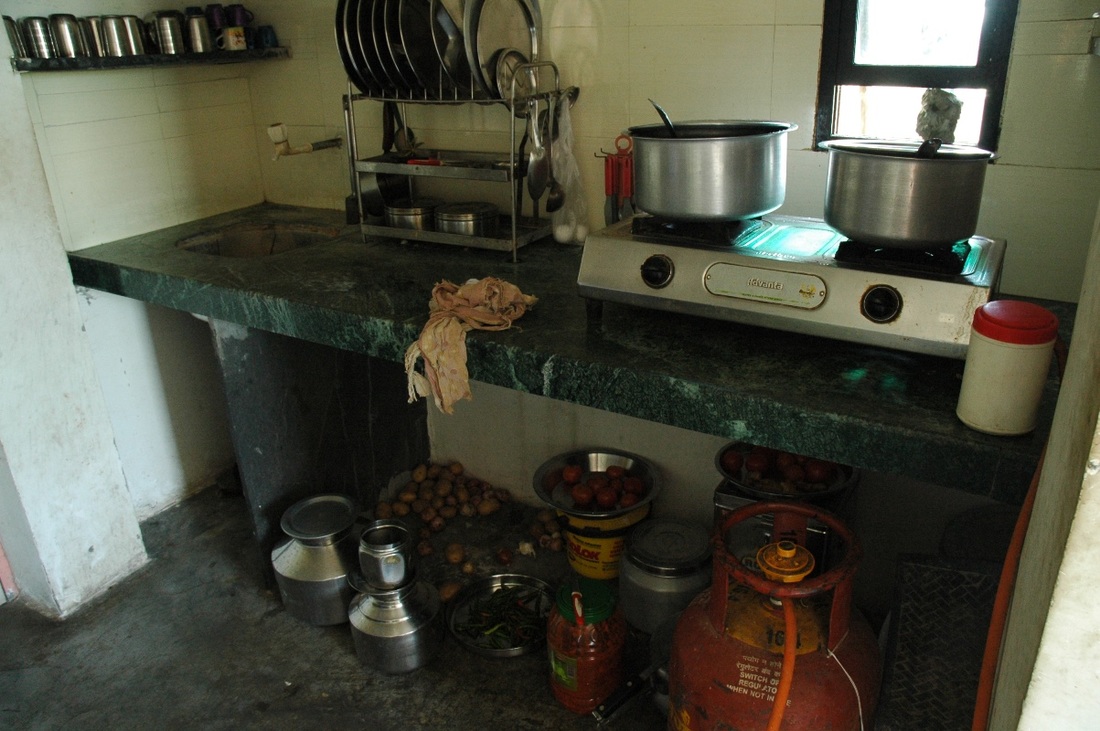
I could easily leave it there as enough of an update and it’s hardly surprising that after such an evening our plans for Saturday morning became somewhat derailed by our fatigue. There’s more to say of course; we taught our first class on Saturday afternoon! In the morning, we delayed our planned meditation and postponed a trip to nearby Nagaloka Centre, until later in the day, opting instead for some impromptu Dharma study and a little more rest. After meditating, we snuck in at the back of the class to see what the girls were doing. Some were typing out passages of English text, while others began familiarising themselves with Corel Draw, a drawing programme I have not used since my days experimenting with the laser cutter on my MA in Manchester. We also checked up on the girls’ living space; a small room that sleeps up to ten that Shakyjata was disappointed had not been re painted since last year. She was pleased though to see that the girls appeared to be keeping the kitchen and toilet facilities clean and tidy. We planned an introductory session before lunch and then rested further until meeting at four for the first English class.

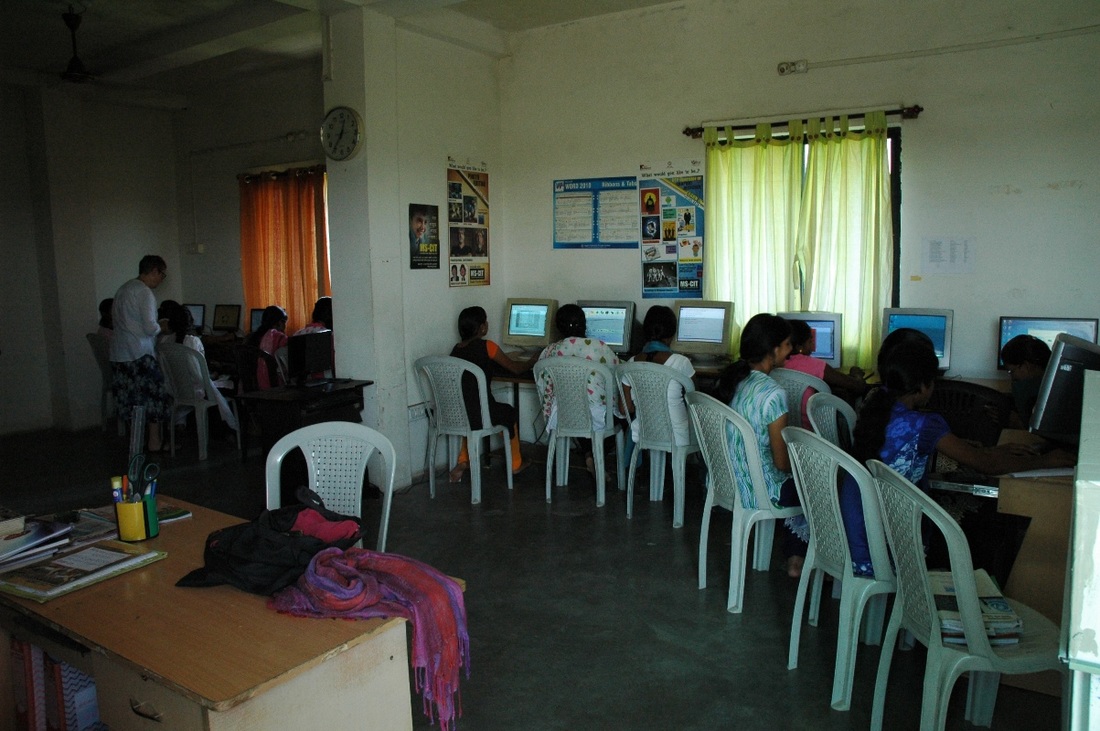
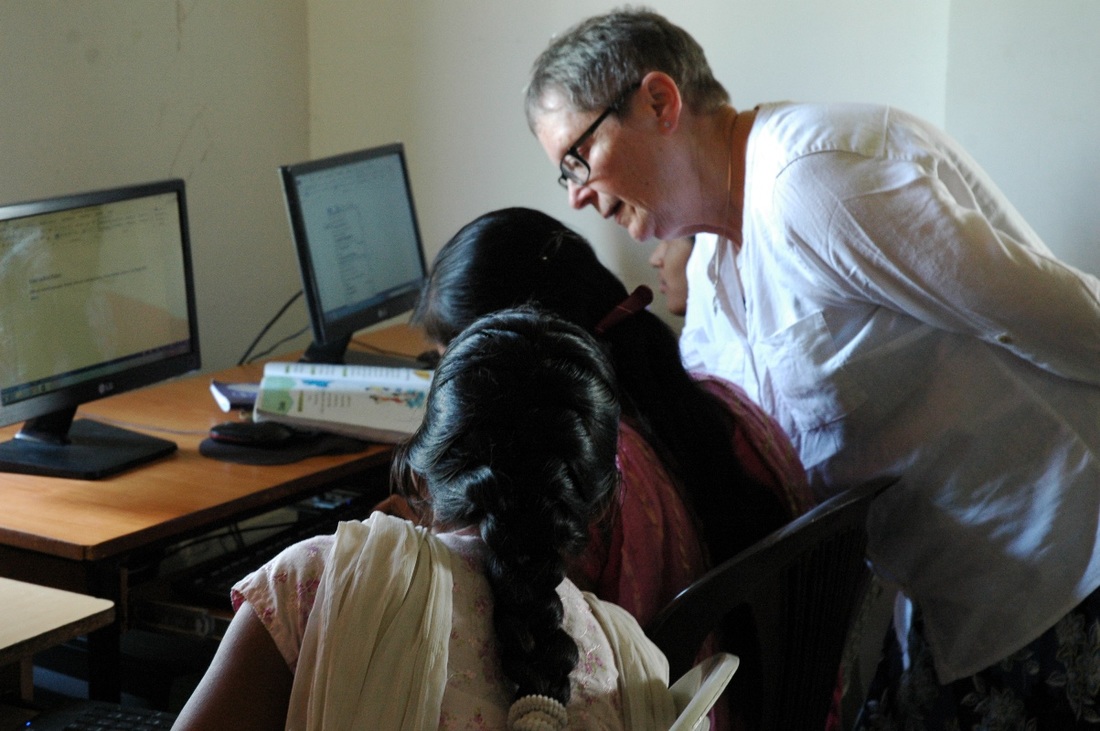
When we returned for this in the afternoon, the girls were quick to leap from their plastic garden chairs and leave the dusty old CRT monitors to form a circle in front of the board, which one young woman carefully cleaned before the start. The first task, making and displaying name badges, was soon followed by the predictable group introductions with “My name is ______________” written clearly on the board. We then progressed through a series of phrases communicating personal information; our ages, the occupations of our parents, numbers of brothers and sisters, building on each in complexity and sometimes testing memories by linking phrases and removing the text from the board. My favourite part of the session was at the end, when having been finally allowed to copy the written text from the board, the girls were so eager to show us their books for corrections to their fastidious handwriting. The opportunity this gave for genuine interaction was a delight and so we picked up on various errors such as the capitalisation of proper nouns with a grateful acceptance from a group of young women so hungry for knowledge and so ready and able to learn, if only someone would teach them. This, of course, being far from my experience of sullen British teens, often attending under duress and defensive at a flash as soon as they are questioned or corrected.
I’m not yet sure how I feel about the contrasts between both the learning environment and attitude of the students in my UK and Indian roles and think it would be wise to spend some more time becoming acquainted with my new environment and assimilating the experiences before making too many comments but I can certainly tell it’s going to be a very different experience. Needless to say, although Sunday is supposed to be their day off, I am very much looking forward to meeting the group again tomorrow evening for a ‘checking in’ workshop session, when we hope to learn more about the group, at a deeper level than the initial personal facts.
Picture
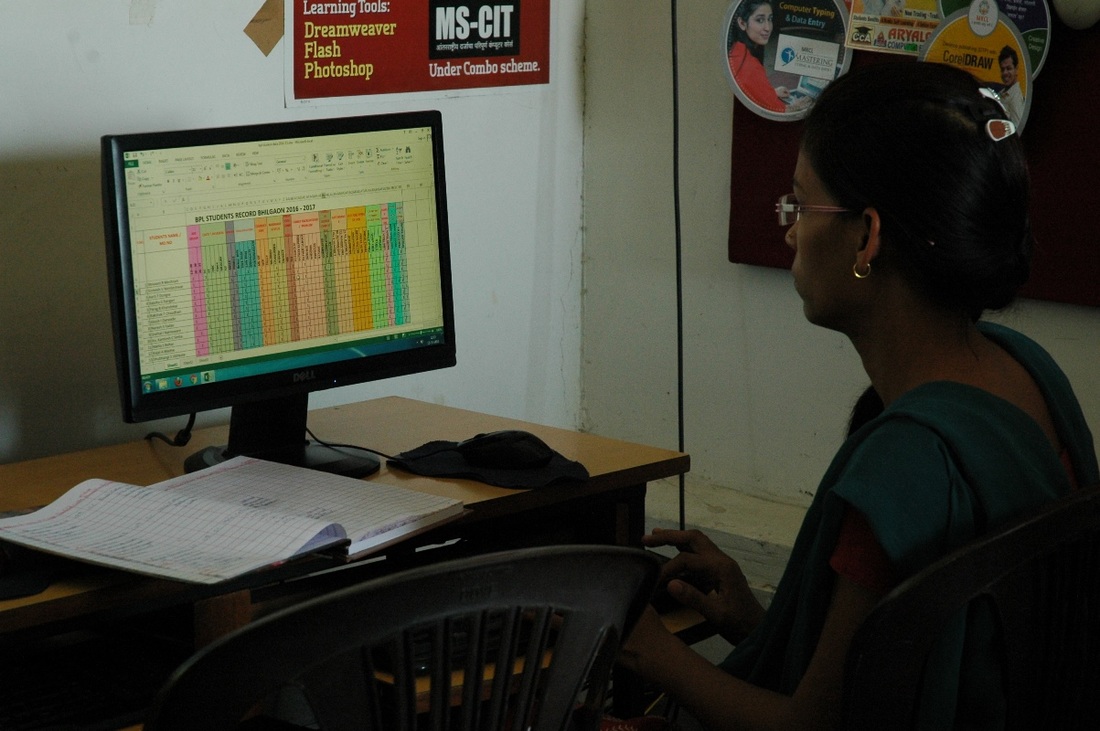
Teacher Vaishali inputs grades to the strangely familiar tracking system!
After such a successful class, the first time I have stood in front of a whiteboard for 15 months, I felt relieved and energised, as I think did Shakyajata, so we made the most of the cool evening air to stroll through the village to Nagaloka before dinner. After so many days of relative physical inactivity, it felt good to gently stretch the legs in the gathering dusk. As well as our group chat with the girls tomorrow, we hope to run similar session with the boys group on Monday, when we hope to have a bit more energy to tackle the bus into town, where they are resident. I can’t say the prospect of traveling there is stimulating my appetite for exploration as much as I’d have expected but I think this is largely to do with the only physical ill affect I’m currently aware of; a rather sore throat! I think a combination of dry air, dust and smog is responsible for the mild cold-like symptoms, but I’m confident that these will settle in time, when I’ve had a week or two to acclimatise. There’s plenty to distract me from it in any case and I’ve been very comfortable so far with no sign yet of the apparently inevitable ‘Delhi Belly’, though since I have been lucky so far to enjoy only good, home cooking, I’m far from complacent about that!
0 Comments

Jai Bhim!

14/10/2016

0 Comments

 
I am mindful as I sit down to write my first update from India, in the calm domesticity of a warm afternoon that it would be all too easy to succumb to the temptation of trying to record and share every detail. Since our arrival, 29 hours ago, I feel I have been through a whole world shift. The tectonic plates of respective cultures, so fundamental to the foundations of our assumptions and responses to experience, have indeed been grinding together but the resulting quake was not unexpected, nor has it been at all unpleasant. I have not yet encountered any difficulties. I have been very well looked after. I am well in body, well in mind and very well fed and watered!
Picture
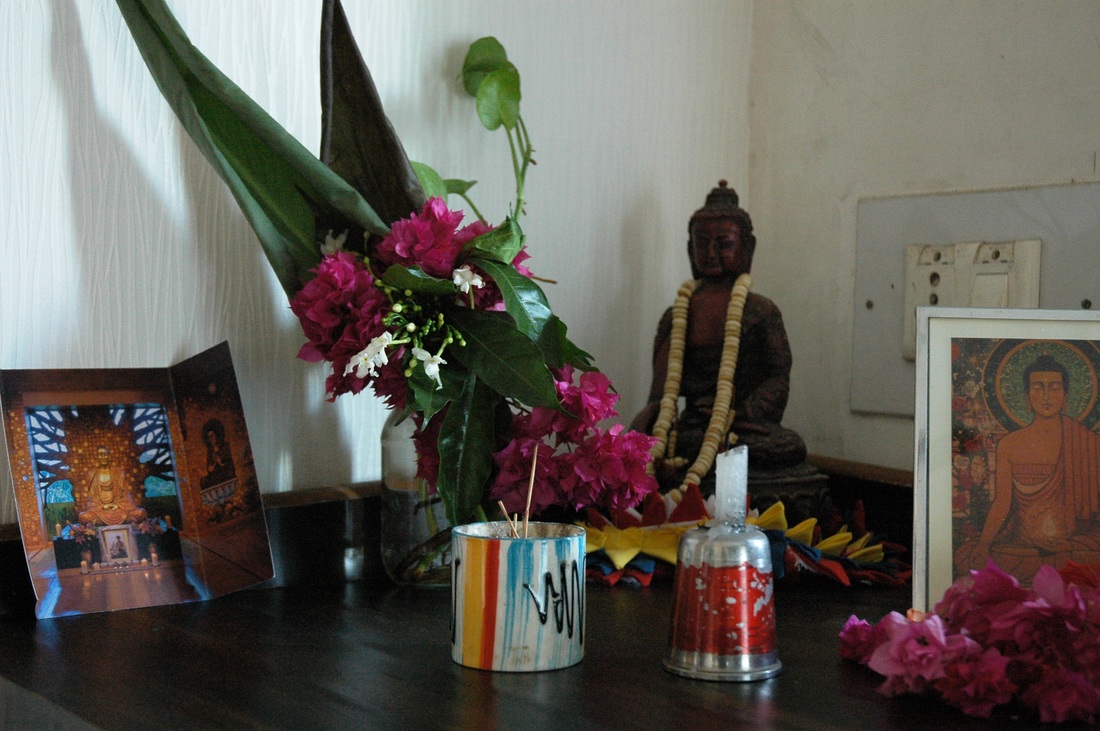
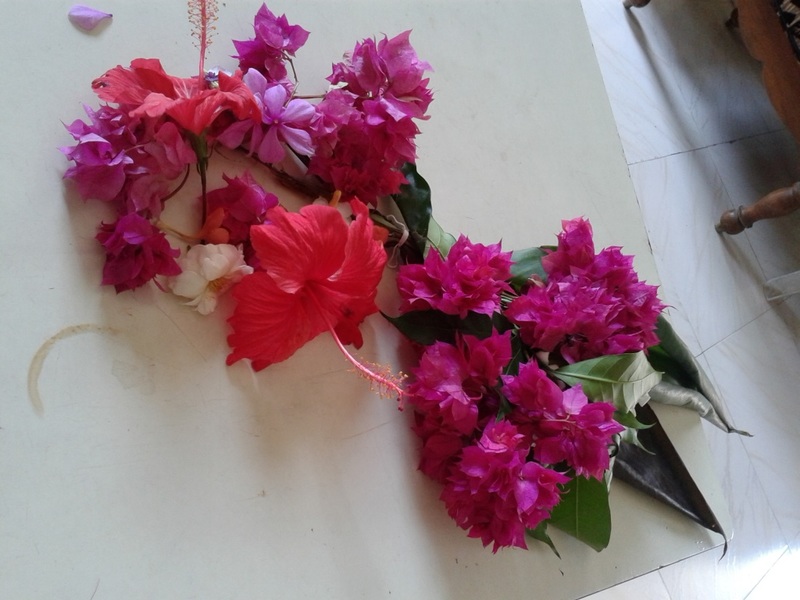
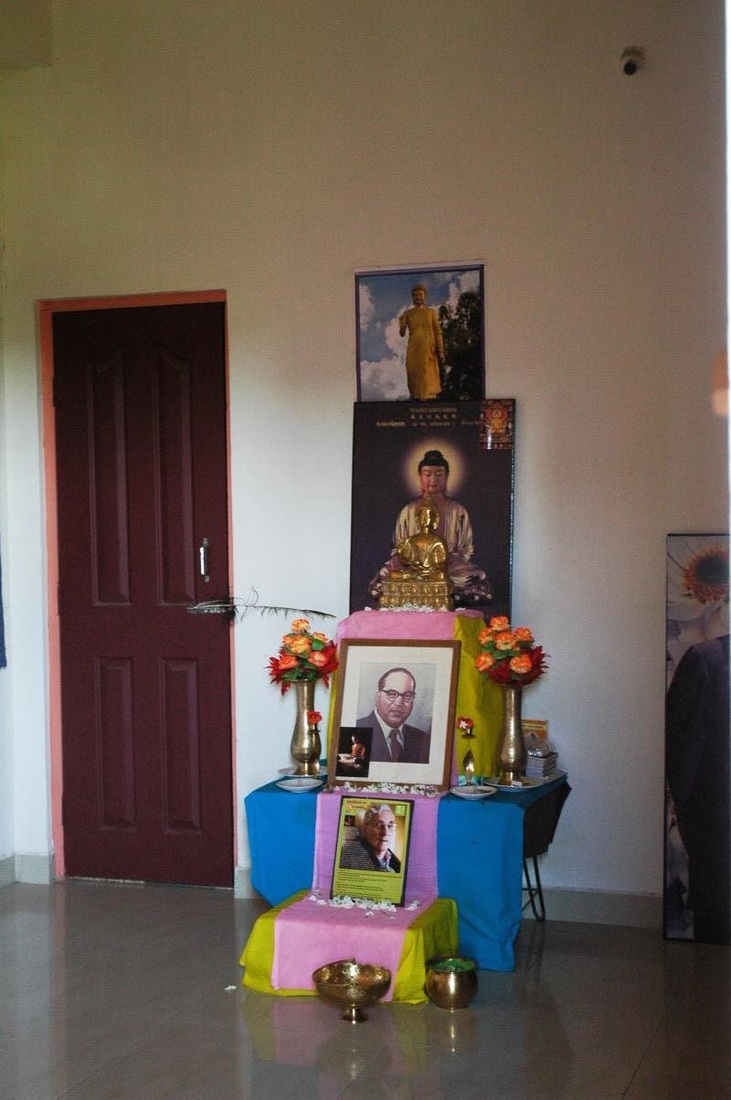
Greeting bouquet on living room shrine.
Following a delicious lunch, at which I gratefully discovered that Indian food does not have to be heavy or bloating as I have sometimes found UK Indian meals to be, I have the luxury of a few hours rest to myself. Later, I shall travel with Shakyajata, and Sheetal (one of the directors at Aryaloka and my very generous and talented hostess) to the Deekshabhoomi, to celebrate the 60th anniversary of the mass conversion to Buddhism of Dr Bhimrao Ramji Ambedkar with his about 600,000 followers on 14 October 1956. I know this is likely to be an evening full of experiences I shall very much want to share and so I’m going to take the opportunity for my first update before there’s too much more to say. I am unable to resist a desire to start at the very beginning, but in the interests of making this post manageable to read, I shall, really truly try to keep things succinct!
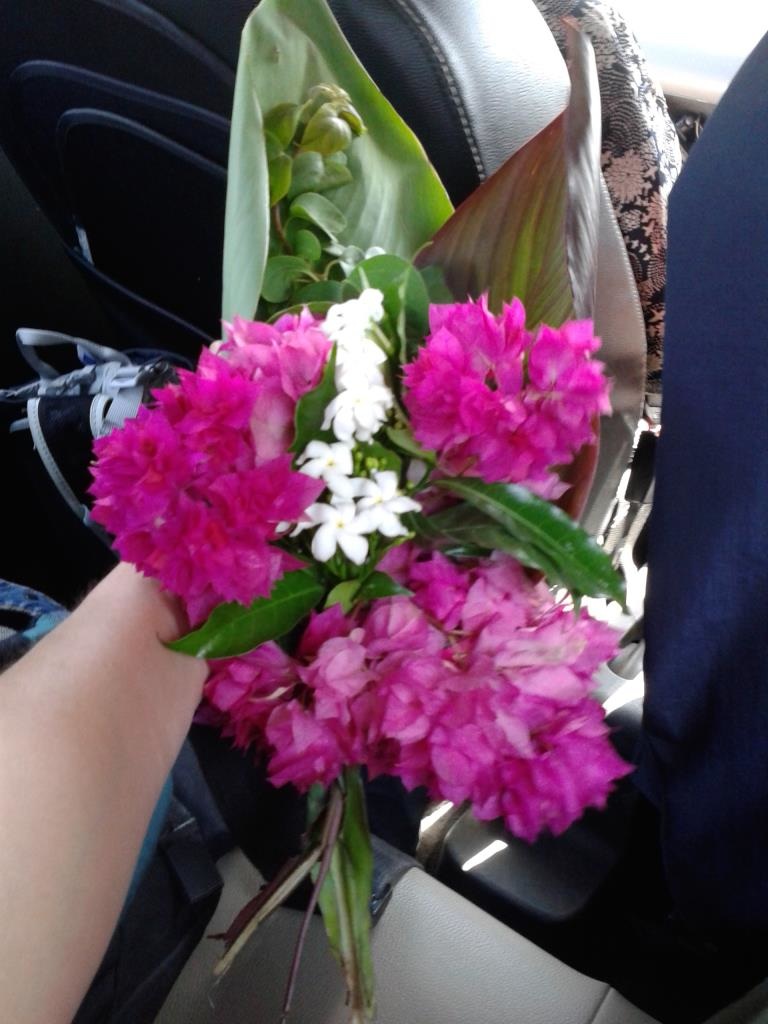
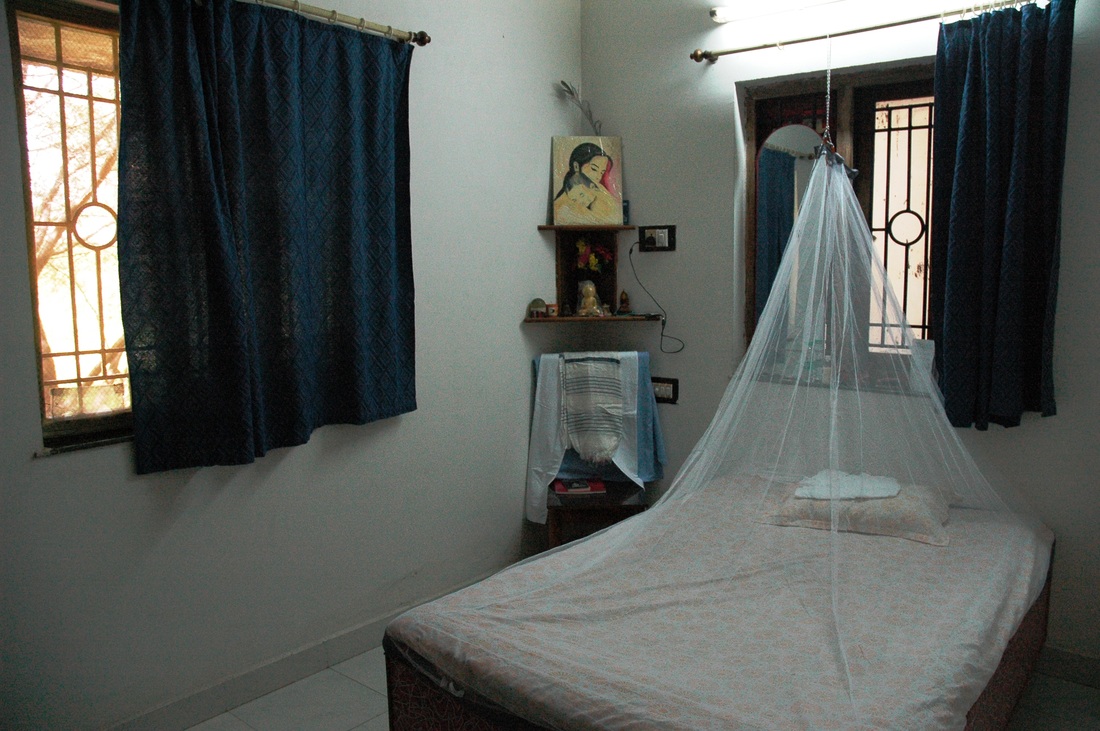
We were greeted at the airport yesterday morning by Aryaketu, Triratna order member and Director at Aryaloka, who is also husband to Sheetal and whose home I shall be living for the coming months. It was wonderful to see his familiar smiling face again (we met at London Buddhist Centre a couple of months ago) and after giving us each a beautiful posy, we were driven straight to the family home. We were welcomed by what felt like a huge crowd of family members as well as the girls on the residential course, each of whom greeted us personally in an informal procession, presenting us each individually with a flower. We shared some tea and chatted a little before I was shown to my room. I was very grateful to unpack my heavy bag and wash before taking lunch! The afternoon was spent resting and recharging the batteries with 40 winks. In the evening, I met and chatted (as much as language barriers allowed; I have my work cut out!) with the 8 girls who are living here. We established a few basic facts, though I have no hope of remembering how many brothers and sisters each have! At 18:30, Aryaketu’s mum led the girls in puja (Buddhist devotional ritual) and meditation, which I attended. Though much of the Triratna chants are in Pali or Sanskrit wherever you are in the world, still there are differences, and much of the actual lesson or direction is delivered in the native language, so I was not able to participate as fully as I liked. I did enjoy watching though and felt like an honoured guest when I was presented with yet more flowers by each girl after she had made her offering to the shrine. I was then able to make my own. Meditation was Metta Bhavana, which I managed to understand, but I felt uncomfortable in my body, hot, sticky, tired and not very able to focus. Having participated however, I felt refreshed and was glad to walk into a living room of English speaking visiting order members who had been attending a local Triratna conference titled Social Engagement and Liberation. We had dinner together (I am finding the dining customs easier than I feared but still it is a skill yet to master to eat rice and very runny dhal with the fingers of only my right hand!) and then some of us walked to the nearby Nagaloka Centre, for an open air concert of Indian classical music in front of the famous 36 foot high walking Buddha. That was really quite enough for one day, in which I’d done little more than snooze since leaving the UK at 05:30 the following morning and so it was to bed! Negotiating the new challenges of sleeping with a mosquito net wasn’t too awkward until I forgot it was there during the inevitable midnight toilet trip and ended up looking something like a spider’s breakfast. Still, I appear to have only one bite this morning so it must have done the trick!

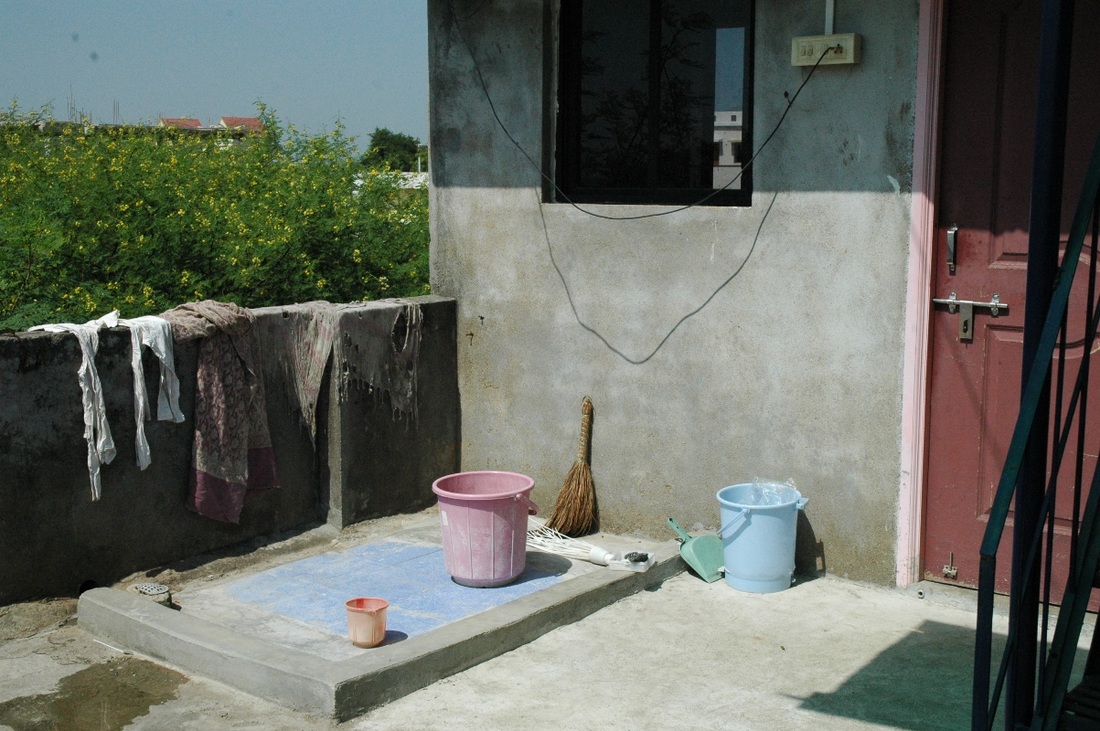
Despite my instinctive urge to get out and start seeing this new world around me, I have tried to be very inactive today. I didn’t get up early for morning puja and meditation with the girls as I had half planned, opting to get another hour in bed instead! Shakyajata did the same, so we meditated together after breakfast and I was actually quite relieved to chant the refuges and precepts in our accustomed style as part of a Threefold Puja in English. I shall attempt to learn the appropriate customs here but one step at a time! My meditation was much more enjoyable than last night and I had a sense that I was floating in a river of my experience, with a myriad of thoughts present but simply bumping off me gently before floating off their own way, like only so much flotsam and jetsam. Shakyajata and I then did a little ‘checking in’ with each other, discussing our feelings about the trip so far as well as our expectations. After lunch, I managed to find out how to access clothes washing facilities and gave my travel clothes a good scrub! That they can only be air dried should not be an issue in this heat, but I think I shall need to learn that less is more when tucking into the washing powder; it is harder to rinse by hand and I think I shall find they are rather streaky when I take them off the line! We leave for the Deekshabhoomi by auto rickshaw in a little under 90 minutes, leaving me just enough time to post this (washing facilities may seem primitive by Western standards but we’re not wanting for Wi Fi!) before changing into appropriate attire for what will be a joyful but serious celebration. Goodness only knows what I shall encounter; I can only guess with excited anticipation!
Picture
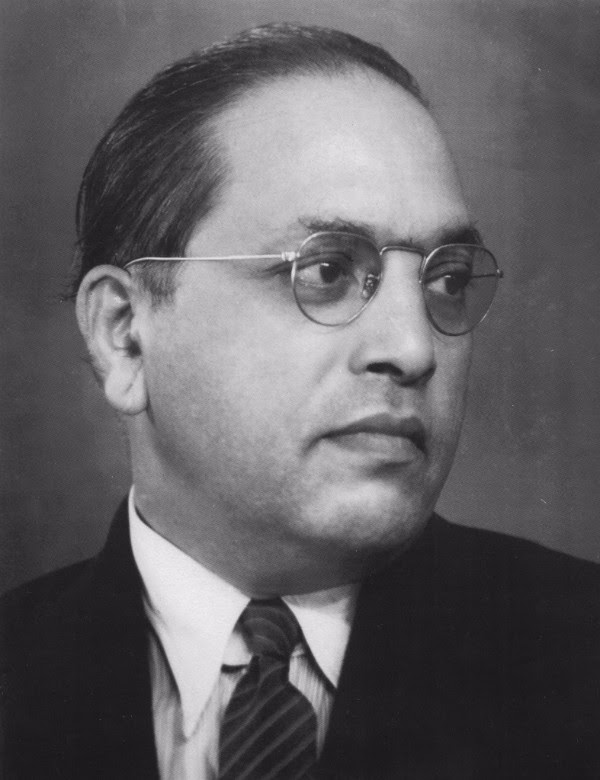
Dr Bhimrao Ramji Ambedkar
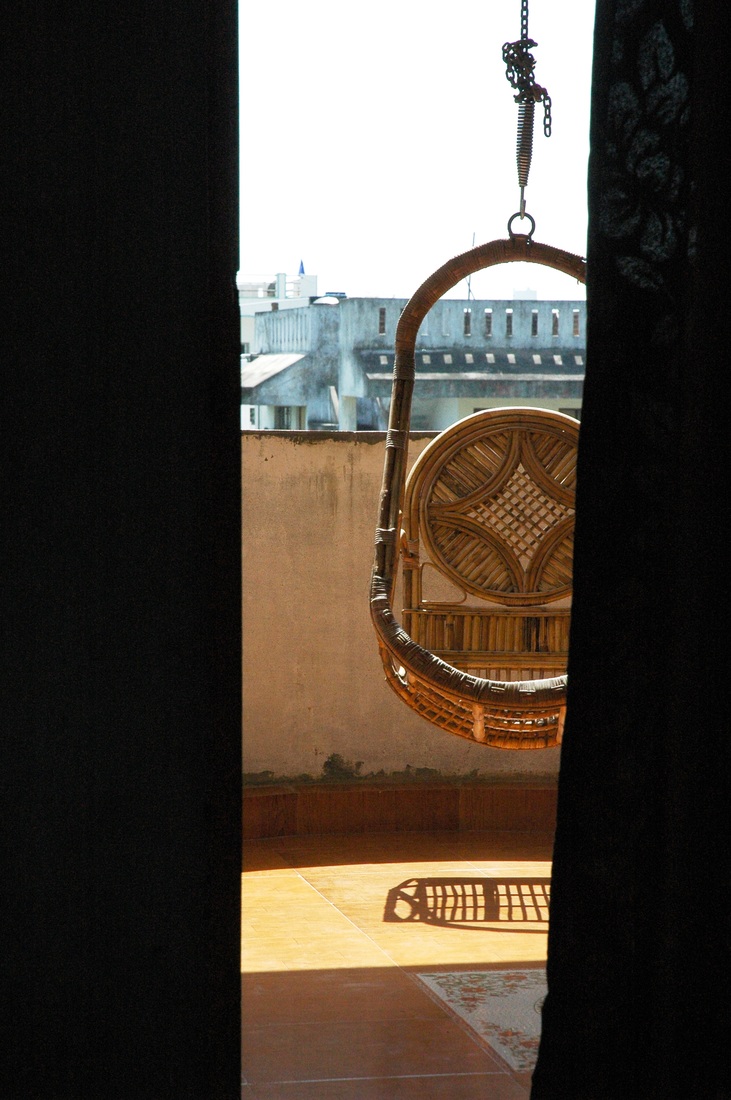
I was struck this morning, as I sipped coffee from a hanging chair on the terrace and looked down onto puja and meditation being performed on a platform in the community square, how palpable is my sense of liberation from the difficulties that were so painful to me only a year back. I was immediately trouble then by a wave of guilt that this has only come about for me because of the organised efforts of others to relieve a far greater degree of suffering and oppression than I have ever experienced. I was soon able to resolve this for myself however; perhaps this is simply a little karmic reward for the lesser efforts I have exerted myself in the organisation of fundraising and travel before I could even be here. A gentle easing of my own troubles that will better enable me to work for the easing of others’ and a little taste to fuel my faith that if I am resolute in my actions here that far greater things than I once thought possible will unfold not just for me, but also for those with whom I work, study, practice and live.
So, on the 60th anniversary of a very important event, I am eager now to really get stuck in with our work here. May we all be well, may it make many beings happy and may all be free from suffering as we grow and develop. Jai Bhim!

0 Comments

Going Forth...

30/9/2016

0 Comments

 
Visa
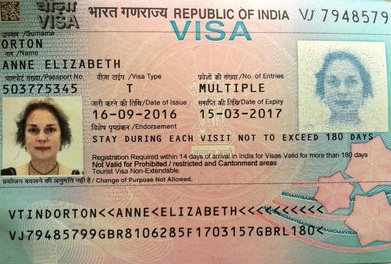
It often feels that new beginnings are inextricably tangled with old ends and this imminent journey is by no means any exception to that rule. I am where I am now, writing this first blog of a new adventure only because I have shut down and moved away from other phases in my life, which, in their time, were their own new beginnings.

But we build on our experiences, learn from our mistakes and gain confidence from our successes. My ‘old ending’ has a fair share of each of these, a goodly mulch of experiential compost in which to germinate new seeds of promise.

About a year ago, in September 2015, I decided to leave a 12 year career in teaching. You can read in far more detail about the reasons for this in my blog post of the time, initially penned for Education Support Partnership to share on World Mental Health Day. Titled ‘Why I’m Leaving Teaching’, it explains exactly that, but you can guess from the rest of that sentence, the crux of why I left. I then moved 200 miles from where I had been settled for 8 years and started a ‘new life’. In truth, this was less of a new beginning than a holding pattern while I did a lot of very important thinking, a lot of decision making and a lot of not much else. A much needed rest for a battered system. I had a few demons to chat with. I’ve learned recently that fighting them achieves nothing. It’s far better to make peace with them and get them and their energies on your side.

During this time, I deepened and consolidated my burgeoning relationship with a newfound spirituality and came to identify as a practising Buddhist. It didn’t seem coincidental that the only thing my mind kept returning to with any enthusiasm as a possible new direction in life was a Buddhist social project that I had first heard about at a talk only a short time after I decided to hand in my notice. This talk, on Dr Ambedkar day in October 2015 was delivered by Shakyajata, a member of the Triratna Buddhist Order who has been working with oppressed young people in India for many years. Her description the work of the small charity she runs, Young Indian Futures, and their work at Aryaloka Computer Education Centre in Nagpur, offering subsidised education to some of India’s poorest and most marginalised young people, moved me deeply. Her words and the affectionate enthusiasm with which she spoke of the students, reminded me of the true purpose of teaching; a way of improving lives, not a means of paying the rent. Time and again I found myself thinking of this talk and the work being done there, so, in April, I contacted her and we began a lengthy process of getting to know each other, deciding that I would travel with her to Nagpur and together preparing for me to teach English there on a voluntary basis. That is almost as much as I can say in this update about the practical side of it all really! Just a little background to set the stage for what is to come. The events that unfold over the next few months will be of as much surprise to me as to anyone following my updates; I really do not know what to expect. But, where once this would have caused me a good deal of worry, instead I find the open expansiveness of that unknown really very liberating. Anything, could indeed happen, but I’ve no reason to suppose it won’t be entirely wonderful.

During my year of ‘inactivity’ my website has been left largely untouched but as part of preparing to leave the UK, I’ve recently given it a spring clean, something of an overhaul. In so doing I’ve written a few blog posts to update the other strands of my activities, namely arts and running. In these, I’ve had a lot of space for reflection, quite painful reflection at times and have been open about my realisation that one thing I’ve been working through this year is the aftermath of an exercise addiction. Of course, my study of the Buddhist teachings has given me a great deal of support and strength with this, but one thing I have particularly benefited from is a new perspective on how I choose to invest my energy. For a good couple of years, I prioritised running and poured most of my passion for life into it as a source of escape and distraction. This left little of me remaining for anything else. It was part of a broader illness but still did nothing to help me recover. I felt tired. I had no enthusiasm. I had no purpose. The running as an activity was an expression of my anxiety and nervous agitation but even then, I knew I wasn’t achieving anything.

Though there has been much to organise in recent weeks, from visa to vaccines, flights to insurance, lesson planning and packing to domestic duties and farewells, and although I have been perhaps busier than for some months, I feel genuinely refreshed. I feel energised and ready to not just take on but to fully engage with whatever challenges lie ahead. Always, at the heart of this, I aim to maintain an awareness of the finite nature of this energy and to be as wisely discriminating as possible in how I utilise it. My aim, my purpose, is to help others achieve their potential, to reduce suffering, to spread a little love and lightness and laughter. If I can focus my dynamism like a shining beam of light to this purpose instead of squandering it on empty pastimes,  then I have no doubt that a pleasantly coincidental side effect will be my own continued flourishing and development. Over the last few years I have been on a very difficult journey. At times, I wasn’t at all sure it was one I’d get to the end of. There were days when, to misquote a misquote, the light at the end of the tunnel really did seem to be no more than the headlights of an hastily hurtling train. So it’s been tough, but sometimes the only way out is through and now I feel I have the wind on my face again, birdsong in my ears and soft grass beneath my feet. Perhaps most importantly, I wouldn’t be where I am now if I hadn’t made that challenging voyage through darkness and apparent disaster. A kind of death. A kind of rebirth. I’m here, I’m alive and I’m ready. And I just can’t wait to get on that ‘plane!

I was recently very fortunate to be invited to volunteer on the team that ran a weekend for beginners at Vajrasana, a beautiful new Triratna retreat centre in Suffolk. As part of this I was invited to speak in a talk titled ‘Why I am a Buddhist’ (you can read or listen to that talk). As well as the much needed boost to my confidence that I found this gave me (I’ve been not been in a classroom for over a year after all and am out of practice with public speaking!) it also gave me the privilege of standing alongside some very strong co speakers and the humbling opportunity to chat with many remarkable individuals afterwards.
In one such ‘post speech’ conversation that particularly touched me, I was advised to listen to ‘This is the Sea’ by The Waterboys, a band I happen to have been fond of for some time. It seems so beautifully poetic, in the context of this song, that I have spent my months of recuperation living on the Thames Estuary and frequently walking (or running!) past the Crow Stone; the point at which the river becomes the sea. This is to me a perfect analogy of the transition I am in the final stages of making and in the words of The Waterboys:
‘Once you were tethered.
Well, now you are free
That was the river
This is the sea!’


Twelve days and counting... A new beginning awaits!
0 Comments
Forward>>
    ‘Magga’ is the Pali word for ‘path’.  In Buddhism, this word is often linked to the Ariya Magga, or Noble Eightfold Path, the fourth of the Four Noble Truths, which is the path to the cessation of suffering.
    ‘Mission Maggamouse’ is the latest catalogue of the adventures of Glittermouse; a visual artist and educator. It has been initiated specifically to record and share her experiences at Aryaloka Computer Education Centre, a Buddhist social project in Nagpur, offering subsidised education to some of India’s poorest and most excluded young people. As a recent Dhammamitra (mitra who has asked for of ordination) of the Triratna Buddhist Order, this activity is an important step in integrating her teaching experience with her spiritual aspirations. You can read more about Glittermouse on the ‘home’ page of this site.

    Mandala

    Categories

    All
    Aryaloka
    Celebrations
    Deekshabhoomi
    Dhamma
    Domestic Life
    Dr Ambedkar
    Nagaloka
    NNBY
    Sangha
    Teaching
    Triratna
    Young Indian Futures

    RSS Feed

Powered by Create your own unique website with customizable templates.